Welcome back!

Welcome to the latest version of my blog! As of spring 2011, I’ll be posting my genre entertainment reviews, updates from recent role-playing games, and restaurant and travel reports here. You can find archives of my old blogs at MySpace and Yahoo 360.

Thanks again to former co-worker Ken G., who helped me set up this Web diary and who hosts it, you can also find links to past entries and related sites. Feel free to post comments or questions, and let me know what you’d like to see!

New “Vanished Lands” telecom team, Update 20 — Back on the farm

The Adventures of Robin Hood
Robin Hood

Fellow role-players, here is my update for Session T3.20 of the latest adventuring party in my “Vanished Lands” heroic fantasy campaign setting. The teleconferencing team met on Sunday, 13 March 2011, and has been using Pathfinder, Skype, and an online dice roller.

In one ancient world, there was a region where strange majicks and demihuman races thrived. After “Holy Steel‘s” journey to the distant empire of Khemet, another motley group gathered in the northwestern “Vanished Lands” to explore a world full of perils and wonders….

>>Telecom party Player Character roster, as of spring 2011:

-“Gawain Keary” [Paul J.]-male Saganim human Illusionist (proto-Celtic Wizard) and contact of “Kimo” [Beruk A.]; NGc, Age 20, Lvl. 1

-“Kovar” [Beruk A.]-male Half-Orc/Saganim human Paladin of Mithras; raised as an orphan; contact of the Order of the Golden Lion; LGn, Lvl. 2

-“Davven ‘Digger’ Hollysharp” [Robert A.S.]-male Faldine Halfling archaeologist (Tallfellow Rogue) from a pipeweed farm in Tarken; contact of “Tunnel” [Stuart C.G.]; CGn, Age 45, Lvl. 2

-“Asish Chen Ti” [Byron V.O.]-male Tsucharim human archer (Mongol-style Ranger), escaped from service to Nannuattan (eastern Dark Elf) Wizard Arbalas; contact of “Sukhov” [Beruk A.] and owner of Akita dog Genghis and horse Onimusha; NGl, Age 20, Lvl. 2

-“Jovinda Halflight” [Sammy H.]-female Half-Elf (Grugach/Hifalendorin) Cleric of Mekkil, goddess of nature; owner of horse Wyth-Amoi, or “Wind Spirit”; NGl, Age 23, Lvl. 2

-“Kazuo Takenaga” [Taum D’A.]-male Nezumi (Rat-kin) Monk from the Zedu kingdom in the Therud Forest; LNg, Age 20, Lvl. 2

-“Favelhorn Riftbringer” [Dexter V.H./absent]-male Mountain Dwarf Summoner; CGn, Age 51, Lvl. 1

16 to 17 August 1229 B.C.E.:” Several weeks after defending it from Centaur raiders, the adventuring party returned to a farm near the abandoned Hifalendorin (proto-Western European) human hamlet of Alarn. Matron Violet Sandia invited the group to join her extended family for dinner.

Gawain entertains children with Prestidigitation, and Kovar and Asish ask “Sir Bonner of Runnymeade” [Jon W.B./Non-Player Character] to help train the peasants to defend themselves. However, the knight says that his skills are too specialized to easily share with simple farmers.

After the meal, Digger retires to the porch to share Hollysharp pipeweed and tales with some of the men. After some prodding by the Halfling scholar, Jonas and his son admit that they fled Alarn after signs that the hamlet was cursed. They confirm the party’s findings of the haunted upper floor of the “Mellow Mule” inn, unnatural beasts in the Aspar River, and mischievous Fey such as Korred from nearby woods. The men are more evasive, however, about the storm giant footprints.

Jovinda meets privately with Violet, who says that she took in her relatives but is disturbed at more news of Alarn’s problems. The elder doesn’t recognize the name “Vappu Lahja” at first, but she later tells the Grugach Cleric of an old fairy tale about a woman who found wisdom on the Plains of Sathendo and was stoned by those who couldn’t comprehend it.

Kazuo reluctantly agrees to talk with a young pregnant woman who is bedridden. He finds the well-fed Alyssa ranting about how some of her relatives are jealous that she is carrying the heir to the Sandia homestead. The emotional girl finds that the Nezumi Monk lends a sympathetic ear, and he tells her of the mysterious Vappu Lahja, whom he met with Digger after a Centaur ritual.

Later that evening, Tad takes Kovar and Asish to a barn to inspect the farm’s arsenal. The horsemen study the broken farm implements, occasional hunter’s weapon, and raw materials and make some suggestions. They also set watches as the party gets ready to bed down in a hay loft.

Gawain confirms that the new arrivals from Alarn are related to the farmers, and Violet asks Jovinda to request that another Cleric to be sent from the city of Nadwi. The priestess of Mekkil, goddess of nature, begins interviewing the entire household, beginning with Jonas’ wife Denise. She isn’t pleased to learn that Kazuo has mentioned Vappu Lahja, which he had said he wouldn’t do.

Kazuo offers to leave, and Digger insists that whoever attacked Alarn must be misinterpreting the guidance of Vappu Lahja. Gawain and Kovar say they have detected little magic and that the Monk and Rogue should be watched. Asish notes that the entire team (including compromised members Digger and Kazuo) should continue riding together to Nadwi.

The next morning, Sir Bonner patrols the farm’s perimeter, and Ranger Asish practices archery with the peasants. Kazuo is joined by Jovinda and Gawain in visiting Alyssa, and stern Kovar waits outside her room. Jovinda re-examines Violet’s bratty granddaughter and concludes that she is physically healthy.

Digger and Jovinda go to talk again with Violet before leaving, and Asish recommends that they try to identify the father of Alyssa’s child. The matron refers Jovinda to her cousin Viola, who works in the household of a Wizard in Nadwi. Armored Kovar not only keeps an eye on furred Kazuo, but also reminds his companions not to rush to judgment….

Please remember to post to the Google Group message board if I missed anything or if you have any ideas to discuss between games. Byron, thanks again for your help with the FATE 3e Starblazer Adventures: “Vortexspace opera! Sammy, I’m sorry that you had to postpone your trip to Japan. In the meantime, I look forward to seeing all of you next Sunday! -Gene

30 June 2010: “Vortex” species — humanoids

Berkeley art

Fellow role-players, by now, you’ve probably seen my descriptions of the development of my upcomingVortexspace opera and the “future history” and tone of the homebrew campaign setting. As we get closer to beginning the game, here are some notes on available Player Character species.

In one future, humanity has begun to colonize the Sol system, but struggles for scarce resources persist. Open and official First Contact with alien societies, themselves at war, opens a wider galaxy to explore — if Terrans survive.

Humans and “near” humans

As I’ve noted previously, about 200 years from now, our solar system is home to nearly 20 billion people, most of whom are “normal” humans living on Earth. They’re still the baseline for whatever rules set we ultimately choose (the top contenders are D20 Star Wars: Saga Edition, FATE Diaspora/Starblazer Adventures, GURPS 4e Lite/Space,” and BASH Sci-Fi Edition).

In the “Vortex” universe, as in many space operas, humans are adaptable, corruptible, and lower-tech than their new galactic acquaintances. Still, the upstart children of Terra have great potential.

Also known as “metahumans,” “parahumans,” “posthumans,” and “transhumans,” the broad category of “near” humans includes mutants, genetically modified humans, and cyborgs. About one in 5 million people is born with a random but significant (and mostly helpful) mutation, and during the era of the Societe de Justice Internationale and the “Drake’s Seven,” many were costumed vigilantes or supervillains.

“Gennies” include humans born in the low-gravity environments of the Lunar Free State, the Mars Confederation, or some outer colonies (but not the orbital cities, which have mostly normal inhabitants).
Some people have been enhanced as entertainers or soldiers, while others have engaged in dangerous recreational splicing. As mentioned previously, some cloning exists, but it’s expensive and heavily regulated.

Cyborgs may not seem as high-tech as their genetically modified kin, but they can be nearly indistinguishable from normal humans (in contrast to many gennies, who often flaunt their differences and supposed superiority). Many modifications are to repair injuries, to interface with machines, or to have swappable functions.

“Synths”

“Synths,” or synthetic humanoids, include genetically modified animals and androids and mostly live in Earth’s colonies. Although humans created these client species to be more capable individually than themselves, humans have also been reluctant to grant them equal rights.

Uplifted” animals arose out of the creation of “gennies” and efforts to preserve megafauna that was going extinct. They’re commonly based on dogs and wolves (Canids), large cats (Felinoids), primates (Chims), bears (Ursoids), or cetaceans (Delphines). Uplifted animals are usually stronger than humans but not as smart, and like gennies, their reproduction is strictly controlled. Alien synths are known as “xenoids.”

By contrast, true artificial intelligences may be smarter than humans but rely on robotic bodies. Robots have industrial, exploratory, or military applications, and androids are often confused for gennies and have social or entertainment applications. Humanoid androids, nonhumanoid bots, and disembodied A.I.s all have programming and legal restrictions and are as vulnerable to computer viruses as organic beings are to
regular illness.

Coming soon: “Vortexaliens and occupations!

1 June 2010: The setting of “Vortex”

The future is now!Fellow role-players, I hope that you had a good Memorial Day weekend. I’m glad that our one-shot games have been mostly successful so far, and I know that some of you have expressed interest in a longer-term campaign. Although I don’t plan to return to the “Vanished Lands” fantasy world anytime soon with the Boston-area face-to-face group, by now, you should have seen my recent post about the development of my “Vortexspace opera.

Here’s more information about my homebrew speculative fiction setting: About 200 years from now, humanity has begun to colonize the Sol system, but ecological problems and internecine conflict persist. The rediscovery of mystical powers, plus open and official First Contact with alien societies, themselves at war, threaten Terra’s very survival. Can heroes arise to meet the challenges in time?

Demographics

Most of the solar system’s 20 billion inhabitants are human, and most live on Earth. The average person is born to a slightly smaller nuclear family than in previous generations, is educated and employed by a megacorporation, and lives in one of the megalopoli that have metastasized along rising coastlines. To picture the teeming megacities, think of Blade Runner or The Fifth Element. Despite globalization, regional and cultural differences remain.

The orbital cities around Earth, Venus, and Jupiter have millions of residents (think Babylon 5 or Star Trek: Deep Space Nine), and the Lunar Free State has megacorp and military bases. Many settlers in the Mars Confederacy (which is beginning to be terraformed) come from crowded Asia. A few generations have now been born that have never set foot on Earth.

“Near” or “trans-” humans (mutants, metahumans, and cyborgs), “Uplifted” (genetically engineered) animals, and true artificial intelligences (robots/androids) are minorities, mostly living offworld. Like the outer colonies, they’ve fought for and earned limited rights.

Technology

Once possessing one of the most diverse ecosystems in the galaxy, Earth still has an impressive variety of organisms and cultures. The “ecocrises” of population pressure, pollution, global climate change, and the depletion of fossil fuels and freshwater led to famine and wars, as well as technological innovation. “Cold fusion” is finally a reality, but disparities in the distribution of resources remain.

Outside the megalopoli, carefully maintained cropland is surrounded by vast wastelands. The average person has access to more technology but less personal space than his or her ancestors. Cyberspace mitigates that somewhat, but virtual perception overlays and mechanical telepathy bring their own hazards, such as addiction.

Communications, transportation, and combat have also changed, even if the social sciences haven’t yet succeeded in creating harmony for all citizens regardless of belief. Memes (transmittable ideas) flitter across infotainment media, and those who still want to or need to travel in person can take high-speed trains, hypersonic aircraft, or commercial submarines (to undersea cities). Unfortunately, these advances also facilitate crime, terrorism, and warfare along economic, ethnic, and ideological divisions.

First used in the colonies, mecha (powered suits) are used as heavy infantry and artillery. Interplanetary carriers, aerospace fighters, and scout ships spend long months patrolling the cold vastness of space, but a storm is approaching the Milky Way’s Orion Arm. After First Contact, Terran humans and related species have access to Transit-level faster-than-light drives, which can propel vessels at up to a parsec (3.26 light years) per day.

Medicine

Many illnesses have been cured, and the life expectancy for the 60% of people above the poverty line is 120 years (half that for those still below it). The very wealthy have access to cloned bodies, partial consciousness transfers, and android avatars, but such technology is expensive and restricted. Terran biochemistry isn’t exactly compatible with that of most aliens.

Economics and politics

Politics has become both decentralized and more centralized, with many services once delivered by local governments now performed by megacorps, and regional governments replacing states and provinces. For example, Boston is now part of the North Eastern American Megalopolis (NEAM), with most goods and services provided through Transglobe Information Company, one of the “Big Eight.” North America’s Continental Congress (NACC) is in Denver.

In response to the ecocrises and the use of weapons of mass destruction, the United Earth Authority has started to become the first true world government. It’s based in Rio de Janeiro, Brazil, and is the nominal ruling body over Terra’s colonies. Each regional state contributes to the U.E.A.’s law-enforcement, bureaucratic, and military forces. NACC’s elite force is the Aerospace Marine Corps. The U.E.A.’s Fort Olympus Mons overlooks Mars’ red outback, where bands of homesteaders, nonhuman rebels, and ecoterrorists try to eke out a living (not unlike Firefly/Serenity).

The sparsely populated Asteroid Belt and Jovian and Saturnian systems include several mining colonies, policed by the small but growing Interplanetary Patrol (think Outland). The colonies have petitioned the U.E.A. to change its name and grant them both equal and proportional representation, but that’s only one of many debates on the eve of First Contact with galactic societies, themselves at war.

The U.E.A. sponsored the United Ecumenical Movement partly in reaction to the destruction of Middle Eastern holy sites and the horrific related casualties late in the petroleum era. Although its chaplains are drawn from different faiths, the U.E.M.’s members have managed to collaborate closely on secret archaeological and paranormal research (with extraterrestrial advice).

Galactic conflict

Many of the billions of stars in the Milky Way Galaxy have planets around them, and millions of those have life. Of those, thousands are capable of sustaining intelligent life, and hundreds are inhabited at any given time. Dozens are homeworlds to Transit-capable beings. Hidden for centuries behind Kuvor’s Veil, a nebula, the Sol system has been a backwater, visited by occasional pirates, explorers, or pranksters. First Contact causes some disruptions in Terran society, but greater threats are ahead.

Although most aliens are nonhumanoid, some can (and do) interact with Terrans (think Flash Gordon, Star Wars, or Farscape). Most of the starfaring species in the Orion Arm are nonaligned, neutral, or members of the Trade Guilds, which are interested in working with Terran megacorps. A few are members of the growing Kharvamid Alliance, which seeks to defend systems like Sol’s from the approaching Zarkonian Armada….

In coming posts, I’ll outline Player Character options for species and occupations, why our choice of rules matters, and more! In the meantime, I look forward to the next Pathfinder: “the Dragonslayers” teleconferencing session and Gabe C.’s Lady Blackbird one-shot. Be seeing you!

27 February 2010: Rules-light and other RPGs

Furry fantasyIn my previous blog post, I discussed the one-shots and miniseries that I’ve participated in with other Boston-area gamers. As I noted, Dungeons & Dragons (D&D4e) is still the most popular role-playing game (RPG), but recent trends include the digitization of social games, the “retro-clone reaction, and the rules-light movement. Fellow blogger Ken G. has discussed similar phenomena in computer games.

Some hobby observers predict that emerging tools such as laptops, smartphones, micropayments, and modular programs will displace and replace conventional dice, miniatures, and Game Masters. Multiplayer online games (MMOs) have undeniably increased in popularity, but board games and face-to-face RPGs have retained their appeal, and grognards (old-school gamers) have kept up with Web publishing even as they look back to 25-year-old books.

To follow a software analogy, Wizards of the Coast’s D&D4e is like Microsoft’s Windows — ubiquitous, restrictively licensed, and overloaded with features. The “rules-lite” movement is an attempt to create and use rules sets like Linux that take less time to learn and teach (and being fan-written, often free). As with some retro-clones, the hope is to find systems that facilitate collaborative storytelling and evoke a certain mood or style.

Based on my own history with past editions of D&D, I like the retro-clones Labyrinth Lord and Basic Fantasy RPG, and the rules-light MicroLite20, which is a condensation of the D20 Open Game License. Smart game producers often publish “quick-start” guides, such as GURPS 4e Lite, Savage Worlds “Test Drive v6,” and the upcoming D&D4e boxed set.

New and promising games are still being published in book form. Where D&D4e arguably took some terminology and concepts from miniatures skirmish, collectible card, and MMO games, Warhammer Fantasy Role-Play Third Edition combines board games and role-playing. Unfortunately, its high initial price tag may discourage people from trying it.

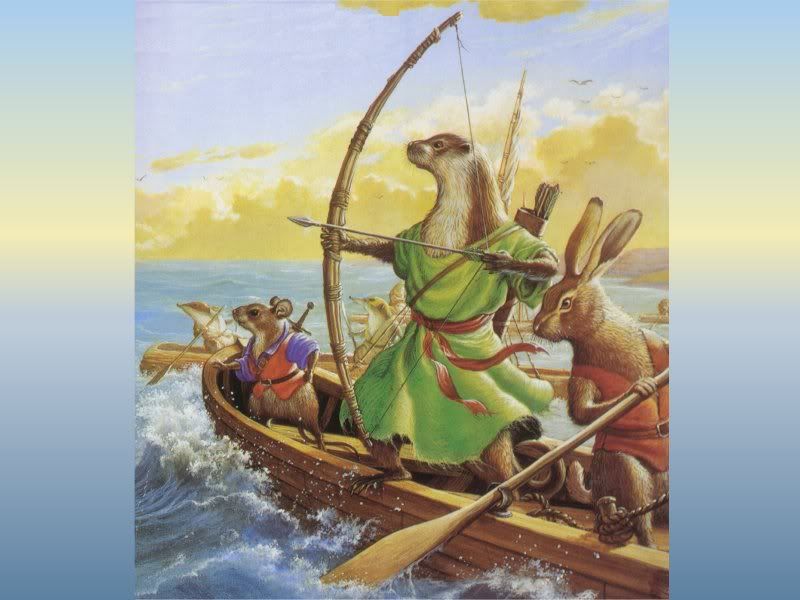
I recently picked up the beautifully produced Shard fantasy game, which features anthropomorphic animals rather than the usual Tolkienesque races — not unlike last year’s award-winning Mouse Guard RPG — and Eclipse Phase, a “transhuman” science fiction game. While I don’t think I’ll be able to get my current gamers to try these rule sets (although Josh C.’s group just expressed interest in having me run Shard), I’m sure they’ll provide much inspiration for my campaigns.

Coming soon: Avatar review and science fiction RPGs!