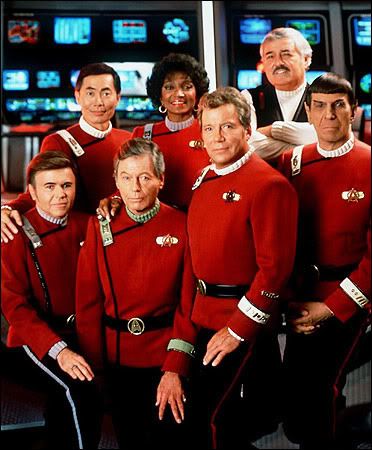
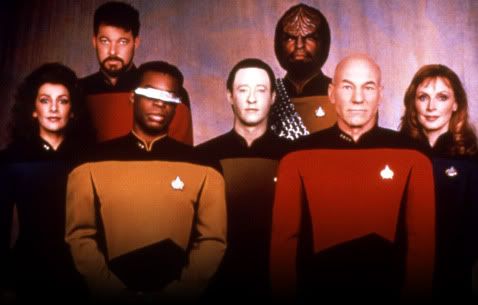
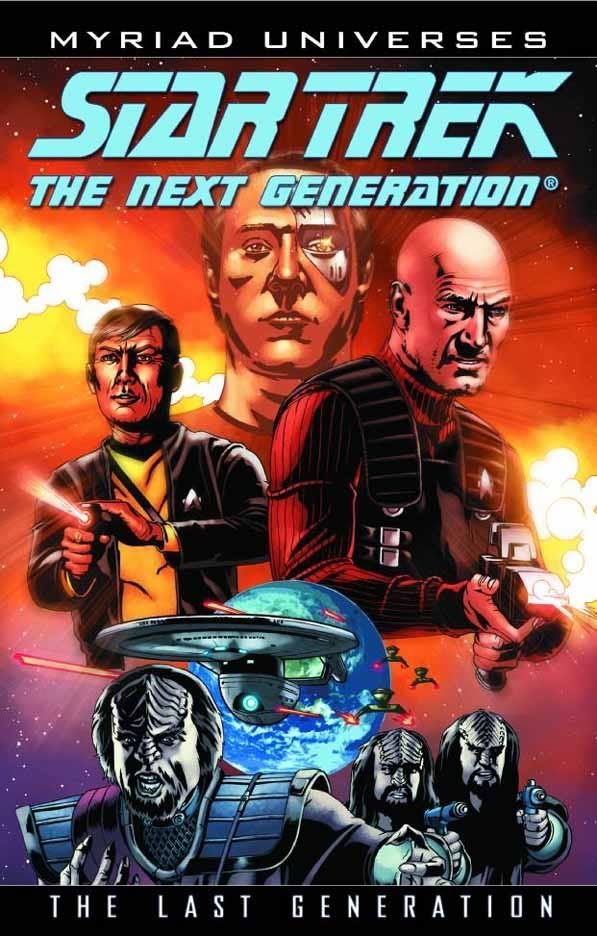
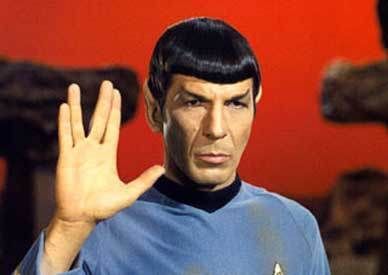
I’m a member of the older half of “Generation X” — born 1965 to 1985 — so I’m a product of 1970s and 1980s popular culture. Trek Nation and The Muppetsreminded me fondly of my childhood and demonstrated why the humanism of Gene Roddenberry and Jim Henson are much missed today.
The Science Channel has been showing documentaries including Ridley Scott’s Prophets of Science Fiction and Trek Nation (shades of the SciFi Channel’s Sciography) The former examines the lives and influence of various creators, while the latter is a more personal account of Rod Roddenberry’s attempts to learn more about his late father. Both show the great ideas and character flaws of their subjects.
Like Rod Roddenberry, I was only vaguely aware of the original Star Trek television series until I caught reruns in college. While I would have liked to have seen more discussion of Gene Roddenberry’s impact on space opera and genre entertainment in general, I understand his son’s desire to know his father better, despite their personality differences.
Gene Roddenberry had been a pilot in World War II and for Pan Am before becoming a police officer and eventually a TV writer and producer. His idealism helped propel Star Trek to cult popularity and inspired several real-world astronauts, despite network confusion and early cancellation. However, Roddenberry was also an emotionally absent father and a philanderer, and there was much of his swashbuckling attitude in Capt. James T. Kirk.
I knew much about the elder Roddenberry’s life and works, but Trek Nation provides interesting glimpses behind the scenes and beyond the usual interviews with actors and fans. For example, I didn’t know that acclaimed writer D.C. Fontana and Roddenberry parted on less-than-friendly terms. I still admire Gene Roddenberry’s desire to show a multiethnic future relatively free of strife and to provide parables about the Vietnam War, even if his personal life was far from a model one.
Rick Berman, Michael Piller, and Ron Moore were understandably impatient with Gene Roddenberry’s relentless optimism, since good drama does require interpersonal conflict. However, I think that they and others took the franchise in a different and ultimately less successful direction. Most of the Star Trek movies have focused on villains rather than exploration or diplomacy, and the TV spin-offs after The Next Generation — Deep Space Nine, Voyager, and Enterprise — increasingly watered down Roddenberry’s vision.
As space operas, Star Trek(and Star Wars, whose creator George Lucas gamely gives an interview to Rod Roddenberry in Trek Nation) juggle the desire for mythic archetypes with a rational, scientific universe as well as galaxy-scale, militaristic action with the power of close friendships. Author David Brin and other fans have taken sides, preferring one over the other, but I’ve enjoyed installments of both Star Trek and Star Wars for many years.
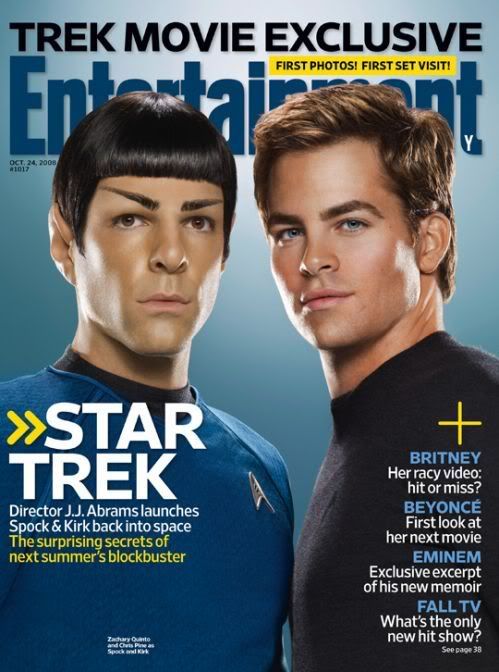
Interestingly, J.J. Abrams — whose recent cinematic reboot created an alternate continuity around the original 1960s characters with new actors — seems to understand the core of Trek better than many others at Paramount. I may not have liked Abrams’ overreliance on lens flares or his setting aside of the Next Generation‘s timeline, but he tells Rod Roddenberry in Trek Nation that even as a non-Trekkie, he understands why Kirk, Spock, McCoy and crew should reflect the aspirations of the audience and the hope for progress in uncertain times. Live long and prosper!
I definitely recommend Trek Nation to any Trekker or Trekkie, as well as to fans of speculative fiction and genre TV in general. Next up, I’ll look at the latest effort to restore another beloved franchise to the public consciousness — the Muppets!
On the other hand, Mongoose did getStar Fleet Battles and Prime Directive, which are based on the original Star Trek television series (and not its many sequels or J.J. Abrams’ parallel-universe reboot). I already have the GURPS and D20 versions of Prime Directive. I’ve been reading up on Traveller, the granddaddy of space opera RPGs, as part of preparing for my homebrew/sandbox scenarios, so a Traveller/Trek combo could be interesting. Trekkers can also look forward to a board game from WizKids, which used to make Star Wars minis for WotC.
One reason I’ve enjoyed running “Vortex” is that there’s little danger of either of my face-to-face adventuring parties overlapping in storylines with the many fantasy, horror, or other games that the current Boston-area players are participating in. I’ll blog more about their sessions soon!
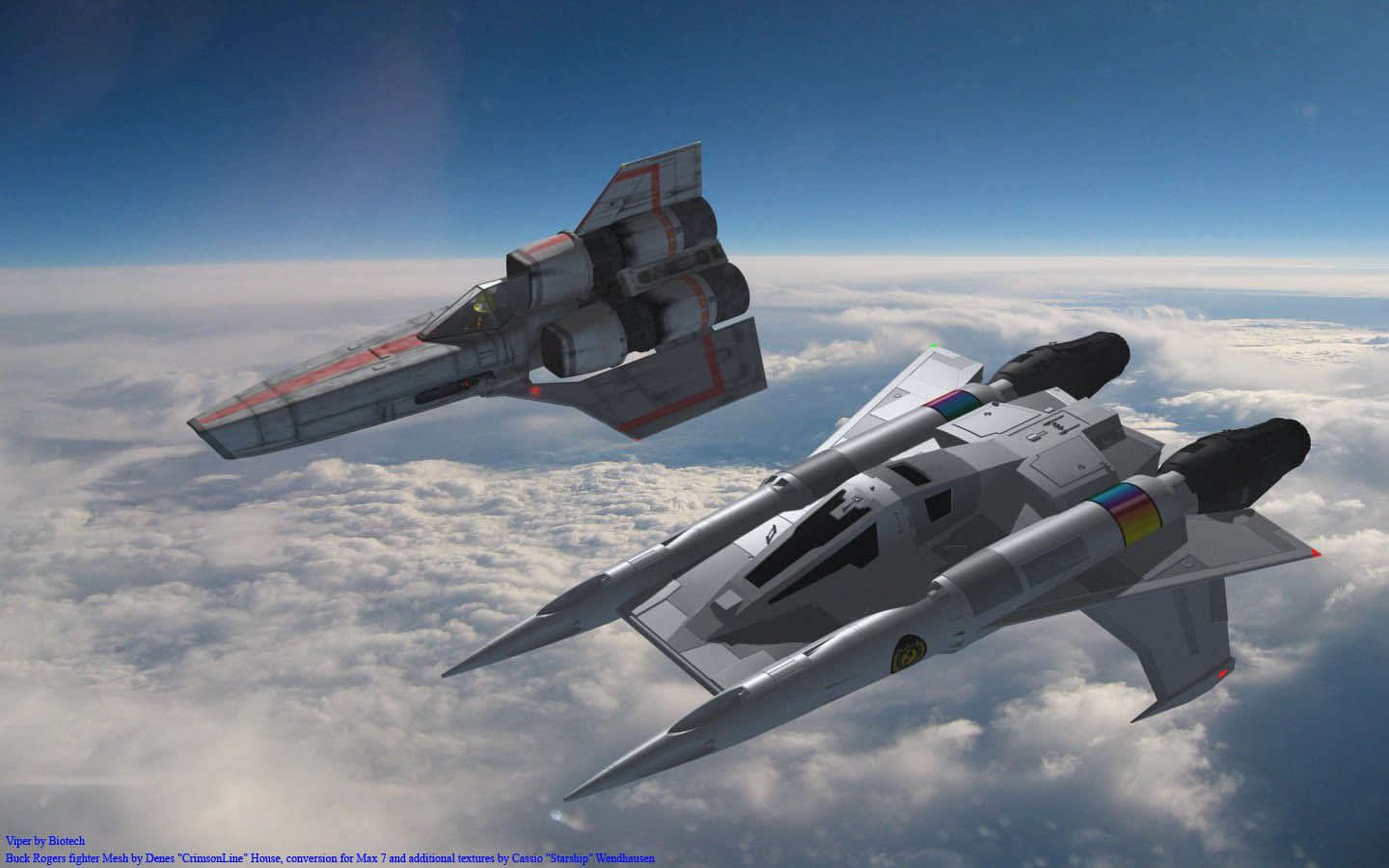
This is my fifth and last blog post (for now) looking at the new genre television season by subgenre. I’ve noted before that within speculative fiction — which starts with the question “What if?” — supernatural conspiracy shows, vampire romances, and metahuman melodramas have been more popular lately than space opera. That’s too bad, because my some of first loves in science fiction were the late-1970s TV heroes of Buck Rogers and Battlestar Galactica (see above and reruns), as well as the novels of Isaac Asimov, Robert A. Heinlein, and many others.
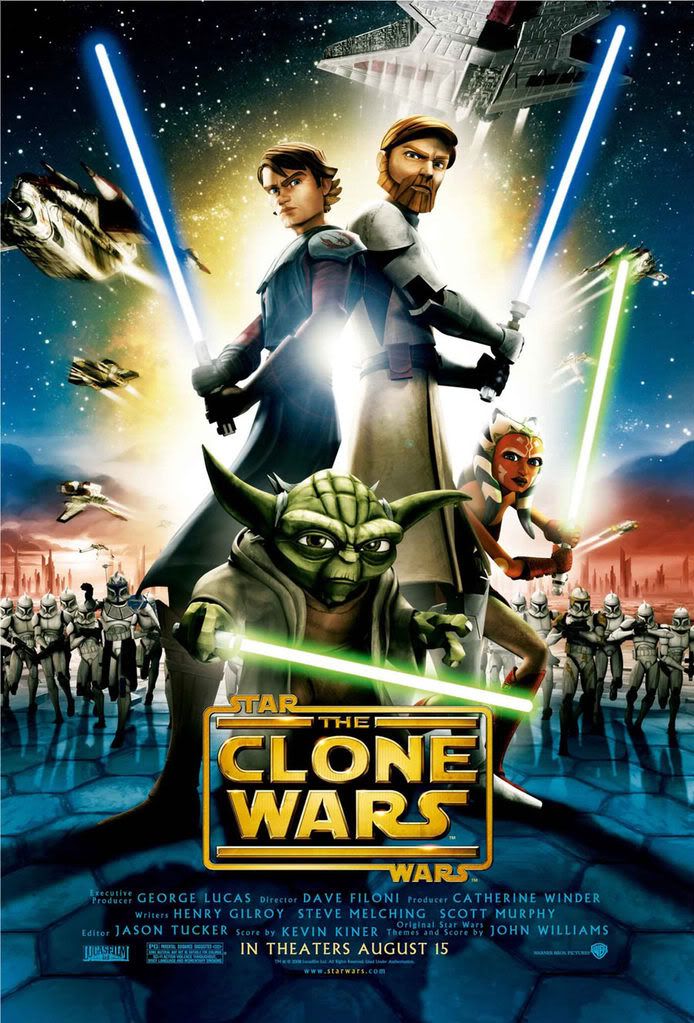
The recent success of Star Trek‘s cinematic reboot could be an early sign of the pendulum swinging back to rockets and ray guns. Not surprisingly, the best space opera on the air right now is the computer-animated Star Wars: Clone Wars. Loosely based on the Tartakovsky shorts that took place between Episode 2: Attack of the Clones and Episode 3: Revenge of the Sith, the pilot movie turned off some fans by focusing on young Padawan (Jedi apprentice) Ashoka Tano.
However, since then, I think that Clone Wars has done an excellent job of exploring and expanding various corners of George Lucas’ universe. It has humanized the clone troopers, showed how the Jedi knights are outmaneuvered by the cunning Sith, and demonstrated what Yoda described as the futility of war. Plus, Clone Wars has the blazing space and lightsaber battles, kid-friendly humor, and strange aliens we’ve come to expect from the Star Wars franchise.
I’m still on the fence about Stargate Universe. On the one hand, it’s part of the franchise established by the retro action movie and long-running Stargate SG1. On the other hand, the large conflict-ridden ensemble, dark and shaky cinematography, and focus on survival over heroism are more in the style of Battlestar Galactica: the Plan or FlashForwardthan I’d prefer.
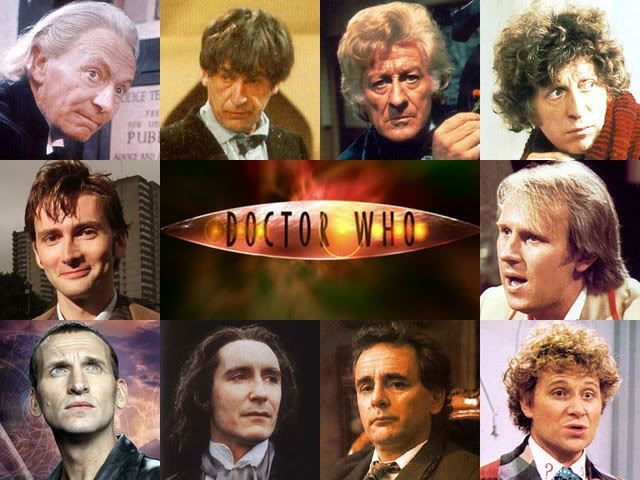
We’ll see how the major cast and crew changes coming to Doctor Who will affect that British time-travel franchise. I’ve enjoyed its mix of space opera, pseudohistorical swashbuckling, and alien horrors from the Jon Pertwee incarnation through Tom Baker and David Tennant, and I’m willing to give Matt Smith, the eleventh eponymous Time Lord, a shot. Spin-offs include the more adult-themed Torchwood,
the adolescent-aimed Sarah Jane Adventures, and the dubious reboot of K-9
and Friends. Have a Happy Halloween!
Fellow genre entertainment fans, most reviews of J.J. Abrams‘ successful cinematic reboot of the Star Trek franchise (including mine) have compared it with the late-1960s television series or the movies featuring the original crew of the U.S.S. Enterprise. However, here again is my review of Star Trek [10]: Nemesis. The previous entry in the long-running space opera series, which I screened in Boston several years ago, was better than I had expected, but unfortunately, that’s not saying much.
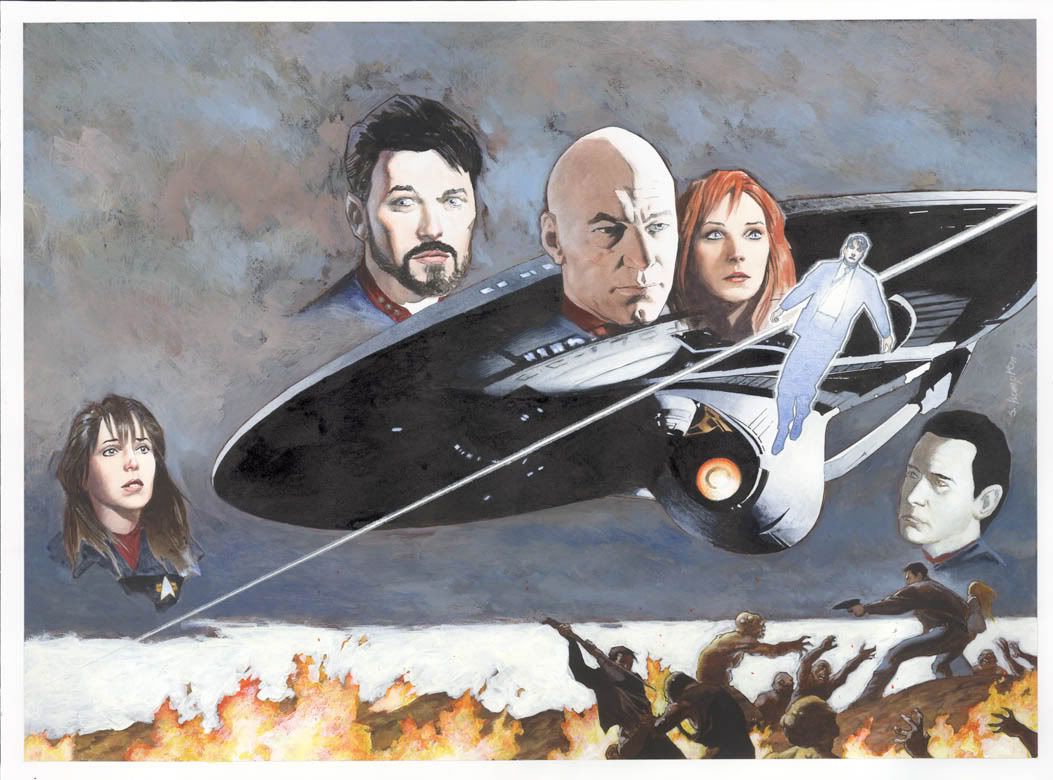
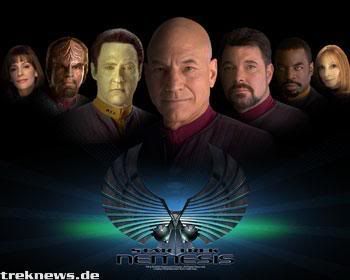
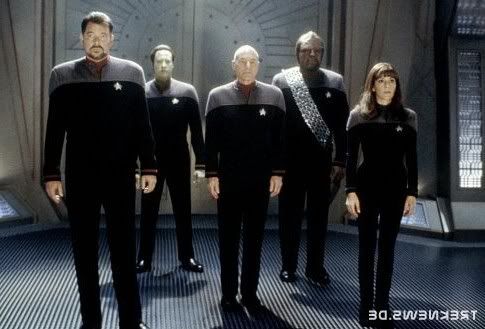
Star Trek: Nemesis cast
For many speculative fiction fans who came of age during the 1980s, Star Trek: The Next Generation‘s crew is still the best and the brightest of the franchise. This review assumes at least some familiarity with Star Trek, which has become a pop-culture phenomenon over the past 35+ years.
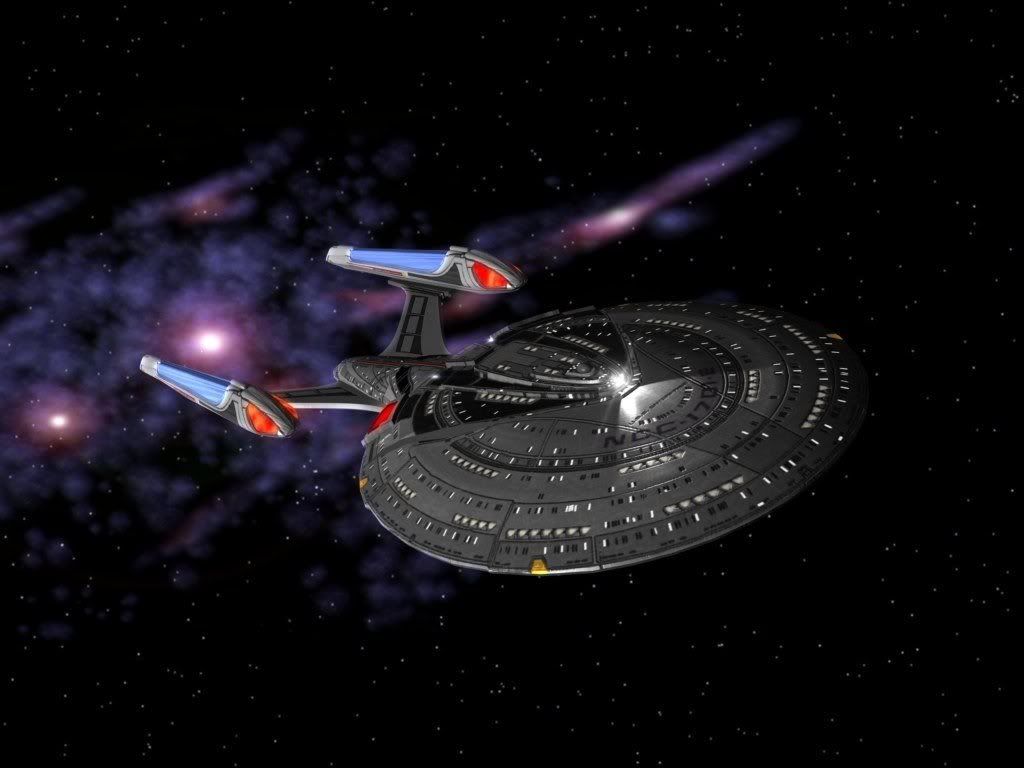
Plot and Script: Supposedly the “final journey of a generation,” this outing with the bridge crew of the U.S.S. Enterprise NCC-1701-E was written by Gladiator‘s John Logan, an avowed Trek fan.
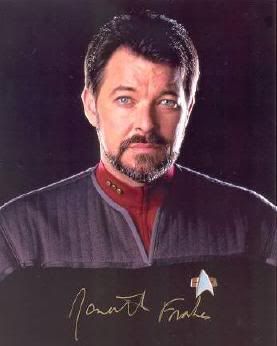
The movie opens with some long-awaited gifts to “Trekkies/Trekkers” everywhere: character development. In an early scene, Capt. Jean-Luc Picard (Patrik Stewart, also known for playing Prof. Charles Xavier in the successful X-Men superhero movies) toasts newlyweds “Cmdr. Will T. Riker (Jonathan Frakes) and Counselor Deanna Troi (Marina Sirtis), who are about to take command of a ship of their own.
The cameos by Wil Wheaton (as Ensign Wesley Crusher) and Whoopi Goldberg (as former bartender Guinan) have been cut distressingly short, and only fans of Star Trek: Voyager may be pleased to see Kate Mulgrew as “Admiral Kathryn Janeway,” who reassigns the starship Enterprise to Romulan space to investigate a coup among the long-time foes of the United Federation of Planets.
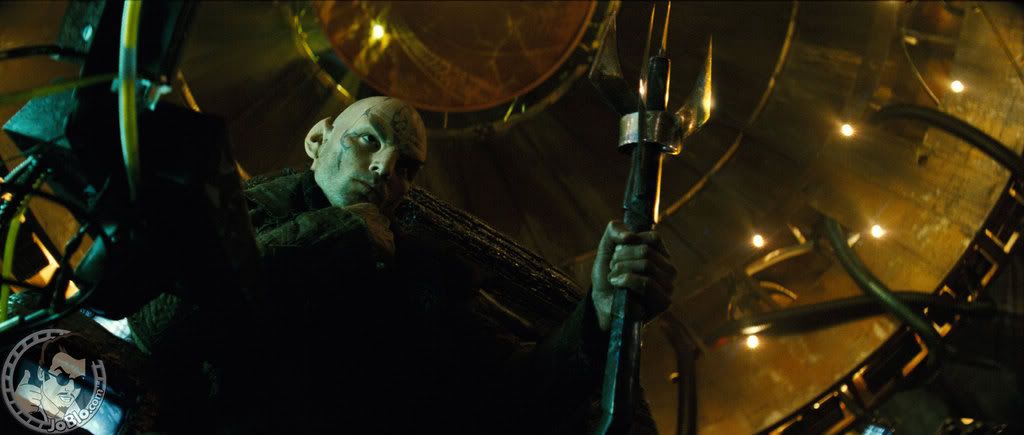
Apparently, the Remans, a Nosferatu-like subject race of the Romulan Empire, threaten to overthrow the balance of power in the quadrant under the leadership of Praetor Shinzon (Tom Hardy [now on TV’s syndicated fantasy Legend of the Seeker]), who turns out to be a deranged clone of Capt. Picard. Yes, I’ve given away some “spoilers” here, but the trailers and previews have already done so.
Like Die Another Day (James Bond 20), Nemesis raids its predecessors for plot devices. Sometimes, this works, as in the use of a nebula for a blazing space battle. However, having megalomaniac villains spouting Shakespeare and scenes of telepathic rape by a Reman viceroy (played by veteran character actor Ron Perlman [Hellboy]) have become cliches, even for Trek. The version of the script that was leaked to the Internet several months ago inspired even less confidence, however.
Star Trek II: the Wrath of Khan is widely considered to be the best movie in this series — including by me — but it has been copied a bit too slavishly in many of the subsequent flicks. Yes, Capt. James T. Kirk (William Shatner) and the 1960s-1980s crew were swashbuckling/cowboy adventurers, but Picard and company‘s strengths were as diplomats and explorers, which hasn’t really been shown in their movies.
Cameos by series veteran Spock (Leonard Nimoy) [which eventually happened in 2009’s reboot] or mischievous godling “Q” (John DeLancie) would have been more interesting than yet another crazed villain, IMHO. Even the fascinating Romulans are underused.
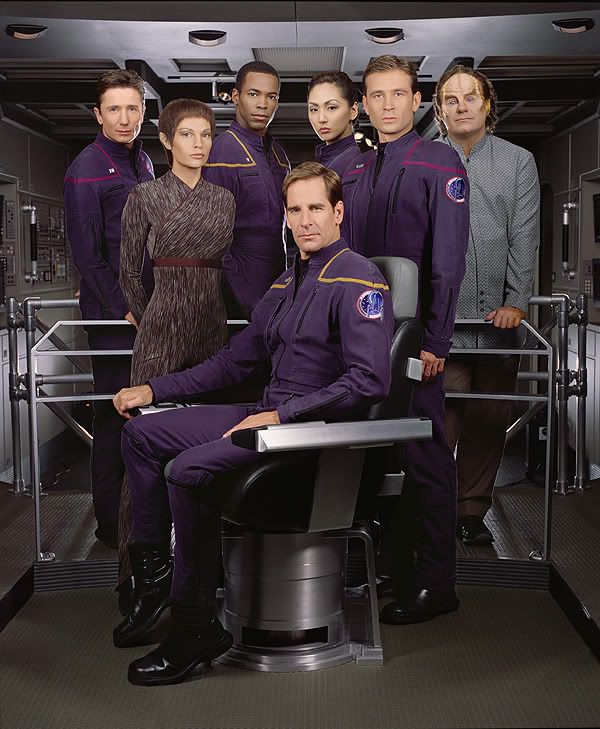
For the record, I believe that Star Trek: Deep Space Nine was about intrigue and preserving Starfleet‘s ideals on a turbulent frontier, Star Trek: Voyager was about maintaining teamwork while being very far from the comforts of Earth, and Star Trek: Enterprise hoped to tell the story of humanity’s first real steps into a then-unexplored galaxy. [As other reviews of mine noted, Enterprise got better too little, too late and was canceled because of low ratings.]
The parallels between Capt. Picard and Shinzon with Data and “B4,” another Sung prototype android, are overdrawn, but they suit the needs of the story. The issues of similarity and sacrifice were dealt with better in Wrath of Khan.
There is some “technobabble” in the dialogue, and the script pays lip service to Gene Roddenberry’s ideals of cooperation and having a sense of wonder. On the other hand, I was glad to see continuity respected, as events from the previous movies and television series were mentioned, such as the Dominion War.
Acting and Direction: “The fault lies not in the stars, but in ourselves.” Although the acting and direction were good, as a Trek fan, it was difficult to feel any sense of suspense. As always, it’s comforting to see familiar characters interacting, and the Next Gen crew was especially relaxed this time around. Director Stuart Baird does bring some fresh energy to the tired franchise, and the action scenes are decent.
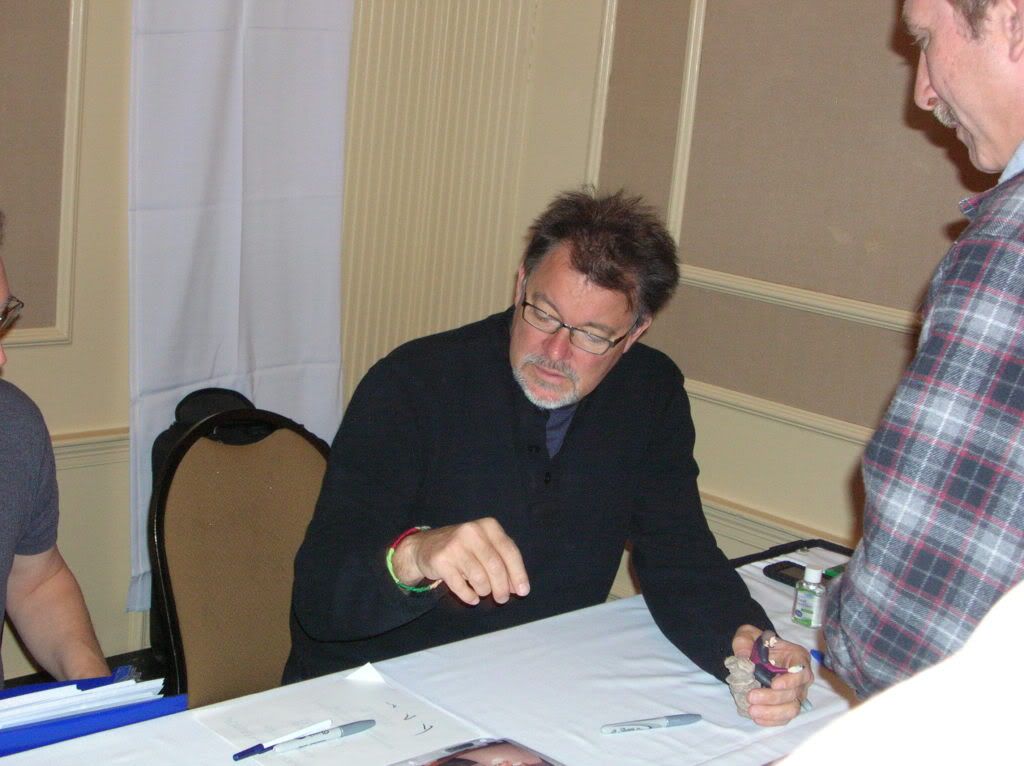
I was disappointed to again see the excellent supporting cast so underused, from the Klingon Lt. Cmdr. Worf (Michael Dorn), to Dr. Beverly Crusher (Gates McFadden), to chief engineer Lt. Cmdr. Geordi LaForge (LeVar Burton). I’ve been fortunate to meet most of these actors at conventions over the years.
Cinematography: From a dune-buggy chase to the aforementioned battle between capital ships, the action is certainly magnified over the previous Star Trek [9]: Insurrection, again evoking Wrath of Khan and even First Contact [8].
The devastation aboard damaged ships is better shown than in the past (I understand that computer-generated imagery was used rather than models this time), but the hand-to-hand fights are still a combination of poor phaser/disruptor aim and fisticuffs. The soundtrack and end credits were more unobtrusive than in the past.
Summary: Overall, I’d give Nemesis only about a 7 out of 10. Does that correspond with the “even/odd-numbered curse?” As I’ve noted before, as one of the largest fictional universes, Star Trek has some of the best and some of the worst examples of space opera. Much of the best Trek material lately hasn’t been onscreen or in the numerous spin-off novels and comic books, but in the role-playing games [I’ve only glanced at video games, board games, and multiplayer online games]. Here are my ratings (out of 10) for the various Star Trek series:
Fellow genre entertainment fans, on Saturday, 9 May 2009, Janice and I met Beruk A. and Thomas K.Y. at the AMC Framingham multiplex to screen the newest Star Trek movie. I enjoyed the film more than I expected to! Although I’m a fan of Gene Roddenberry’s long-running space opera franchise, this review is intended for anyone, including those unfamiliar withStar Trek.
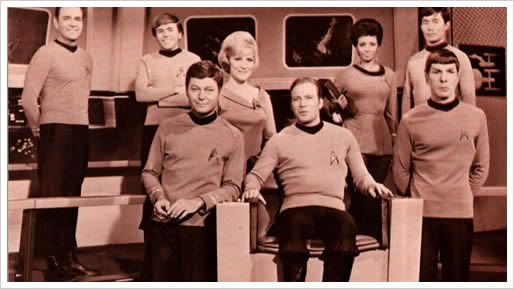
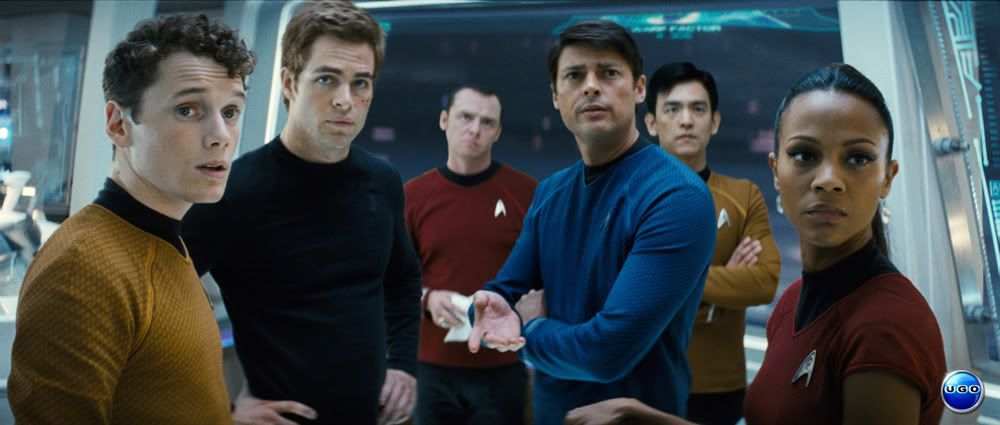
A familiar command crew for a new Enterprise
In the mid- to late 1960s, the originalStar Trek television series became a popular-culture phenomenon, despite being canceled after only three seasons because of low ratings. Trek‘s appeal has endured not only because of its optimistic vision of the future, in which humanity has put aside its differences to explore the galaxy, but also because of its depiction of the crew of the U.S.S. Enterprise, whose intelligence and friendships enabled it to meet any challenge.
There was also sociopolitical allegory, fisticuffs and starship battles, swinging sex, and technobabble — and some excellent speculative fiction by respected authors. The original series (TOS) has influenced all genre television since with its archetypal characters, episode plots, and ensemble cast, even if it didn’t invent each of these things. While special effects have improved since early Doctor Who and TOS, the sometimes hammy acting and quasi-military Starfleet of the United Federation of Planets have been copied (Stargate SG1), parodied (Galaxy Quest), and reacted to (Battlestar Galactica) for 40 years.
I have many fond memories of watching TOS reruns while playing foosball late at night in college. The subsequent movies veered from campy to melodramatic, and the spin-off TV series — The Animated Series, The Next Generation, Deep Space Nine, Voyager, and Enterprise — had many fine moments, but they gradually lost focus and audience attention. Star Trek: Nemesis, the most recent flick in that shared universe, earned lackluster box office and reviews.
J.J. Abrams, who is best known for producing television’s Lost, has managed to update and shake up the Star Trek universe while preserving much of what made it compelling. I came out of the theater proud to be wearing my Trek T-shirt (Roddenberry was one of the first to realize the potential of licensed merchandise) and in the company of fellow “Trekkers” (or “Trekkies,” depending on your preference).
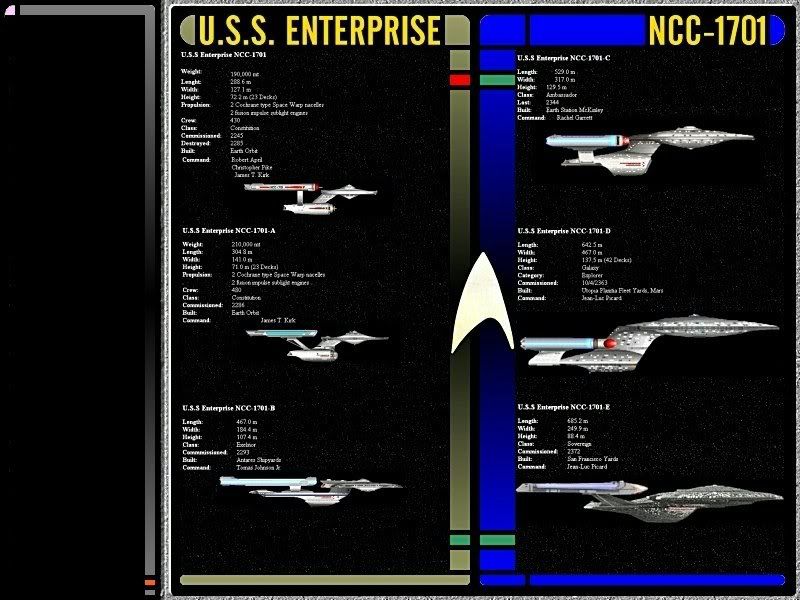
Without giving away any “spoilers” (which some of the reviews linked to in this review have) about the plot, the new Star Trek shows how the beloved command crew of the U.S.S. Enterprise NCC 1701came together for the first time, about 200 years from now. In a significant twist, Nero, a nefarious Romulan miner from the even more-distant future, comes back seeking revenge on the logical (and also pointy-eared) Vulcans for the destruction of his homeworld.
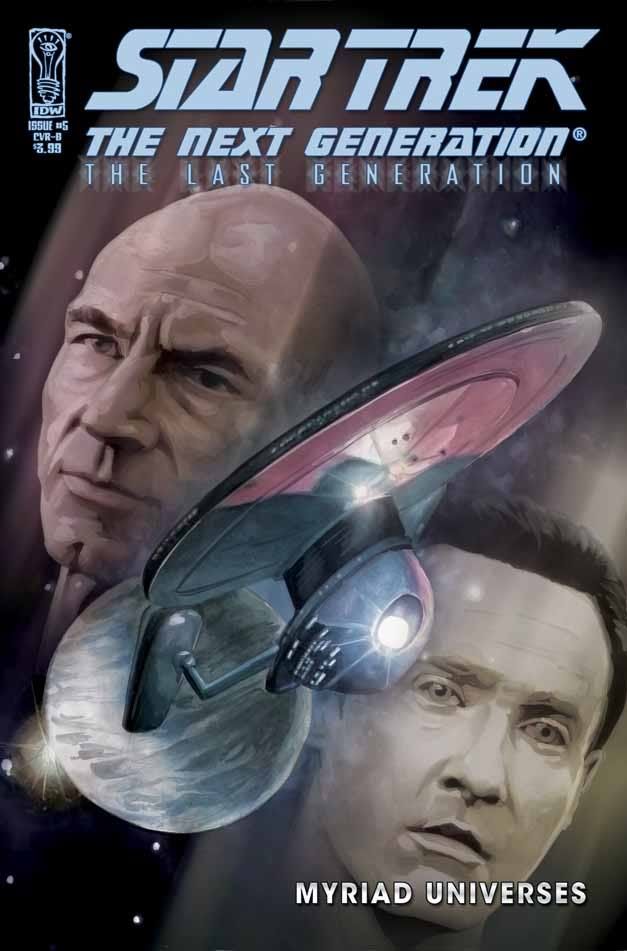
The break in the timeline from previously established continuity happens in the opening scene, as the U.S.S. Kelvin is attacked by Nero’s massive space vessel, just as James T. Kirk is born. (A comic book miniseries ties this back to The Next Generation, if you care.) Many more people will suffer from the renegade Romulan’s plans, even as years pass and we see Kirk become a restless youth and a brash Starfleet cadet.
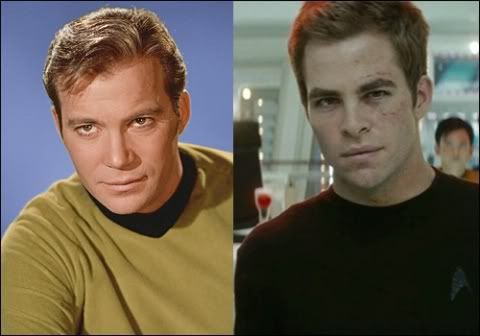
I was very impressed with the casting. The younger actors recreate the roles of their predecessors without sinking into mimicry or comedic impressions. Chris Pine hasthe right mix of cockiness and empathy for Kirk, mostly avoiding the often-imitated cadences of William Shatner’s line readings. The attractive Zoe Saldana is a catalyst as linguist Nyota Uhura, originally played by African-American pioneer Nichelle Nichols.
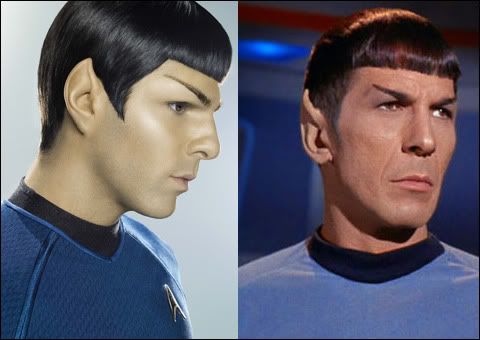
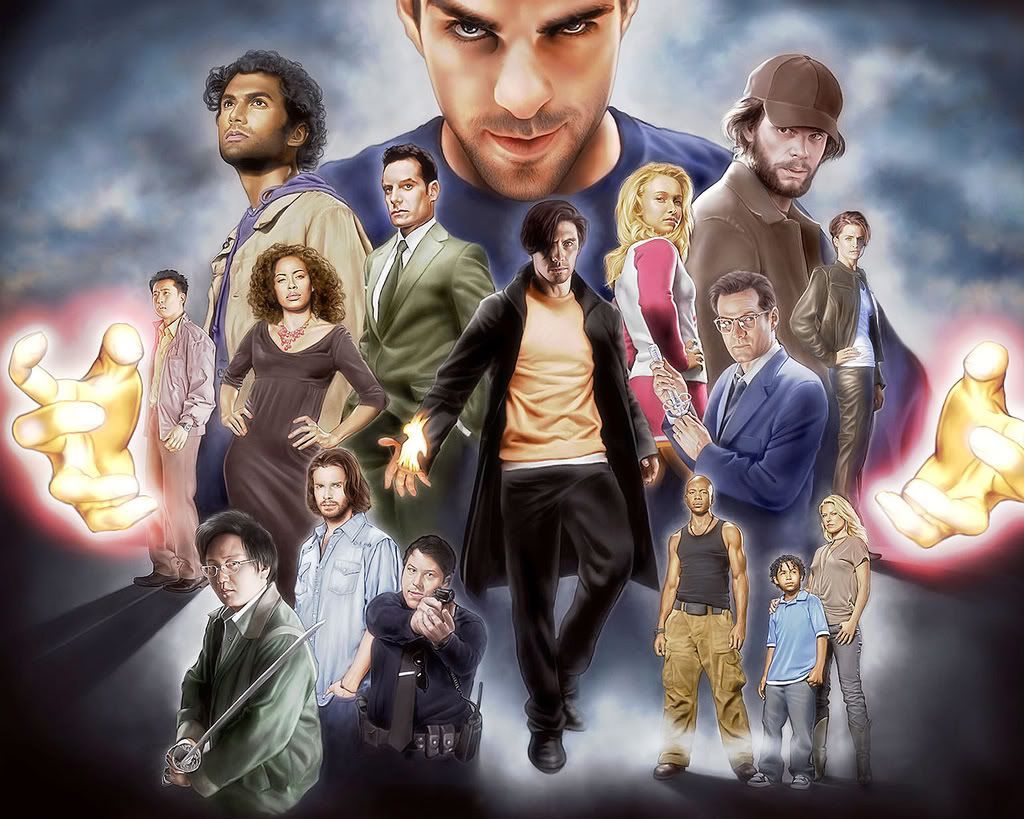
Zach Quinto, best known as the villainous Sylar on Heroes, is fascinating as the half-Vulcan/half-human Spock. Although he doesn’t have Leonard Nimoy’s baritone, he does hold his own, even opposite “Spock Prime” (thanks to the aforementioned time travel). Quinto’s Spock is torn between his logical Vulcan and emotional human sides — represented by Ben Cross, taking over for the great Mark Lenard as Ambassador Sarek, and Winona Ryder, as mother Amanda in truncated scenes, respectively.
Genre vet Bruce Greenwood plays Captain Christopher Pike, originally depicted by Jeffrey Hunter. Pike serves as a mentor to young Spock and Kirk, and is the subject of torture by Nero, played by Troy and Hulk‘s Eric Bana. Nero isn’t a villain on the level of Ricardo Montalban’s Khan Noonien Singh, but he’s better than the Romulan/Reman baddies of Star Trek: Nemesis. (I’ll repost my review of that later.)
My favorite was Karl Urban (Eomer in the Lord of the Rings films) as Dr. Leonard “Bones” McCoy. Although Urban isn’t quite the “old country doctor” as played by DeForest Kelley, his grumpiness and humanism perfectly complement Kirk’s id and Spock’s superego. Of a talented cast, Urban comes closest to replicating the spirit of the original actor and character.
The bridge of the starship Enterprise is eventually rounded out by John Cho as the swashbuckling Hikaru Sulu (replacing George Takei), Anton Yelchin as young ensign Pavel Chekov (originally Walter Koenig), and comic actor Simon Pegg capturing the enthusiasm of genius engineer Montgomery “Scotty” Scott (originated by James Doohan). I’ve been fortunate enough to meet many of the supporting actors at conventions over the years, and I was pleased that their characters were given more to do than they had been in several prior movies.
The script is witty, balancing the gravity of Kirk and Spock’s tragic family histories with the lively banter and catchphrases unique to Trek. In the process of saving starships and even planets, it was heartwarming to see Kirk, Bones, and Spock become the “big three” and to see the entire crew — and, by extension, the audience — become an unflappable team and family. The heroic optimism of Trek is relatively rare in space opera right now, and as relevant for the challenges we face with President Barack Obama as for those faced during President John F. Kennedy’s administration.
There is more action than in any previous Star Trek, partly thanks to a younger cast and a bigger budget. Fortunately, the funny quips and moments of character development make the pyrotechnics and loud space battles tolerable. Some of the physical comedy, as in a scene when Kirk is chased by a huge Cloverfield-style monster while marooned on an ice planet, or when Scotty is accidentally transported (teleported) into a water-circulation system, are classic Trek tropes that were lampooned in Galaxy Questbut balance the seriousness of the underlying story.
Speaking of the story, while I had reservations about the use of time travel and Romulans, I was pleased to see that bringing together the Enterprise crew was more important than the usual plot devices or villains. Originally, I would have preferred to continue forward from the era of The Next Generation/Deep Space Nine, but I understand Abrams’ reasons for going back to the best-known incarnation.
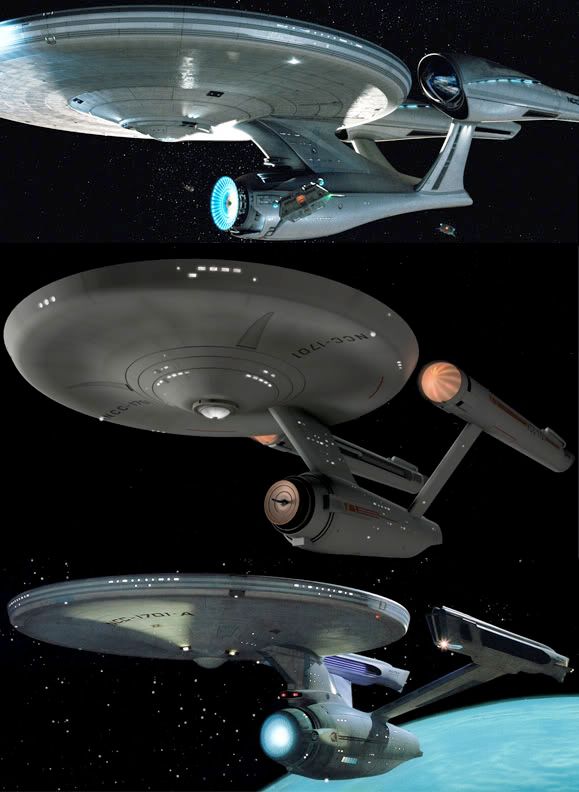
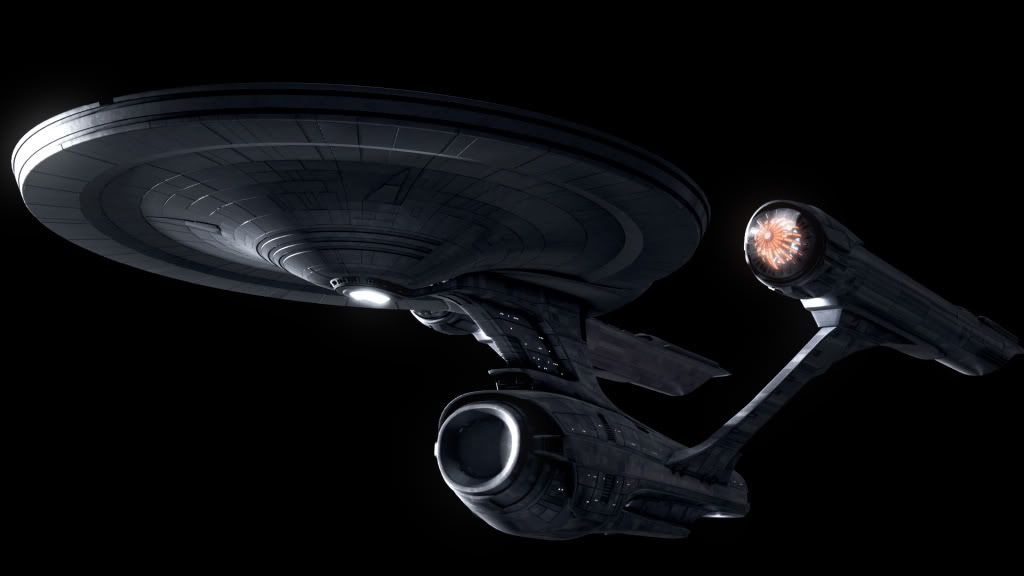
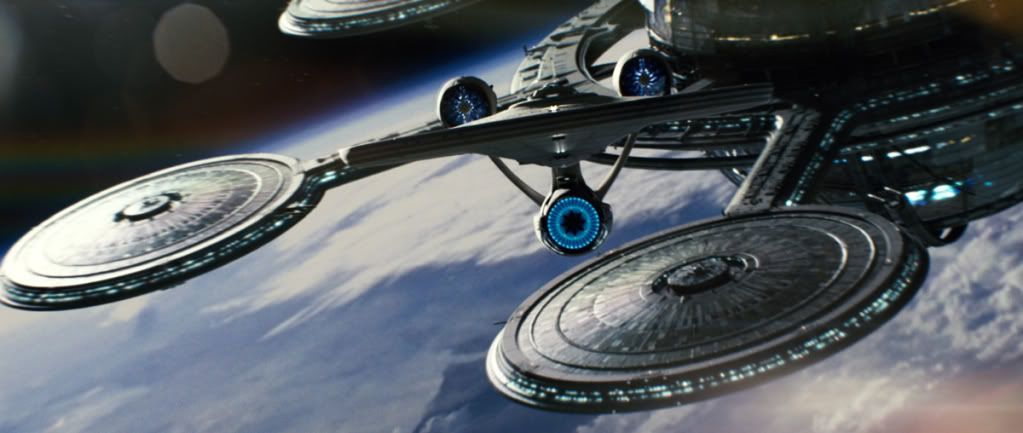
The visual effects were spectacular, and from the opening attack on the Kelvin to the final scenes of the Enterprise traversing interstellar space, the vessels and battles haven’t looked this good since Star Trek II: Wrath of Khan or Star Trek: First Contact. Perceptive fans will spot or hear references to Klingons, Tribbles, Cardassians, Adm. Archer, and the Kobayashi Maru test, but such allusions to the larger franchise don’t slow down the pace (although neither did any of the intellectual questioning of TOS).
Some fans and critics have complained that the retro/futuristic bridge set looks like an Apple Store, but I think that makes sense, given how our technology has evolved from the 1960s to the 2000s. Handheld communicators, portable computers, and graphical interfaces have caught up with the props of TOS.
On the other hand, much of science behind this science fiction isn’t much more plausible than in George Lucas’ Star Warsfilms, with exotic “red matter” creating black holes, some potential paradoxes, and a lack of explanation for standard Trek tech, such as transporters, force fields, invisibility cloaks, and warp drive. Still, the starship Enterprise is sleek but still recognizable, and I thought the updated costumes did a good job of evoking the era of beehive hairdos and go-go boots without looking dated.
The soundtrack is serviceable, but I have to admit that my emotions were touched upon hearing Alexander Courage’s original music and Nimoy’s voice-over late in the movie. I think that Abrams has succeeded in making an exciting movie that is still Star Trek, and I hope that both fellow fans and general audiences will rediscover what some of us have enjoyed for so long. Of the remakes I’ve seen, this is one of the best.
I’d give the new Star Trek a 9 out of 10, four stars, or an A. The movie is rated PG-13 for violence and some language. As Vulcans say, “Live long and prosper!”




 Gene's Worlds