“Vanished Lands” new telecom team, Update 18 — Waking nightmares

Heroic fantasy art
Fantasy heroes

Note: As I continue consolidating and migrating among my various blogs, some posts will be mirrored.

Fellow role-players, here is my update for Session 18 of the latest adventuring party in my “Vanished Landsheroic fantasy campaign setting. The teleconferencing team met on Sunday, 27 February 2011, and has been using Pathfinder, Skype, and an online dice roller.

In one ancient world, there was a region where strange majicks and demihuman races thrived. After “Holy Steel‘s” journey to the distant empire of Khemet, another motley group gathered in the northwestern “Vanished Lands” to explore a world full of perils and wonders….

>>Telecom party Player Character roster, as of spring 2011:

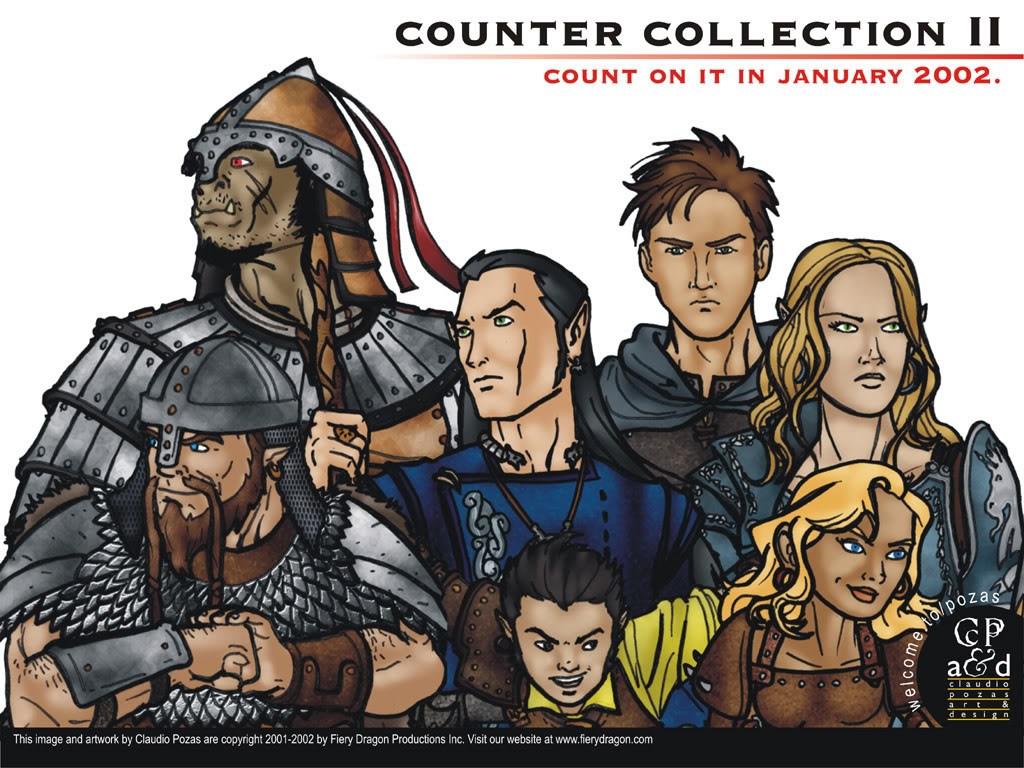
-“Kovar” [Beruk A.]-male Half-Orc/Saganim human Paladin of Mithras; raised as an orphan; contact of the Order of the Golden Lion; LGn, Lvl. 2

-“Davven ‘Digger’ Hollysharp” [Robert A.S.]-male Faldine Halfling archaeologist (Tallfellow Rogue) from a pipeweed farm in Tarken; contact of “Tunnel” [Stuart C.G.]; CGn, Age 45, Lvl. 2

-“Asish Chen Ti” [Byron V.O.]-male Tsucharim human archer (Mongol-style Ranger), escaped from service to Nannuattan (eastern Dark Elf) Wizard Arbalas; contact of “Sukhov” [Beruk A.] and owner of Akita dog Genghis and horse Onimusha; NGl, Age 20, Lvl. 2

-“Jovinda Halflight” [Sammy H.]-female Half-Elf (Grugach/Hifalendorin) Cleric of Mekkil, goddess of nature; owner of horse Wyth-Amoi, or “Wind Spirit”; NGl, Age 23, Lvl. 2

-“Kazuo Takenaga” [Taum D’A.]-male Nezumi (Rat-kin) Monk from the Zedu kingdom in the Therud Forest; LNg, Age 20, Lvl. 2

-“Favelhorn Riftbringer” [Dexter V.H./absent]-male Mountain Dwarf Summoner; CGn, Age 51, Lvl. 1

-“Gawain Keary” [Paul J./absent]-male Saganim human Illusionist (proto-Celtic Wizard) and contact of “Kimo” [Beruk A.]; NGc, Age 20, Lvl. 1

15 to 16 August 1229 B.C.E.:” After meeting in the Wisalef Forest, the travelers had encountered hostile Centaurs, followers of the mysterious Vappu Lahja. Returning northwest across the Plains of Sathendo, the group found an abandoned hamlet and stayed in a haunted inn.

The brave adventurers revisit the upstairs rooms at the “Mellow Mule” in the Hifalendorin (proto-Western European) human community of Alarn. Noting that one room contained a man hanged upside-down, scholar Digger speculates that the strange items in each chamber may have a symbolic meaning similar to the Tarot deck or Skaevingol (Norse) beliefs.

In the first guest room on the right, Kovar had seen a raven, which left behind a black feather. Digger and Jovinda theorize that it could be an omen or a sign for judgment and justice. Across the hall, all the furniture is suspended from the ceiling, possibly reflecting a reversed Tarot card (emphasizing negative connotations) or the Wheel of destiny.

The shards of a magical mirror in the second room on the right showed the Half-Orc Paladin eyes that were not his own. Asish searches for tracks, and Kazuo questions whether his companions are reading too much into the manifestations of unquiet spirits. Still, Digger and Jovinda note that mirrors can be portals or symbolize the Magician or soul.

The opposite room is covered in frost, suggesting a trap or Hell (as well as the recent presence of Undead). Gawain stays downstairs with “Sir Bonner of Runnymeade” [Jon W.B./Non-Player Character], who is recovering from being captured by two Korred.

In the third room on the right, the furniture had been thrust out the window, leaving a maw of dangerous and animated splinters. Across from it is a room where decay had rapidly advanced, which Halfling Rogue Digger says could represent the Fool or the Wheel card.

After determining that a circle scratched on the floor of the last room on the right isn’t broken, Asish cuts down the hanged man. Kovar carries the unfortunate victim, whom Sir Bonner positively identifies as the innkeeper. Jovinda casts Detect Magic, which shows that the man was levitated into place and that the horse in the room in the last room on the left was affected by Teleport and Eviscerate spells.

Digger observes that the slain steed could represent the Death or Tower card, but Jovinda notes that just as the Fey Korred spoke in riddles and metaphors, perhaps the rooms reflect an unnatural progression. The raven and reverse-gravity rooms could be warnings of a disruption in the natural order, says the Grugach Cleric of Mekkil, while the cold and mirror chambers might be a trap for the soul.

Jovinda says the rooms with decay and splinters could demonstrate a separation of the physical from the spiritual, echoing the ritual purification that Kazuo and Digger endured on their way to meeting — and being influenced by — Vappu Lahja. The priestess says the last rooms in the inn (with the horse and hanged man) could depict a final destruction of the body and soul. The group agrees that her interpretation makes sense.

Asish takes Kazuo to patrol the area around Alarn. They find the print of a huge bare foot, suggesting that Connacht and Maldrod weren’t lying about a giant passing through. The Ranger and Monk retrieve a runaway horse for Sir Bonner. Gawain and Kovar watch the “Mellow Mule” and the knight.

Jovinda finds that the innkeeper was exsanguinated elsewhere before he was hung, and she and Digger walk along the Aspar River looking for animals to talk to. A monstrous eel leaps out at them!

Tsucharim rider Asish’s arrows hits the slimy serpent, which falls short of swallowing Digger. Kovar throws a spear, and Kazuo charges, but his blows have little effect. Jovinda casts Calm Animal and Talk With Animals, persuading the hungry eel to swim north, away from human habitation.

Kazuo objects to the use of any mind-affecting spells but says he’ll respect Jovinda’s judgment. The Monk also disagrees with Kovar and others, who feel that the dangerous monster should have been slain.

Asish describes the tracks he found, which may have been left by a storm giant. Jovinda and Digger are surprised that the two Korred may have been literal in their description of what scared off the peasants after all.

Digger and Kazuo say that the storm, serpent, and giant, combined with the haunted inn and Korred, are more likely to be responsible for Alarn’s abandonment than the followers of Vappu Lahja. Kovar and Asish still don’t trust the woman and hope to find human farmers to verify what happened before riding on to the city of Nadwi….

I’m glad that most of you were able to participate in our return to the regular Sunday night time slot! Dexter and Paul, let us know when and if “Favelhorn” and “Gawain” will be able to rejoin us. A few of you have mentioned alternatives to Skype, Scriblink, and the online dice roller we’ve been using — feel free to post links to the Google Group message board.

Prospective gamer Rich L., who sat in on “VortexTeam 1 in this past Monday’s FATE 3e Starblazer Adventures space opera session, has also expressed interest in checking out the fantasy campaign. Since he lives near me, I may have him come over to check out the game at some point, if you’re amenable, but it’s not urgent.

In the meantime, while I continue to look at various retro-clones and rules-light systems such as Labyrinth Lord, please make sure that your character records are up to date. I don’t anticipate skipping any sessions in March, but let me know your own schedules. Take it easy, and happy gaming! -Gene

Latest “Vanished Lands” telecom team, Update 17 — Haunted inn

The "Vanished Lands" heroic fantasy campaign setting
The "Vanished Lands"

Fellow role-players, here is my update for Session 17 of the latest adventuring party in my “Vanished Landsheroic fantasy campaign setting. The teleconferencing team met on Saturday, 19 February 2011, and has been using Pathfinder, Skype, and an online dice roller.

In one ancient world, there was a region where strange majicks and demihuman races thrived. After “Holy Steel‘s” journey to the distant empire of Khemet, another motley group gathered in the northwestern “Vanished Lands” to explore a world full of perils and wonders….

>>Telecom party Player Character roster, as of spring 2011:

-“Kovar” [Beruk A.]-male Half-Orc/Saganim human Paladin of Mithras; raised as an orphan; contact of the Order of the Golden Lion; LGn, Lvl. 2

-“Davven ‘Digger‘ Hollysharp” [Robert A.S.]-male Faldine Halfling archaeologist (Tallfellow Rogue) from a pipeweed farm in Tarken; contact of “Tunnel” [Stuart C.G.]; CGn, Age 45, Lvl. 2

-“Asish Chen Ti” [Byron V.O.]-male Tsucharim human archer (Mongol-style Ranger), escaped from service to Nannuattan (eastern Dark Elf) Wizard Arbalas; contact of “Sukhov” [Beruk A.] and owner of Akita dog Genghis and horse Onimusha; NGl, Age 20, Lvl. 2

-“Jovinda Halflight” [Sammy H.]-female Half-Elf (Grugach/Hifalendorin) Cleric of Mekkil, goddess of nature; owner of horse Wyth-Amoi, or “Wind Spirit”; NGl, Age 23, Lvl. 2

-“Kazuo Takenaga” [Taum D’A.]-male Nezumi (Rat-kin) Monk from the Zedu kingdom in the Therud Forest; LNg, Age 20, Lvl. 2

-“Favelhorn Riftbringer” [Dexter V.H./absent]-male Mountain Dwarf Summoner; CGn, Age 51, Lvl. 1

-“Gawain Keary” [Paul J./absent]-male Saganim human Illusionist (proto-Celtic Wizard) and contact of “Kimo” [Beruk A.]; NGc, Age 20, Lvl. 1

14 to 15 August 1229 B.C.E.:” The unlikely band of adventurers had tracked hostile Centaurs from the edge of the Wisalef Forest to a mysterious woman named Vappu Lahja. Returning northwest across the Plains of Sathendo, the party had found the Hifalendorin (proto-Western European) human hamlet of Alarn deserted, except for two mischievous Korred and their prisoner.

Digger and Jovinda question hairy duo Connacht and Maldrod in the cellar of the “Mellow Mule” inn. The Korred claim that the Halfling and Hifalendorin peasants had been driven away by a surly giant who recently stomped through the area. He had been followed by a fearsome storm and a huge serpent in the Aspar River, further scattering the local inhabitants, according to the Fey.

In the inn’s common room, Asish and Kazuo talk with “Sir Bonner of Runnymeade” [Jon B./Non-Player Characer], whom the Korred had released from a Stone-Shaped cell. The tired knight explains that he had stayed in Alarn for some time while searching for a worthy quest.

Sir Bonner notes that some people had abandoned Alarn after the hamlet was visited by Centaurs and Satyrs, possibly followers of Vappu Lahja. He went on patrol into the surrounding wilderness, only to be ambushed by the devious Korred.

Kovar rides in to provide backup, leaving Gawain with the other steeds. The Half-Orc sharpens his weapons, strengthening Connacht and Maldrod’s desire to leave. Digger and Jovinda eventually allow the Korred to return to the Wisalef Forest, on the condition that they find or release other refugees and send them home.

The party reunites to compare notes. Digger thinks that the Korreds’ tall tale is nothing more, but Kazuo observes that they could be speaking in metaphor or riddles. Jovinda reminds her companions that the Fey don’t adhere to the same moral codes as humans do and that their sense of priorities is skewed by their long lives and chaotic nature.

Digger, Kazuo, and Gawain point out that the giant, storm, and serpent could have been illusions cast by mischievous Fey folk. Alarn is empty but otherwise undamaged. The wanderers agree to look for more tracks in the morning.

Archer Asish stokes a fire in the hearth and sets watches for the night. Kovar is still wary of Digger and Kazuo, whose judgment has been compromised since they underwent Centaur rituals and met Vappu Lajha. Nimble Kazuo and arcanist Gawain have an uneventful first watch.

During the second watch, armored Kovar leaves wary Digger in the common room to check upstairs. He climbs the creaky stairs and finds a long hallway with four doors on either side [cue spooky music]. In the first room on the right, the Paladin of Mithras, lord of oaths, sees undisturbed beddings and a crow sitting in the open window.

In the next guest room, Kovar finds a broken mirror on the floor. He looks at the shards and is surprised to see eyes that are not his own looking back! Quickly moving on, the brave holy warrior enters a room whose furniture seems to have been thrown out the window. As he examines the damaged sill, a splinter leaps out and penetrates his gauntlet!

At the last room on the right, Kovar is unable to open the door all the way because of a weight behind it, possibly a corpse. The wise Paladin returns to Davven, and they agree to tell the others later about the strange findings. Asish and Jovinda’s watch is quiet, and they let Sir Bonner rest.

Digger keeps track of the remaining provisions at breakfast the next morning. Kovar and Jovinda lead Asish, Digger, and Kazuo upstairs, while Gawain stays with Sir Bonner. The crow left a feather on the straw-stuffed mattress of the first room. Rogue Digger grabs a sheet, which Kovar uses to gather up the pieces of the enchanted mirror in the next chamber for later study.

On the left side, the first room’s furniture is all suspended from the ceiling! Digger tosses in a copper coin, which floats in midair. Everything in the second room is covered in ice, and Kovar upends the bed to reveal a frozen chamber pot.

The Paladin’s Detect Evil and the Cleric’s Detect Undead reveal that the building is definitely haunted, but the malicious intent or presence is diffuse. It gets stronger down the hallway, however. Ranger Asish readies weapons, and Monk Kazuo clenches his fists.

Jovinda uses her quarterstaff to test the damaged window where Kovar got the splinter. Like a maw, more toothy pieces of wood fly at the Grugach’s staff, forcing all to withdraw! The last room on the right does indeed contain a corpse — the unlucky innkeeper, hung upside down.

Digger notes that his position is reminiscent of the Hanged Man card in the Tarot deck, as well as certain aspects of Skaevingol [Norse] beliefs. Barbari raider Asish recommends burning down the “Mellow Mule” as a precaution, but Jovinda observes that even though evil may have been gathering before Alarn was abandoned, destroying the inn won’t necessarily dispel it.

In the last room on the left, the group is horrified to see the remains of Sir Bonner’s horse strewn about like some unholy decoration. Jovinda suspects the Unseelie Court, or malevolent faerie folk, rather than followers of Vappu Lahja. This comes as small relief to Digger and Kazuo, as they agree to press on toward the city of Nadwi….

I hope that all of you enjoyed our latest game as much as I did! Dexter and Paul, let us know when and if you’ll be able to rejoin us — both “Favelhorn” and “Gawain” could be helpful as your party continues its adventures. Rob will be out next weekend.

Paul and Beruk, I look forward to seeing you and the rest of Team 2 for tonight’s FATE 3e Starblazer Adventures: “Vortexspace opera! Erik B.L. and family’s visit to the Boston area from New York went well this past weekend. Note that we’ll be moving back to Sundays as of the next “Vanished Lands” session, on 27 February 2011. Take it easy, -Gene

10 August 2010: “Vortex” decisions

The Milky Way galaxy

Fellow role-players, here are some notes from the Boston-area group’s “Vortex” planning session of Monday, 9 August 2010, which I hosted at my second duplex in Needham Heights, Massachusetts.

>>Favorite science fiction and expectations

I’ve already posted about influences on my homebrew space opera setting, including the novels of Isaac Asimov, movies such as The Fifth Element, television shows including the original Battlestar Galactica, and games like Star Frontiers. I asked everyone about their favorites and found interest in traditional pulp fiction.

Paul J. cited Star Trek: the Next Generation and Deep Space Nine (“DS9”), the anime Outlaw Star and Cowboy Bebop, and Joss Whedon’s space Western Firefly/Serenity (which other people liked). Beruk A. added the British TV shows Red Dwarf and Doctor Who, which mix humor and surrealism.

Greg D.C. mentioned Edgar Rice Burroughs‘ Mars/Barsoom books and the exploratory thrills of early 20th-century planetary romances. Sarah F. named the 1990s SeaQuest DSV, Lexx, and Farscape, which featured ship-based adventures and exotic environments. Josh C. added the interplanetary diplomacy and wars of Babylon 5 and DS9. Brian W. reached further back to the 1970s for Space 1999 and classic Doctor Who, which had shaky production values but strong characters and plots, not unlike the original 1960s Star Trek.

We only touched upon cyberpunk such as Blade Runner, transhumanist speculation such as David Brin’s Uplift stories, and retro steampunk like the works of Jules Verne. We missed Dave C. last night — what’s your favorite science fiction?

>>Initial Player Character concepts

Brian described his Trinoid, a trilateral amphibious alien xenobiologist and anthropologist sent to the Sol system around the time of open and official First Contact between Terrans and galactic societies. (See my earlier post regarding nonhumans.) The strange (to human eyes) being plans to observe and conserve Earth’s lifeforms.

Josh had two human proposals: an honorable sniper that’s a hybrid between an Army Ranger and a knight Templar, and a martial artist/freedom fighter similar to early Capoeira practitioners. I noted that he’d have to specify the soldier’s code of honor and organization, which he described as one that would defend humanity and seek its place in the stars. The rebel could be a colonist struggling against control of Mars or other places by Earth-based corporate or governmental authorities.

Sara designed a Tharian, an alien with wings (like a Star Frontiers Yazirian) and reptilian skin, similar to a gargoyle. Although the Tharians aren’t technologically advanced, her character’s home village was destroyed by interstellar pirates (possibly Ru’ulok). She stowed aboard the invading vessel and was subsequently found and trained as a mechanic with some larcenous skills.

Greg described “A.R.T.H.E.R.R.,” an artificial intelligence/robot probe designed by human mining conglomerate Vimeco about a century ago (in “game time”). After the megacorporation realized that it didn’t need robots to gather information from harsh environments but that it instead wanted to control access to information, the robot worked odd jobs but retained its desire and ability to explore.

Beruk created a former government operative with communications and piloting expertise. Perhaps he saw something related to First Contact on the frontier that he shouldn’t have, or maybe he made the wrong enemies (a la Outland). He’s trying to keep a low profile but find out more.

Paul, who had to leave early, talked about a Scoundrel or Jack of all trades who is actually a near-human psychic. He uses telepathy to help him persuade people to cooperate. Overall, the gamers agreed on an exploratory theme for the campaign, so the new party will probably get access to a ship sooner rather than later. Military, diplomatic, and trade missions will still be possible, but they won’t be the group’s shared focus. I’ll try to provide a mix of environments and challenges.

>>Rules systems

With help from Josh, Sara used BASH! Sci-Fi Edition for her Tharian, and she liked the relatively simple point-buy method of character building. The d6 multiplier was a turnoff to Paul and Greg, and the group agreed that since Basic Action Super Heroes was the least supported and the least familiar to everyone, the representative of rules-light and retro-clone games should be set aside.

Beruk and Josh noted that D6 Space (similar to West End Games’ old Star Wars RPG and Marvel Superheroes) and Mecha & Manga and Tomorrow Knights for D20 Mutants & Masterminds (about to have its third edition in combination with DC Adventures) were fairly simple, but the others were more interested in other games. We’ve looked at numerous science fiction systems over the past several months.

Brian and Josh used Steve Jackson Games’ Generic Universal Role-Playing System. Unfortunately, even the combination of GURPS 4e Lite and Space was complicated for character creation, especially for Brian’s Trinoid. While it might be good for “simulationist,” lethal games, GURPS also failed to get any strong support.

Beruk and Sara (and Dave, who was absent) had looked at Star Wars: Saga Edition. They noted that it was compatible with numerous other D20 science fiction games, used the familiar species/class/level system, and supported aliens and robots. However, reservations about the Force and Jedi as imbalancing and concerns about D20/Open Game License rules proliferation put Saga in second place of the games we considered.

Brian easily created his Trinoid with Fantastic Adventures in Tabletop Entertainment, or FATE 3e. Greg and Paul eagerly looked at Brian’s hardcopy of the FATE-based Dresden Files RPG, which Josh ended up borrowing (in addition to my Pathfinder Campaign Setting). Ultimately, Brian, Paul, Greg, and Josh voted for FATE, which is the rules set we’ll be using for “Vortex!”

We’ll be using a few science fiction references for FATE. Diaspora has an online System Reference Document, brief and straightforward rules descriptions, and a “hard SF” edge. Starblazer Adventures lists numerous aspects, stunts, and pulpy tropes, but it isn’t as well organized. Mindjammer supports transhuman elements such as psionics.

In addition, we’ll be using the dice-rolling mechanic from the Icons superhero game (2d6-7), Starblazer Adventures’ “gritty” starting level (15 points for skills), and phased acquisition of aspects as part of group character/party design. Brian and I will try to post more information in the coming weeks.

Beruk, as you requested, here are some links about conversions from some space operas to FATE:

I look forward to talking with all of you about your characters’ species, occupations, motivations, and FATE 3e writeups soon! -Gene

4 August 2010: “Vortex” Player Character concepts

Vortex PC party

In one future, humanity has colonized the Sol system but still struggles with population pressures, competition for resources, and ideological differences. Open and official First Contact with galactic societies, themselves at war, raises the stakes even as frontiers broaden and beckon. Who will rise to the challenge?

Fellow role-players, here are 10 steps to take as we begin considering Player Characters, a new party, and the setting for my upcoming “Vortex” space opera campaign!

1. What species is your Player Character? Human, near-human, gennie/synth, or alien? How close are you to the norm?

2. Where does your character come from? What’s his/her/its homeworld? What is the P.C.’s nationality? What was your family and educational background? How old is your P.C.?

3. What’s your current occupation? I’ve used classes based on Star Wars: Saga Edition as examples: Diplomat, Explorer, Mystic, Trader, Warrior, but you can also think of things like spy, engineer, martial artist, and space marine.

4. What are your ethics? Does your P.C. have a personal code of honor, allegiances, or duties? The more specific, the better.

5. What’s your motivation? Why is your character adventuring, and why would it be part of a mixed team? What are your shorter- and longer-term goals? We’ll also be discussing party tone and objectives.

6. Who are your associates? As I mentioned previously, what affiliations does your P.C. have with other people and organizations? What are your attitudes toward things such as other species, governments and megacorporations, or various regions or factions? This is related to our setting conversations, and as with the Pathfinder teleconferencing team, we may have group generation of supporting characters.

7. What are your other interests? Does your character have any distinguishing features? What are your hobbies or personality traits? Are there any strong likes or dislikes? Signature items or style? How will others first see you?

8. Share your initial concepts. The “Vanished Lands” Yahoo/eGroup and “Holy Steel” Google Group message boards can help us coordinate. So far, this is what I’ve heard (and feel free to elaborate here):

Paul J.: male near-human Mystic with exotic weapons

Beruk A.: male human Trader with a mysterious past, possibly a former government agent

Brian W.: Trinoid (trilateral amphibious alien) Explorer, xenobiologist

Sara F.: female alien (species and occupation to be determined)

Josh C.: male Terran human Warrior, sniper with a strong code of honor

9. Write it up. Pick two of the rules sets we’re consideringBASH, FATE, GURPS, and Saga — and see how your concept looks. I can help with nonhumans and setting notes.

10. Bring it! Be ready to discuss concepts, rules, and themes in the next week or two! Nothing’s written in stone yet, but I look forward to tightening up our ideas and role-playing! -Gene

3 August 2010: “Vortex” — why rules matter

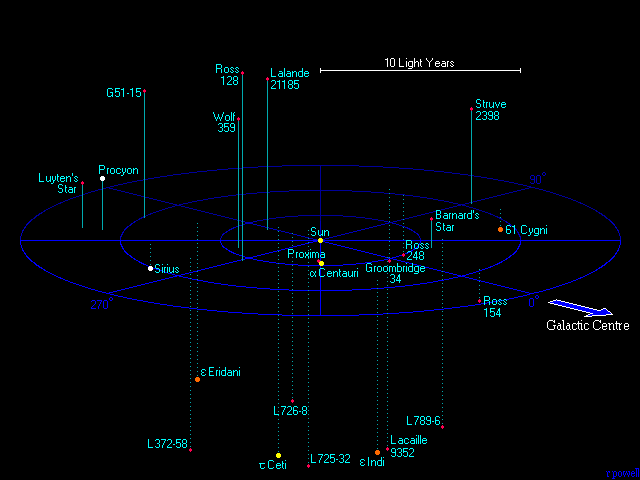
12lys

Fellow role-players, here is my last major post before we get into the specifics of group setting, Player Character, and party creation! Why does our choice of game system matter? Wouldn’t any set of generic or science fiction rules work for my upcoming “Vortex” space opera campaign?

Well, yes and no. As with my other settings — the “Vanished Lands” for fantasy, “Gaslight Grimoire” for steampunk, the superhero/espionage world of the “S.J.I.,” and the shared time/dimensional travel of “Voyagers II” — I’ve been running 5,000+ years of continuity through different editions of various games, most notably Dungeons & Dragons.

On the other hand, some games are more generic than others, which bundle specific worlds, genres, and rules. For example, Shadowrun Fourth Edition combines aspects of traditional fantasy (demihumans and magic) with one dystopian cyberpunk future and dice pools. It might work well for steampunk, but probably less so for lower-powered settings, optimistic superheroes, or certain types of horror.

I want to find rules sets that are easy to learn and teach, offer room for character development and player creativity, and provide support for basic space opera tropes — species, technologies, and environments. After looking at dozens of games over the past several months, I’ve narrowed down our options to the following:

>>GURPS 4e Lite/Space

Pros: I used the third edition of Steve Jackson Games’ Generic Universal Role-Playing System for several campaigns back in Virginia in the 1990s, including “Vortex,” so my background notes would need less conversion effort. Character creation is point-based and granular. GURPS set the standard for well-written reference books about different genres and real-world history. GURPS Lite can be downloaded for free.

Cons: The full fourth edition of GURPS isn’t user-friendly to newcomers, and advanced character options are spread across several books. The rules are moderately “crunchy” and less cinematic than some of the others listed here.

Related GURPS 3e/4e sourcebooks: Aliens, Bio-Tech, Blue Planet, Cyberpunk, Cyberworld, Espionage, Lensman, Magic, Mars, Martial Arts, Mecha, Powers, Prime Directive, Psionics, Robots, Space, Terradyne, Thaumatology, Transhuman Space/Changing Times, Traveller, Ultra-Tech, Uplift, War Against the Cthorr

>>D20 Star Wars: Saga Edition

Pros: Most of the current Boston-area groups are familiar with the D20 Open Game License and system reference documents based on it. Along with Mutants & Masterminds, Saga Edition is arguably one of the most streamlined implementations of D20 and is compatible with numerous other D20 science fiction games that I own. Character creation is fairly simple, and most classes need little modification. George Lucas’ updating of space opera from the serials of the 1930s and 1940s to the 1970s and 1980s is obviously a major inspiration for “Vortex,” so it’s close in tone.

Cons: Wizards of the Coast has dropped the Star Wars license, and the “e20” generic system being written using the D20 OGL isn’t complete yet. Players familiar with “A long, long time ago, in a galaxy far, far away,” will have to set aside their preconceptions for the futuristic setting of “Vortex,” and the Jedi in particular would need rework for the Mystic occupation.

Related D20 games:

Babylon 5/Babylon Project

Big Eyes, Small Mouth/Centauri Knights (also in Tri-Stat edition)

Blood & Space/Bulldogs

Core Command/Jovian Chronicles/Heavy Gear/Mecha Compendium (also SilCore) *

e20: System Evolved Project

Farscape

-D20 “Lite” (see recent “Gaslight Grimore” steampunk fantasy)

Mars/WARS

-D20 Modern: Future/Alternity

Mutants & Masterminds 2e: Mecha & Manga

Prime Directive (“Star Trek,” also in GURPS edition)

Spycraft: Stargate SG1Star Wars (West End Games D6 edition)

Traveller (“T20” and “T20 Lite”; also in GURPS and other editions)

True20: Reign of Discordia

>>FATE 3e Diaspora/Starblazer Adventures/Mindjammer

Pros: Fellow Game Master Brian W. has demonstrated Fantastic Adventures in Tabletop Entertainment in his “Spirit of the Caribbean” and “Fierce Frontier” one-shots, and he has been successfully running fantasy using the Legends of Anglerre variant. FATE has gotten good support (including the Icons superhero game) and allows for collaborative storytelling and world building.
Cons: There is a learning curve because FATE is conceptually different from most class/level-based systems. Starblazer Adventures, which is based on 1980s British comics, is a heavyweight tome and not as clearly organized as other books. It also requires Mindjammer for transhumanist and psionic elements, while Diaspora is Traveller-style hard-SF rather than space opera. (Here are more comparisons between Starblazer Adventures and Diaspora.)

Other games:

Icons: Ion Guard

Dresden Files RPG

Savage Worlds: Slipstream

>>BASH Sci-Fi Edition

Pros: This representative of the rules-light and retro-clone movements has the slimmest and cheapest core rulebook. Basic Action Super Heroes! is a point-based system with a d6 mechanic, and the Sci-Fi Edition is meant to be a simple but complete game.

Cons: Some players may prefer the D6 rules, the anime-flavored Big Eyes, Small Mouth, or one of the third-party systems below. BASH doesn’t have the support of multiple splatbooks, a large user base, or years of playtesting.

Other games:

Aeon/Trinity (White Wolf’s “Storyteller” system)

Cyberpunk 2020Doctor Who: Adventures in Time and Space (and FASA, other editions)

Dune (Last Unicorn, D20, GURPS editions; PDFs only)

Eclipse Phase (transhumanist science fiction) *

Fspace

Iridium/Sleeping Imperium/Thousand Suns Revised (PDFs only) 

Serenity (Cortex, Firefly)

Shadowrun 4e

Space Opera RPG

SpaceMaster (Hero System 4th/5th Ed.)

Star Frontiers (“remastered” retrofuturist PDFs) *

Star Trek (GURPS, FASA, Last Unicorn, and Decipher editions; see also Prime Directive) –StarSiege: Event Horizon

X-Plorers

So how do we pick one game to use? Josh and others have come up with a good recommendation: Each role-player who plans to participate in the upcoming Boston-area face-to-face campaign should create a character using two rules systems. You should pick the two you’re most interested in and be prepared to critique them. Next Monday, 9 August 2010, we’ll start comparing notes and discuss your “VortexPlayer Characters and group party/setting creation in more detail! My next posts will lay out some steps to help with this. Have a good week, -Gene