The Amazing Spider-Man belated review

Between trying to complete a big project at work, bad news of serious illness and unemployment among family and friends, and last weekend’s visit to Upstate New York, I’ve again fallen behind in blogging. At least I won’t run out of movies, television, and games to review anytime soon.

On Sunday, 8 July 2012, I met Thomas K.Y. & Kai-Yin H. and Sara F. & Josh C. for The Amazing Spider-Man. Sony’s superhero reboot was more fun than some of its predecessors, if not as memorable.

The Amazing Spider-Man
Spidey gets new threads from Marc Webb

The good: I thought that the cast of The Amazing Spider-Man was strong, with lanky, wisecracking Andrew Garfield taking on the role of Peter Parker/Spidey from the mopey Tobey Maguire. The chemistry between Garfield and Emma Stone‘s Gwen Stacy was palpable, and I found Stone more appealing than Kirsten Dunst’s Mary Jane Watson.

Cliff Robertson is ably replaced as Peter’s honorable Uncle Ben by Martin Sheen (who knows a thing or two in real life about troubled children). Sally Field is a long way from Gidget as Aunt May, and Denis Leary is Gwen’s tough father, NYPD Capt. Stacy. Speaking of parental figures, Rhys Ifans, who was charismatic in the SyFy Channel’s Neverland, brings proper pride and pathos to Dr. Curt Connors.

I also liked that The Amazing Spider-Man‘s webslinging seemed to rely more on stuntmen in costumes rather than computer-generated imagery. Of course, visual effects have no doubt improved in the past decade or so.

The bad: One of my main complaints is that, in its attempt to keep the movie rights from reverting back to Disney/Marvel, Sony rehashed Spider-Man’s origin story barely a decade after Sam Raimi did a good job of adapting it to the silver screen. Garfield spends most of his screen time out of costume or unmasked, and the subplot of his missing (scientist or spy) parents is teased but mercifully dropped.

The advertising for The Amazing Spider-Man gave away the identity of the Lizard as the main villain. He’s formidable and has ties to Peter and to Oscorp (which played a major role in the Raimi/Maguire version). Still, he’s not as fearsome as Willem Dafoe’s Green Goblin or Alfred Molina’s Doctor Octopus.

The ugly: As glad as I am to see Peter’s ingenuity return with mechanical web shooters rather than organic ones, I’m not a fan of Spidey’s skaterboi racing suit in The Amazing Spider-Man. I prefer the classic red-and-blue costume over the “ribbed for your pleasure” hyper-textured look that has been popular in everything from J.J. Abrams’ Star Trek reboot to Zach Snyder’s upcoming Man of Steel.

Even though the plot element of Peter’s missing parents is dropped, aptly named director Marc Webb suggests that it was somehow his destiny to be bitten by a mutant spider and that his subsequent heroics are less a matter of personal ethical choice and more one of heredity. This undermines Uncle Ben’s “with great power comes great responsibility” mantra and echoes some of the missteps of the “Bring on the Dark” Broadway musical. Peter’s hero’s journey doesn’t need those complications.

I also noticed that a scene with Spider-Man fighting reptilian mutated police was truncated, but that was for the best. Otherwise, it would have been like the slugfest between Ang Lee’s Hulk and giant dogs. It’s also too bad that other New York-based superheroes, such as the Fantastic Four, Daredevil, or the Avengers, couldn’t be shown in the background because different studios hold the rights.

The verdict: Overall, I enjoyed The Amazing Spider-Man more than I expected to. The cast made up for some plot weaknesses, and my onetime hometown New York City looked as good as ever. I’d put it just after Raimi’s first two superhero flicks, but I definitely liked it more than his third one.

I enjoyed The Avengers more, but The Amazing Spider-Man is a more family-friendly comic book adaptation than The Dark Knight Rises (which I’ll try to belatedly review soon). I’d give The Amazing Spider-Man, which is rated PG-13 for violence, about a 7 out of 10, three out of five stars, or a solid B.

Catching up: San Diego Comic-Con 2012 reflections

Superheroes and villains have been in the news a lot lately. My heart goes out to the families of the victims of this past weekend’s shooting tragedy in Colorado. Let’s look back for a moment to happier times.

San Diego Comic-Con 2012 included the usual movie and television previews, toys and games, large numbers of brave fans in costume (also known as cosplay), and even some comic book announcements. Although I missed Spike TV’s coverage a few weeks ago, I caught much of G4’s programming, including its three-hour block on Saturday, 14 July 2012.

The CW's upcoming "Arrow" TV series
The CW’s upcoming “Arrow” TV series

Movies

Of the movies previewed, I’ve become more interested in the science fiction remakes Total Recall and Dredd, as well as animated comedies ParaNorman, Hotel Transylvania, and Rise of the Guardians. A few other flicks caught my eye, including Django Unchained, Looper, Elysium, and Pacific Rim.

Of course, there are the obligatory prequels and sequels, including James Bond in Skyfall, comic book superheroes Iron Man 3 and Thor 2, Star Trek 2, and last but not least The Hobbit: An Unexpected Journey and The Hobbit: There and Back Again.

Live-action TV

With the recent genre TV season ended, it was bittersweet to look back at departed or soon-to-end series such as Awake, Fringe, and Spartacus. Fortunately, there are lots of new shows to look forward to this fall, including supernatural melodrama 666 Park Ave. and postapocalyptic Revolution.

I’m a longtime fan of DC Comics’ Green Arrow, so I’ll definitely try the CW’s Arrow, which gives Oliver Queen the Batman Begins/Smallville treatment. I hope that it can focus more on Ollie’s awakening as a champion of social justice and archery prowess and less on the soap opera aspects, but the trailers are a mixed bag.

Of course, there’s lots to watch in the meantime, like midsummer cable shows such as Leverage, Warehouse 13, Alphas, and White Collar. As a longtime “Whovian,” it’s nice to see the cast of Doctor Who (and Torchwood) treated as returning heroes. We’ll see whether CBS’s Elementary will be a worthy companion to the BBC and PBS’s Sherlock and Masterpiece: Mystery.

Beyond the speculative fiction of Fringe, other procedurals with twists that I recommend include Castle (fanboy shippers), Person of Interest (domestic espionage), and Grimm (modernized fairy tales).

Cartoons

I’m disappointed that Batman and the Brave and the Bold and Avengers: Earth’s Mightiest Heroes are being replaced so soon, but at least Young Justice and Green Lantern: the Animated Series will be joined by new lighthearted Teen Titans Go! episodes. As I’ve mentioned before, Star Wars: the Clone Wars is carrying the torch for space opera on TV and continuing to expand George Lucas’ universe.

I’ve enjoyed the worldbuilding of Avatar: the Legend of Korra and the underrated Tron: Legacy. I suspect that the next animated Teenaged Mutant Ninja Turtles will be better than the live-action revision would have been.

Comic books

In comic books discussed around Comic-Con, I’m amused that Marvel is also doing a “soft reboot” with its “Marvel Now” after the much-criticizedDCnU” of the past year. I’ll be sorry to see Ed Brubaker leave Captain America, which he presented as a technothriller, and I hope that Marvel can rein in its proliferating Avengers and X-Men titles.

I’m still sifting through various “Batfamily” issues, but I’ve enjoyed some of DC Comics’ series after its continuity revision. Superman and Wonder Woman have benefited most from de-aging and new creative teams, and (some) Green Lantern and the Flash have changed the least. DC’s treatment of its female characters and younger teams still leaves something to be desired, however.

Of the comics from publishers other than the “big two,” I’ve enjoyed the Star Trek: the Next Generation/Doctor Who — Assimilation crossover, the similarly retro Steed and Mrs. Peel, and Brian Wood and Becky Cloonan’s atmospheric adaptation of Conan the Barbarian: Queen of the Black Coast.

I’ve been busy with work, games, and summer activities, but I hope to post my belated reviews of The Amazing Spider-Man and The Dark Knight Rises soon!

Movie review: Disney/Pixar’s Brave

On Sunday, 24 June 2012, Janice and I met Thomas K.Y. & Kai-Yin H. and Sara F. at the Showcase Cinema de Lux at Legacy Place in Dedham, Massachusetts, for an early matinee of Brave. We enjoyed the Disney/Pixar computer-animated fantasy.

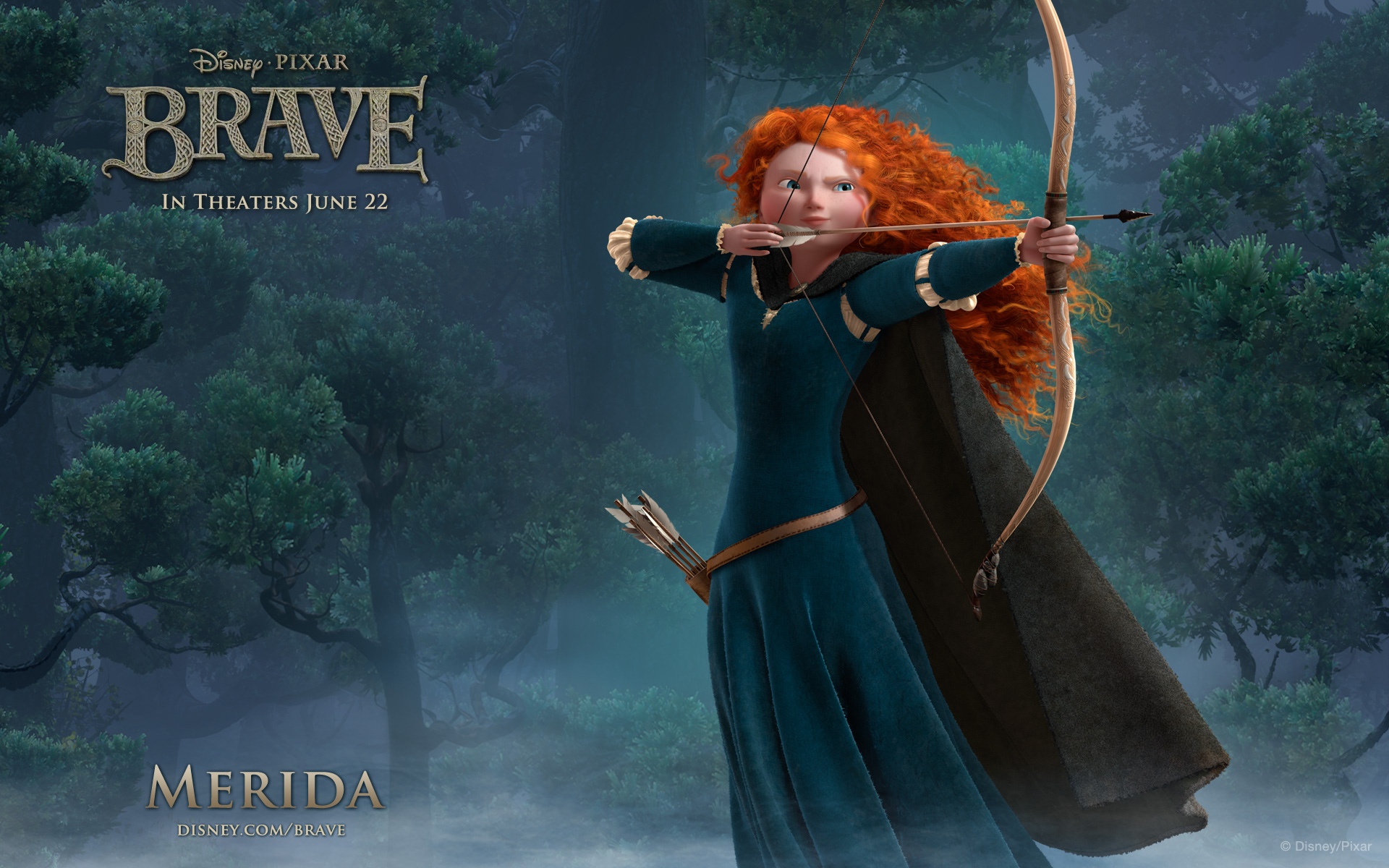
Disney/Pixar's Brave
Wallpaper for computer-animated Scottish fantasy

Unlike many of its predecessors, Brave isn’t a retelling of a classic fairy tale or an adaptation of a popular children’s novel. The movie follows Princess Merida, a headstrong Scottish lass, as she struggles to find her destiny in a rugged land of colorful warriors and hidden magic.

While Brave is not historically accurate, I’m glad that actual Scottish and British actors were used for its voice cast. Kelli Macdonald (Gosford Park, No Country For Old Men) is an appealing Merida, and comedian Billy Connolly is her boisterous father King Fergus. Emma Thompson plays the controlling Queen Elinor, and Julie Walters is an old witch who grants Merida an ill-advised wish.

Robbie Coltrane, Kevin McKidd, and Craig Ferguson are other Scots in Brave‘s cast, and of course, Cheers and Pixar alumnus John Ratzenberger is also aurally present. Brave‘s character designs are cartoonish but manage not to be too jarring against the realistic landscapes. As an archery fan, I enjoyed the tournament scene, even if most of it had already been shown in commercials and trailers.

The script and plot are a bit more straightforward than other Disney flicks, but I appreciated the fact that the movie is somewhat less sentimental — or emotionally manipulative — than other Pixar films (see Up). Some reviews focus on Merida as a stronger young woman than past Disney princesses, but what about Mulan?

Others have noted that most of Pixar’s pics have been more boy-oriented, such as Toy Story and Cars, but Brave actually has more in common with recent movies from Dreamworks, such as How To Train Your Dragon or Kung-Fu Panda. Brave also bears a strong resemblance to Dragon Hunters and Brother Bear, but isn’t as tragic in tone as Sintel. In addition, Brave‘s Celtic knotwork and mythic medieval setting reminded me of the delightful Secret of Kells.

I was pleased to see Brave tackle mother-daughter relationships, since much folklore and more recent movies tend to focus on father-son or father-daughter ones. Merida‘s suitors and three younger brothers are also a source of some amusement.

Overall, I’d give Brave, which is rated PG for some violent scenes, three out of five stars, an 8 out of 10, or a B+. Brave might not go down as a classic, but it’s still solid family entertainment. The next movie I’ll probably see in the theater is The Amazing Spider-Man.

Speaking of animated fantasy, while I’ve recently blogged about Avatar: the Legend of Korra, I have to note that I was pleased with the action-packed first season finale to this sequel to Nickelodeon’s Avatar: the Last Airbender. The dieselpunk/fantasy setting, escalating plot, and adolescent characters all came together, and I look forward to seeing what happens next.

Free RPG Day 2012 report

Happy summer solstice! While I’ve missed some movies and local events lately because of travel and crowded schedules, I did get to Free RPG Day. On Saturday, 16 June 2012, Janice and I drove into Boston to visit the Compleat Strategist.

Retro RPG wallpaper
Retro role-playing rules!

The staff at the small game shop was friendly as usual, and I declined an invitation to participate in a Pathfinder tabletop role-playing session. I did pick up the following free items:

I also bought some Lord of the Rings HeroClix and Giants Revisited for Pathfinder (my Advanced Race Guide hardcopy is coming in the mail). I looked at the thick core rulebooks for Dungeon Crawl Classics and Adventurer, Conqueror, King because of fellow Game Master Brian W.‘s recommendations. I didn’t purchase either of these retroclones yet, because I want to see what my current face-to-face groups are willing to try after various miniseries and our D&D Next playtest.

I didn’t see any of the planned books for FATE 3e Starblazer Adventures/Mindjammer (for “Vortex“) or Legends of Anglerre (for the “Vanished Lands“) but at least the FATE version of Bulldogs has gotten some good science fiction support online. I’m more inclined to stick with rules-light systems than invest in yet another potentially expensive, complicated game with a limited fan base.

Unfortunately, the staff at Pandemonium Books & Games in Cambridge, Mass., was surprisingly ignorant of Free RPG Day and seemed to be more interested in hosting collectible card tournaments than serving role-players. It seemed like a missed opportunity to get people into the store. It’s a shame that the larger shop has focused less on traditional RPGs lately.

Janice and I later enjoyed lunch at Mr. Bartley’s Burger Cottage and visited our usual book shops in Harvard Square. We missed Josh C. & Sara F., who were at the Compleat Strategist sometime after us. I look forward to looking more closely at my Free RPG Day swag. So many games, so little time!

D&D Next playtest review

I’ve already reported on my first playtest session for Dungeons & Dragons “Next” (Fifth Edition). Stepping back from the Player Characters and the events within that tabletop role-playing game, here are some thoughts about the rules.

The Keep on the Borderlands
The Keep on the Borderlands and the Caves of Chaos

First, let’s take a look at the participants. Jason E.R., Bruce K., and Rich C.G., the newest members of the face-to-face, Boston-area groups, sat out the D&D Next playtest, but we had some returning and new gamers to round out our face-to-face adventuring party.

-Beruk A.: Our font of pop culture references, Beruk is one of the first gamers I met in the Boston area, and all of his characters have strong personalities and terrible luck. Since Josh had already claimed the pregenerated Half-Elf Wizard, Beruk played a human Mage.

-Brian W.: Like me, Brian is a 40-something grognard who has fond memories of games from the early 1980s. He likes lighter rules sets such as Savage Worlds more than recent editions of D&D. Brian is a proponent of Dungeon Crawl Classics, which is part of the retroclone movement and the so-called Old School Renaissance. He has been hosting our face-to-face gatherings since I moved from Needham to Waltham, Mass.

-Sara F.: Sara is the youngest person in my current groups (under 30) and an experienced role-player, with a preference for non-human characters — we “reskinned” her Halfling as an intelligent raccoon — and simpler systems such as Fantastic Adventures in Tabletop Entertainment (FATE 3e).

-Josh C.: Sara’s boyfriend is a Game Master who came of age during the 1990s, when White Wolf’s Storyteller: the World of Darkness was dominant. Josh has played and run AD&D2, D&D3.x, and Pathfinder, among other systems. His “Spelljammer: the Show Must Go On” miniseries, using FATE 3e Legends of Anglerre, is just winding down on Sunday nights.

-Thomas K.Y.: Primarily a player of video games and massively multiplayer online (MMO) games such as City of Heroes, Thomas did play D&D3.0 and D20 Mutants & Masterminds 2nd Ed. with us a few years ago.

-Kai-Yin H.: A novice to tabletop role-playing games, Thomas’ girlfriend is a good sport and has attended several genre movies with us. Of the pregenerated characters, I gave Kai-Yin the Dwarf Fighter because it was the simplest.

How did D&D Next play? As Dungeon Master, I was glad to be able to use flavor and statistics from the oD&D (BECMI), AD&D2, and D&D3.x versions of the classic Keep on the Borderlands module. I had no difficulty combining Non-Player Characters, maps and scene descriptions, or monsters from the different editions of the “Caves of Chaos.”

We used mostly pregenerated characters, with the notable exceptions of Sara’s raccoon Rogue and Beruk’s human Wizard. I didn’t make any mechanical adjustments to their statistics — we just described and role-played them differently. Since we had two Wizards and two Clerics, more example spells would have been helpful for distinguishing and developing them.

I would have liked more guidance in the playtest PDFs of how to create or customize P.C.s in the event of a larger group or to avoid duplication. If I continue this playtest with my Sunday night telecom fantasy group, we’ll have more tweaking to do.

I thought that D&D Next‘s backgrounds (similar to “aspects” in FATE) and themes (similar to combat roles in D&D4e) added a decent layer to character’s origins and abilities without too much complication. It looks like feats from D&D3.x/D20 will come in here. I wanted to see Bard, Ranger and Paladin options, whether as backgrounds/themes or as full occupational classes.

I liked using D&D5e/Next‘s ability score checks and simplified skill list, but Thomas and Josh said it would have been nice to know the math behind some of the playtest‘s precalculated bonuses.

The Player Character record sheets could have been clearer for novices like Kai-Yin, and Wizards of the Coast (WotC) could have provided more guidance for alignment/motivation. Josh noted that Pathfinder‘s alignment descriptions are particularly clear. Equipment and weapon descriptions could have been more specific or interesting for modern players unfamiliar with fantasy tropes, such as different types of armor and weapons.

Combat ran reasonably smoothly and faster in D&D Next than for any edition past AD&D1. Smaller stat blocks for opponents were definitely a plus. Hit points and damage seemed initially high — 100+ for an Owlbear — but if the advancement curve is flatter, that might be OK. Thomas mentioned that simple D20-derived rules for firing into melee/friendly fire and certain conditions would have been helpful.

We liked D&D Next‘s advantage/disadvantage method of rolling 2d20, but we didn’t care for its healing, which was almost as easy as in D&D4e. Thomas also pointed out that more of the rules should have been in natural language with more explanatory sidebars.

Admittedly, this was the first session in a while or ever for some gamers, but money, movement, and some spell descriptions caused confusion even though they were on the character sheets or in the rules packets. I agree with Josh that a one-page “cheat sheet” of rules summaries would have been helpful, and should in fact be all that’s required (with page references) for a fully playable game.

Overall, as other reviews have noted, this playtest of D&D Next feels a lot like stripped-down D&D3.x/D20, with bits from D&D4e. It ran smoothly, allowing for some player creativity and D.M. discretion, but as a mostly combat-oriented module, we haven’t gotten very far with character development or problem solving yet.

I know I’m a little late to the party with these observations, but readers and fellow role-players may find them helpful as we compare notes on the D&D Next playtest.

We’ll see whether WotC can live up to its promises for more online support, easy session prep, rules modularity, and the ability to appeal both to nostalgia and the desire for novelty among gamers of all ages. D&D5e/Next still has a ways to go before it can be more than a Hasbro brand, compete with Pathfinder and other games, and dominate our now-shrinking hobby as its predecessors did.