Since today is when many comic book fans visit their local shops to get the latest issues of their favorite titles — and I’m still catching up on work and gaming notes — here’s a quick rundown of what I’m currently subscribing to.
Yes, several of the costumeredesigns aren’t especially good (Teen Titans and Birds of Prey), there’s an emphasis on horror (Justice League Dark) over all-ages superheroes. While DC’s reboot includes a few well-written female characters (Batwoman), other titles feature blatant pandering and sexism (Red Hood and the Outlaws). Overall, however, I’m still buying and reading more DC than Marvel.
-David I.S. getting: All-Star Western, DC Universe Presents, Mr. Terrific, Resurrection Man
Not getting(doesn’t include Vertigo): Animal Man, Batman Beyond, Batwing, Blackhawks, Blue Beetle, Captain Atom, Deathstroke, Demon Knights, Flash, Frankenstein: Agent of SHADE, Fury of Firestorm, Green Lantern, Green Lantern Corps, Green Lanterns: New Guardians, Grifter, Hawk and Dove, I Vampire, JLA Beyond, Justice League Dark, Justice League International, Legion of Superheroes, Legion Lost, My Greatest Adventure, OMAC, Red Lanterns, Savage Hawkman, Sgt. Rock and the Men of War, The Shade, Stormwatch, Suicide Squad, Superboy, Supergirl, Swamp Thing. Voodoo
–Done/dropped: Aladdin/Sinbad, Buck Rogers, 50 Girls 50, Green Hornet, Jungle Girl, Magnus Robot Fighter, New/Mighty/Secret Avengers, Ruse, Thor, Turf, Umbrella Academy
–To borrow from David I.S.: Angel & Faith/Buffy: the Vampire Slayer, Domino Lady, Echo, Farscape, Firefly/Serenity, Ghostbusters, Knights of the Dinner Table, Mystery Society
Trades only: Age of Bronze, Astro City, Girl Genius, League of Extraordinary Gentlemen, Mouse Guard, Powers, Wizard of Oz
As DC Comics‘ renumbering continues, here’s more of my take on an ideal Justice League. This is by no means the only way to approach that superhero team, but it’s more of a tweak than the current overhaul being given to that fictional universe. I’m still catching up on the new continuity (threeweeksof issues have already come out).
I’ve tried to pick an interesting assortment of characters with varied powers and personalities. Since my version is shaped partly by the needs of my role-playing campaigns, I’ve stated that the current wave of metahumans has been publicly known for about 10 years, rather than the current “DCnU‘s” five. This gives more breathing room for supporting casts, elements from the past 70 years’ worth of stories, and multiple teams, without making the core members too old.
I’ve already named shrinking scientist the Atom, magician Zatanna, winged warrior Hawkgirl, shapeshifting telepath Martian Manhunter, martial artist Black Canary, and archer and social conscience Green Arrow. Here are my remaining six picks:
Like Hawkman and his convoluted backstory, Aquaman has been the butt of jokes for his ability to communicate with sea life. However, I’ve always thought that Aquaman was cool, from his days with the Superfriends and his crossover duel with Namor, Marvel’s Submariner, to his recent strong participation in Justice League Unlimited and Batman and the Brave and the Bold. Like Wonder Woman, animators seem to have had an easier time unifying Aquaman’s personality and demonstrating his prowess than many comic book writers.
Arthur Curry is not only the Justice League’s environmental champion, but as king of Atlantis, he has responsibilities and experience that few can match. Whether he’s “Conan of the sea” with long hair and a hook hand or wearing the gold and green scales, Aquaman should be regal, mighty, and just a bit playful. His protégés include Tempest in the Titans, Aqualad II in Young Justice, and possibly Animal Man. In addition to his wife Mera, Aquaman would get along well with Princess Diana of Theymiscira.
The Flash is the fastest man alive, with Marvel’s Quicksilver an analogue for the onetime police scientist. I’d use the recently resurrected Barry Allen, who’s a contemporary of most of my other choices. While other heroes have families and sidekicks, Barry’s relationships are especially close, with Jay Garrick in the Justice Society, Wally West in the Titans, and Bart Allen in Young Justice.
The Flash‘s sense of loyalty, strong moral compass, and creativity make him close friends with Hal Jordan/Green Lantern and Superman, but the speedster’s impatience may occasionally grate on Batman and Aquaman’s nerves. Arguably one of the most powerful metahumans in the DC universe, the Flash is the resident expert in time travel (backed up by Booster Gold in Justice League International).
Speaking of the JLI, while I’d put Guy Gardner on that team, John Stewart is my choice for Green Lantern on the Justice League. Sure, he could occasionally swap places with Hal Jordan when one or the other has a mission in deep space, but Stewart’s military background, ethnic diversity, architectural ability, and pangs of conscience make him an interesting addition. Stewart’s straightforward attitude would be an asset in working with the Flash and Batman.
With Alan Scott on the Justice Society and Jade in the Titans, Stewart would be the resident expert in alien invasions, occasionally putting him at odds with exiles Superman, Hawkgirl, and Martian Manhunter. As cosmic energy wielders, members of the Green Lantern Corps are similar to Marvel’s Thor or Silver Surfer. Green Lantern could also be a mentor to Firestorm and Static Shock in Young Justice.
The final three members should come as no surprise. Wonder Woman is the Justice League’s supreme tactician (similar to Ms. Marvel in the Avengers) and is nearly as powerful as Superman. Wonder Woman‘s mother, Queen Hippolyta, could have served with the Justice Society during World War II. Diana’s “sisters,” Donna Troy/Troia Cassie Sandsmark/Wonder Girl, would be on the Titans and Young Justice, respectively, with Artemis as occasional backup and foil.
Wonder Woman is a role model for all superheroines, but even for her, the expectation of perfection would be hard to live up to. I figure that her optimism, desire for peace, and toughness would be reasons enough for her to get along with just about everyone in the league. I also think that Wonder Woman would be the Justice League’s first choice as diplomatic representative to world governments.
On the strategic side, Batman keeps the Justice League working. Bruce Wayne is responsible for the team’s satellite Watchtower, training numerous up-and-coming vigilantes such as the Outsiders, and trying to stay one step ahead of the bad guys. Similar to the acrobatic Captain America on the battlefield, inventive Iron Man in the workshop, and brilliant Sherlock Holmes as a detective, Batman stands equal to his superpowered allies, if often in the shadows.
Batman’s protégés are equally impressive, with Nightwing leading the Titans, Red Robin in Young Justice, and Oraclehelping both the Justice League and the Birds of Prey. His focus on the streets of Gotham is similar to that of Spider-Man or Daredevil in New York City. Bruce is serious and reserved, occasionally annoying Barry, Ollie, and Hal, but Diana and Clark are close enough to know and like his true self.
Superman, the first modern superhero, should be the standard-bearer and unofficial leader of the Justice League. He’s a powerhouse like Marvel’s Hulk, a natural authority like Captain America, and has a cool cape like Thor — or rather, they have those qualities like the last son of Krypton. Superman‘s foes, such as Lex Luthor, Darkseid, and Brainiac, are worthy challenges to the entire superhero community.
Although Superman doesn’t typically have sidekicks, he does have family such as Karen Starr/Power Girl with the Justice Society, Kara/Supergirl with the Titans, and clone Connor Kent/Superboy with Young Justice. Superman‘s moral certitude might irritate Batman or Green Arrow even he inspires them and others. I don’t mind if “big blue” is a “boy scout”; his extraterrestrial origin and sheer strength of muscle and will are more than balanced out by his Midwestern regular-guy charm and desire to defend and — be a part of — humanity at all costs.
Of course, superheroes are only as good as their opposition. Even a pantheon of 12 and assorted sidekicks and spinoff teams can’t be everywhere at once in a world with almost 7 billion people. Natural disasters, common criminals, supervillains, and the occasional alien or mystical attack should be more than enough to keep the Justice League busy, not to mention rivalries within their own ranks.
In the DC Universe Online MMO and my “Societe de Justice Internationale” scenarios (using GURPS Supers and D20 Mutants & Masterminds/DC Adventures), it’s cool when Player Characters get to meet a “named” character. However, they have to feel like they can make a positive difference. I hope that any version of the Justice League in print, TV animation, games, or live-action retains that sense of camaraderie and fun while saving the world… Whom would you pick and why?
Among other things, I picked up a few role-playing supplements (including the aforementioned DC Adventures: Heroes and Villains, Vol. 1) at Pandemonium Books & Games and the Compleat Strategist. We had to deal with “gamer funk” from hordes of collectible card players and wargamers at the former, but we had no trouble looking at the bookshelves in the latter.
I’d pick the Ryan Choi version of the Atom because he’s the most recent incarnation of the character, he adds some ethnic diversity, and he can represent a younger hero who has “graduated” to the major leagues. (Sure, he was killed, but we all know that’s not a permanent condition in ever-changing yet cyclical comics.) With predecessor Ray Palmer and Justice Society member Mr. Terrific as mentors, Choi would likely view the Titans‘ Cyborg as his closest peer. I could also see the Atom mentoring Jaime Reyes/the Blue Beetle in Young Justice.
Like Marvel’s Ant Man, Choi’s Atom is the resident expert in physics and weird science. When he’s not infiltrating enemy lairs or solving life-and-death puzzles, I picture Choi exploring the microverse, chatting with fellow scientist the Flash, or tinkering with Red Tornado. He might be a bit intimidated by the “Big Three” and would probably annoy less patient comrades such as Hawkgirl.
Every team needs a magician, and Zatanna is the Justice League’s. The fishnet-wearing, backward-speaking stage performer is similar to the Avengers’ Scarlet Witch and could ask the Justice Society’s Doctor Fate (or even her late father) for advice. Raven would be her likely contact in the Titans, and Zatanna‘s cousin Zachary Zatara has been in Young Justice.
While Zatanna is among the few people who can call Bruce Wayne or John Constantine friends, I figure that Superman, who is vulnerable to magic, would be wary of her. By contrast, Wonder Woman and Aquaman are comfortable with magic and would often rely on her when dealing with the supernatural foes of Themyscira and Atlantis.
Yes, I chose Shiera Hall/Hawkgirl partly because she was in Justice League Unlimited. I’d respectfully call her “Hawkwoman,” but the longer name doesn’t roll off the tongue. Her role as winged warrior mirrors that of lover Hawkman in the Justice Society, Hawk and Dove in the Titans, or Wasp in the Avengers. Whether she’s a reincarnated Egyptian noble, an archaeologist with mystical weapons, an extraterrestrial police officer, or all of the above, Hawkgirl should kick butt and take names.
As in the Dini/Timm cartoon, Hawkgirl should get along with Wonder Woman and Green Lantern, if less so with romantic rival Vixen or liberal firebrand Green Arrow. Hawkgirl‘s knowledge of procedure, tactics, and obscure history could be balanced by claustrophobia and distrust of her motives (depending on her origin).
Like peanut butter and jelly — or, more properly, Oreos and milk — the Martian Manhunter goes with most recent incarnations of the Justice League. In the DCnU, he’s now withStormwatch, another “major league” team. The shapeshifting telepath is almost as powerful as Superman, but the Martian Manhunter is more alien than human and provides an outsider’s perspective on humanity and superhumanity.
Like the Titans’ Starfire and Beast Boy, J’onn J’onzz can be refreshingly naïve or stubbornly idealistic. I think the Martian Manhunter would get along well with Superman, Elastic Man, Plastic Man, and the Outsiders’ Metamorpho. His protégé on Young Justice is Miss Martian. If Batman is the brains behind the Justice League, Superman the brawn, and Wonder Woman the heart, Martian Manhunter is the informal mascot and morale officer.
A second-generation costumed vigilante, Black Canary is another tough woman in the Justice League, but she has a different perspective from the aristocratic Wonder Woman or soldier/cop Hawkwoman. Dinah Drake Lance grew up knowing the entire Justice Society, including her mother (Black Canary I) and trainer Wildcat. Black Canary II is a street-level heroine who supplements her sonic scream with martial arts skill, not unlike Marvel’s Mockingbird.
While other Justice League members have sidekicks, Dinah can call on her other teams, including the Justice Society, the Birds of Prey (Oracle, Huntress, Lady Blackhawk, and Spoiler, among others), and the “families” of Batman and Green Arrow. A cross between a den mother and a drill sergeant, Black Canary helps keep the Justice League in line. She tends to let her hair down with Green Arrow, Green Lantern, and the Birds of Prey.
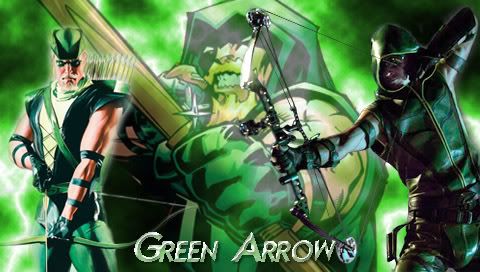
Speaking of Green Arrow, the Justice League’s social conscience has been one of my favorite superheroes since Mike Grell’sLongbowHunters and subsequent run in the late 1980s. The Robin Hood-inspired archer, onetime wealthy playboy, and chili-loving rogue adds unpredictability and emotion to the team.
As much as I like the works of Judd Winick, Kevin Smith, and others, I think that OliverQueen has been put through the wringer a bit too much lately. The fun-loving (and nonpowered) daredevil who shamelessly uses trick arrows, copies Batman’s toys, and flirts with every woman in sight has been dragged down by mystical forces and deaths (and rebirths) of himself and close friends.
The sometime financial backer of the Justice League is closer lately to Russell Crowe’s dour Robin Hood and Marvel’s Ultimate Hawkeye than to Errol Flynn. I’m also not sure about Ollie’s Smallville-influenced costume and lack of a goatee in the DCnU, but I hope the costumed vigilante and his universe can return to a sense of heroic fun.
I’ve already blogged about how I would approach DC’s “Big Three” — Wonder Woman, Superman, and Batman — with a mix of reverence to their 70 years of shared history and an attempt to keep them young and relevant for new audiences across serialized media.
As I’ve portrayed the Justice League in my “Societe de Justice Internationale” role-playing scenarios (using GURPS Supers and Mutants & Masterminds), that group of superheroes is the “national team,” similar in theme and power levels to Marvel’s Avengers. It has international branches, but it is based in the U.S. and focuses on threats such as natural disasters, alien invasions, and supervillains that no single superhero can handle alone.
The “major leagues” include the Justice Society, which is composed of “legacy” heroes — semiretired costumed vigilantes and their children and grandchildren. Marvel has its Invaders. The Justice Society, which began in World War II, disbanded during the Cold War (in a parallel to the censorship of comics) and served as mentors and inspiration to the Justice League.
The experienced metahumans of the Justice Society and Justice League have a few offshoots, such as Justice League International, the covert Outsiders, the futuristic Legion of Superheroes, and the street-level Birdsof Prey. I’d put Marvel’s X-Men and Fantastic Four at this level.
The “minor leagues” include the young adults of the (formerly Teen) Titans and the up and coming Young Justice. Marvel’s equivalents include the New Mutants, Runaways, and Young Avengers. Some of the people on these supergroups are the protégés of older heroes. Just as the Justice League has its Legion of Doom, so do the sidekicks have their own foes, such as the Brotherhood of Evil.
I like this generational aspect and would try to keep it. See my previous blog posts on how relative ages should work out. For example, the Justice Society’s Nite Owl is the protégé of the Golden Age hero of the same name, and Batman (about age 30) is the dark vigilante of the night in the Justice League. In turn, Batman’s former sidekick Nightwing (about 20) leads the Titans, and Red Robin (age 17) is on Young Justice.



 Gene's Worlds