Holiday update 2007

December 2007
Holiday 2007

As I prepare to move my blog from MySpace and Yahoo, here’ s a look back at one of my first posts (note that some of the links may be broken):

Friends, I hope that your holidays have been happy thus far. Instead of sending out the usual annual update letter, I hope that people are reading this blog.

The week before Christmas was busy, even though Janice and I had finished most of our gift shopping. Working on two issues simultaneously to get most of this week off kept CW‘s copy desk humming. On Saturday, 22 December 2007, we went to the local dump and post office, and I got my car inspected (which went more quickly and was cheaper than the previous week’s repairs). 

We also had a Chinese-American buffet lunch at the Hunan New Taste, stopped by the Walpole Mall and the Big Y supermarket, and picked up my subscription at the New England Comics in Norwood, Massachusetts. 

On Sunday, we stayed in because of the latest snowfall and caught up on television. What are your favorite holiday specials? Mine include classics such as A Charlie Brown Christmas, Dr. Seuss’ How the Grinch Stole Christmas, and various versions of Dickens’ A Christmas Carol. Janice’s include A Garfield Christmas, Bill ‘n’ Opus: A Wish for Wings That Work, and Will Vinton’s Claymation Christmas.

Of course, numerous Rankin-Bass cartoons and stop-motion specials have marked the holiday for generations, including Rudolph the Red-Nosed Reindeer, The Little Drummer Boy, ‘Twas the Night Before Christmas, and The Year Without a Santa Claus. More recently, we have A Muppet Family Christmas and Emmet Otter’s Jug-Band Christmas, The Nightmare Before Christmas, Robbie the Reindeer, and Shrek the Halls

I also had a quip-filled City of Heroes (CoH) virtual session with David I.S. and company, and Janice baked in preparation for seeing her folks. We plan to have a relatively quiet New Year’s Eve, since we’ll both be working that day. 

We drove to Upstate New York on Monday, Dec. 24, first to Janice’s parents’ home. Like my parents, Marvin and Linda M. live atop a hill on five acres in the country. Unlike my family, they have numerous pets and a steep, icy driveway. Janice’s middle sister Shelly was already there with her husband Melvin W. and children Rebecca, Laura, and David

I checked out photographs of friends on teenager Becky’s Clie handheld device, played chess with tween Laura, and played pool with 9-year-old David and his father. Shelly told us about her missionary work in inner-city Utica, and after a tasty lasagne dinner, we drove down to Janice’s youngest sister’s home, where we were staying.

We joined Melinda and Gary L. and their children Amanda and Joshua for Christmas Eve. I helped keep the kids occupied while the other adults finished wrapping a pile of presents. Amanda demonstrated her recent violin lessons, and I talked with 6-year-old Josh about various superheroes. Their cat Chocolate kept us company as we slept.

On Christmas morning, unwrapping continued, as the Manwillers and Wrights reconvened at the Lewis home, which has the most open space. Among other things, we got DVDs and an electric snow shovel. We had a ham luncheon, followed by Laura and 8-year-old Amanda playing with animal toys and David and Joshua playing with action figures and videogames. Becky is old enough to participate in most adult conversations.

Thanks to Gary’s PlayStation 2 and Xbox, I played an off-road racing videogame with Melvin, as well as Justice League Heroes with Josh. Although I don’t have the money or time to add console systems to my crowded tabletop (pen-and-paper, dice-and-pizza) role-playing, teleconferencing, and CoH PC gaming schedule, it was nice to try them out once in a while. Josh also demonstrated Spider-Man and Star Wars Lego II for us. (Lego Batman and Indiana Jones games are coming!) 

I telephoned my family in Virginia, but I still missed being with my parents, brother Peter, sister-in-law Kelly, and nieces Ava and Lili. I hope to see them sometime in spring of 2008. But first, we’ll be at Dexter V.H.’s latest wedding in New York City in just over a week!

We returned to the Boston area on Wednesday afternoon after taking out the Lewises and Janice’s mother to lunch at Applebee’s. On Thursday, I caught up on e-mail and prepared for various games, including last night’s D&D3.5 “Vanished Lands: Holy Steel” teleconferencing team and tomorrow’s D&D3.5 “Vanished Lands: the Broken Chains” holiday makeup fantasy session. I’ve got to work today. 

Of course, no year’s end blog post would be complete without a set of “best of” lists. IGN.com has a pretty good rundown of movies, genre television, and comics, but here’s my abbreviated version for 2007:

Favorite movies: Children of Men, Pan’s Labyrinth, and Ratatouille

Favorite SFTV shows: Avatar: the Last Airbender, Doctor Who, and Pushing Daisies (Fellow blogger Ken G. has also noted the untimely demise of the underrated time-travel drama Journeyman, but at least Pushing Daisies and Reaper got picked up.)

Favorite comic books: Captain America, Detective Comics, and The Spirit

Favorite musical singles (and videos):Gone Gone Gone” (Robert Plant and Alison Kraus), “Rehab” (Amy Winehouse), “Umbrella” (Rihanna)

Favorite RPG releases: D20 Mutants & Masterminds 2nd Ed.: Ultimate Power, A Practical Guide to Monsters (Dungeons & Dragons 3.5/4e), D20 Star Wars: Saga Edition

What were your faves? I look forward to blogging about such entertainment and more in the coming year, and may it bring good health and prosperity for all!

10 August 2010: “Vortex” decisions

The Milky Way galaxy

Fellow role-players, here are some notes from the Boston-area group’s “Vortex” planning session of Monday, 9 August 2010, which I hosted at my second duplex in Needham Heights, Massachusetts.

>>Favorite science fiction and expectations

I’ve already posted about influences on my homebrew space opera setting, including the novels of Isaac Asimov, movies such as The Fifth Element, television shows including the original Battlestar Galactica, and games like Star Frontiers. I asked everyone about their favorites and found interest in traditional pulp fiction.

Paul J. cited Star Trek: the Next Generation and Deep Space Nine (“DS9”), the anime Outlaw Star and Cowboy Bebop, and Joss Whedon’s space Western Firefly/Serenity (which other people liked). Beruk A. added the British TV shows Red Dwarf and Doctor Who, which mix humor and surrealism.

Greg D.C. mentioned Edgar Rice Burroughs‘ Mars/Barsoom books and the exploratory thrills of early 20th-century planetary romances. Sarah F. named the 1990s SeaQuest DSV, Lexx, and Farscape, which featured ship-based adventures and exotic environments. Josh C. added the interplanetary diplomacy and wars of Babylon 5 and DS9. Brian W. reached further back to the 1970s for Space 1999 and classic Doctor Who, which had shaky production values but strong characters and plots, not unlike the original 1960s Star Trek.

We only touched upon cyberpunk such as Blade Runner, transhumanist speculation such as David Brin’s Uplift stories, and retro steampunk like the works of Jules Verne. We missed Dave C. last night — what’s your favorite science fiction?

>>Initial Player Character concepts

Brian described his Trinoid, a trilateral amphibious alien xenobiologist and anthropologist sent to the Sol system around the time of open and official First Contact between Terrans and galactic societies. (See my earlier post regarding nonhumans.) The strange (to human eyes) being plans to observe and conserve Earth’s lifeforms.

Josh had two human proposals: an honorable sniper that’s a hybrid between an Army Ranger and a knight Templar, and a martial artist/freedom fighter similar to early Capoeira practitioners. I noted that he’d have to specify the soldier’s code of honor and organization, which he described as one that would defend humanity and seek its place in the stars. The rebel could be a colonist struggling against control of Mars or other places by Earth-based corporate or governmental authorities.

Sara designed a Tharian, an alien with wings (like a Star Frontiers Yazirian) and reptilian skin, similar to a gargoyle. Although the Tharians aren’t technologically advanced, her character’s home village was destroyed by interstellar pirates (possibly Ru’ulok). She stowed aboard the invading vessel and was subsequently found and trained as a mechanic with some larcenous skills.

Greg described “A.R.T.H.E.R.R.,” an artificial intelligence/robot probe designed by human mining conglomerate Vimeco about a century ago (in “game time”). After the megacorporation realized that it didn’t need robots to gather information from harsh environments but that it instead wanted to control access to information, the robot worked odd jobs but retained its desire and ability to explore.

Beruk created a former government operative with communications and piloting expertise. Perhaps he saw something related to First Contact on the frontier that he shouldn’t have, or maybe he made the wrong enemies (a la Outland). He’s trying to keep a low profile but find out more.

Paul, who had to leave early, talked about a Scoundrel or Jack of all trades who is actually a near-human psychic. He uses telepathy to help him persuade people to cooperate. Overall, the gamers agreed on an exploratory theme for the campaign, so the new party will probably get access to a ship sooner rather than later. Military, diplomatic, and trade missions will still be possible, but they won’t be the group’s shared focus. I’ll try to provide a mix of environments and challenges.

>>Rules systems

With help from Josh, Sara used BASH! Sci-Fi Edition for her Tharian, and she liked the relatively simple point-buy method of character building. The d6 multiplier was a turnoff to Paul and Greg, and the group agreed that since Basic Action Super Heroes was the least supported and the least familiar to everyone, the representative of rules-light and retro-clone games should be set aside.

Beruk and Josh noted that D6 Space (similar to West End Games’ old Star Wars RPG and Marvel Superheroes) and Mecha & Manga and Tomorrow Knights for D20 Mutants & Masterminds (about to have its third edition in combination with DC Adventures) were fairly simple, but the others were more interested in other games. We’ve looked at numerous science fiction systems over the past several months.

Brian and Josh used Steve Jackson Games’ Generic Universal Role-Playing System. Unfortunately, even the combination of GURPS 4e Lite and Space was complicated for character creation, especially for Brian’s Trinoid. While it might be good for “simulationist,” lethal games, GURPS also failed to get any strong support.

Beruk and Sara (and Dave, who was absent) had looked at Star Wars: Saga Edition. They noted that it was compatible with numerous other D20 science fiction games, used the familiar species/class/level system, and supported aliens and robots. However, reservations about the Force and Jedi as imbalancing and concerns about D20/Open Game License rules proliferation put Saga in second place of the games we considered.

Brian easily created his Trinoid with Fantastic Adventures in Tabletop Entertainment, or FATE 3e. Greg and Paul eagerly looked at Brian’s hardcopy of the FATE-based Dresden Files RPG, which Josh ended up borrowing (in addition to my Pathfinder Campaign Setting). Ultimately, Brian, Paul, Greg, and Josh voted for FATE, which is the rules set we’ll be using for “Vortex!”

We’ll be using a few science fiction references for FATE. Diaspora has an online System Reference Document, brief and straightforward rules descriptions, and a “hard SF” edge. Starblazer Adventures lists numerous aspects, stunts, and pulpy tropes, but it isn’t as well organized. Mindjammer supports transhuman elements such as psionics.

In addition, we’ll be using the dice-rolling mechanic from the Icons superhero game (2d6-7), Starblazer Adventures’ “gritty” starting level (15 points for skills), and phased acquisition of aspects as part of group character/party design. Brian and I will try to post more information in the coming weeks.

Beruk, as you requested, here are some links about conversions from some space operas to FATE:

I look forward to talking with all of you about your characters’ species, occupations, motivations, and FATE 3e writeups soon! -Gene

5 August 2010: Chicago family reunion

Chicago's Willis Tower

On Wednesday, 28 July 2010, Janice and I took a JetBlue Airways flight from Boston’s Logan Airport to Chicago O’Hare to visit part of my mother’s side of the family. We rented a car and drove to the Marriott Northwest before grabbing dinner at Buffalo Wild Wings. The dry-spiced boneless Buffalo chicken tenders were particularly good.

The next morning, Janice and I drove to the Barrington station of the Metra (commuter rail), which we took into the city. When I helped out at BriForum in June, I noted how Chicago’s urban density reminded me favorably of my hometown of New York, just as San Francisco is a bit like Boston. Unfortunately, the sprawl around Chicago, in which good arable land is being turned into subdivisions and strip malls, reminded us of Northern Virginia.

Janice and I walked through “the Loop,” Chicago’s downtown neighborhoods, and we saw the giant bean sculpture at Millennium Park. We also enjoyed the galleries and café at the Art Institute before heading back out to the suburbs, stopping at a Graham Crackers, a comic book shop, on the way.

My younger brother Peter, his wife Kelly, and their children arrived from Virginia that evening. We went to my cousin Cristina‘s home for dinner, meeting her husband Arnold and their daughters Marjorie and Meg, plus Marjorie’s boyfriend Joe. For the first time, Janice, Kelly, and the girls got to partake of a Filipino feast, including Pancit Molo (a variation on wonton soup), not prepared by my mother. It was great to reconnect with some family members after more than two decades!

The next morning, Peter and I picked up our parents, who had been delayed by bad weather. Although plans to go into town had to be postponed, we rejoined the Tan family for lunch. For dinner, we dined at Le TiTi de Paris, a fancy French restaurant. I had steak stuffed with prosciutto and cheese.

On Saturday, July 31, we drove to the Navy Pier, whose attractions included a carousel, a Ferris wheel, jugglers, a stained-glass exhibit, and a large food court. I had a proper Chicago hot dog. By now, you’ve probably noticed that, like most families, eating is a major activity during any reunion. We took a river cruise focusing on the city’s diverse and historic skyline, followed by deep-dish pizza at Lou Malnati’s. Marjorie proved to be indispensable in getting us around.

On Sunday, Janice and I returned to Boston after just scraping the surface of the things to see and do in Chicago. We mowed the lawn, bought groceries, and began catching up on e-mails and recorded television. Our travel done for now, we’ve gotten back to work.

As you may have seen from other posts, my role-playing games have also kept me busy. The Sunday night Pathfinder teleconferencing team has started a new adventuring party in my long-running “Vanished Lands” homebrew fantasy setting, and the Monday night local face-to-face group is gearing up for my “Vortex” space opera campaign. I’ll try to blog more about them, comic books, and other stuff soon!

4 August 2010: “Vortex” Player Character concepts

Vortex PC party

In one future, humanity has colonized the Sol system but still struggles with population pressures, competition for resources, and ideological differences. Open and official First Contact with galactic societies, themselves at war, raises the stakes even as frontiers broaden and beckon. Who will rise to the challenge?

Fellow role-players, here are 10 steps to take as we begin considering Player Characters, a new party, and the setting for my upcoming “Vortex” space opera campaign!

1. What species is your Player Character? Human, near-human, gennie/synth, or alien? How close are you to the norm?

2. Where does your character come from? What’s his/her/its homeworld? What is the P.C.’s nationality? What was your family and educational background? How old is your P.C.?

3. What’s your current occupation? I’ve used classes based on Star Wars: Saga Edition as examples: Diplomat, Explorer, Mystic, Trader, Warrior, but you can also think of things like spy, engineer, martial artist, and space marine.

4. What are your ethics? Does your P.C. have a personal code of honor, allegiances, or duties? The more specific, the better.

5. What’s your motivation? Why is your character adventuring, and why would it be part of a mixed team? What are your shorter- and longer-term goals? We’ll also be discussing party tone and objectives.

6. Who are your associates? As I mentioned previously, what affiliations does your P.C. have with other people and organizations? What are your attitudes toward things such as other species, governments and megacorporations, or various regions or factions? This is related to our setting conversations, and as with the Pathfinder teleconferencing team, we may have group generation of supporting characters.

7. What are your other interests? Does your character have any distinguishing features? What are your hobbies or personality traits? Are there any strong likes or dislikes? Signature items or style? How will others first see you?

8. Share your initial concepts. The “Vanished Lands” Yahoo/eGroup and “Holy Steel” Google Group message boards can help us coordinate. So far, this is what I’ve heard (and feel free to elaborate here):

Paul J.: male near-human Mystic with exotic weapons

Beruk A.: male human Trader with a mysterious past, possibly a former government agent

Brian W.: Trinoid (trilateral amphibious alien) Explorer, xenobiologist

Sara F.: female alien (species and occupation to be determined)

Josh C.: male Terran human Warrior, sniper with a strong code of honor

9. Write it up. Pick two of the rules sets we’re consideringBASH, FATE, GURPS, and Saga — and see how your concept looks. I can help with nonhumans and setting notes.

10. Bring it! Be ready to discuss concepts, rules, and themes in the next week or two! Nothing’s written in stone yet, but I look forward to tightening up our ideas and role-playing! -Gene

3 August 2010: “Vortex” — why rules matter

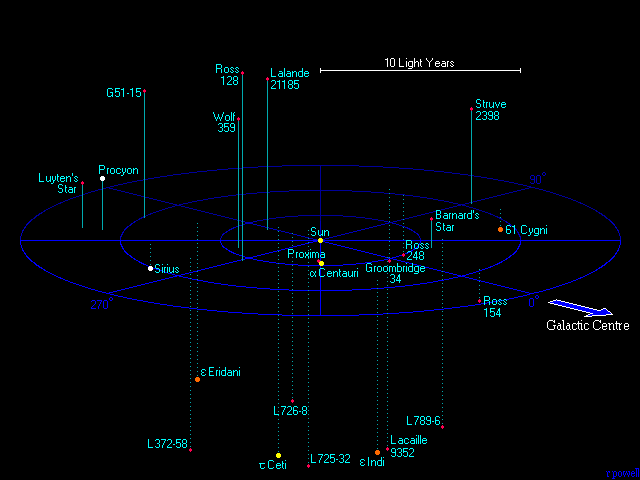
12lys

Fellow role-players, here is my last major post before we get into the specifics of group setting, Player Character, and party creation! Why does our choice of game system matter? Wouldn’t any set of generic or science fiction rules work for my upcoming “Vortex” space opera campaign?

Well, yes and no. As with my other settings — the “Vanished Lands” for fantasy, “Gaslight Grimoire” for steampunk, the superhero/espionage world of the “S.J.I.,” and the shared time/dimensional travel of “Voyagers II” — I’ve been running 5,000+ years of continuity through different editions of various games, most notably Dungeons & Dragons.

On the other hand, some games are more generic than others, which bundle specific worlds, genres, and rules. For example, Shadowrun Fourth Edition combines aspects of traditional fantasy (demihumans and magic) with one dystopian cyberpunk future and dice pools. It might work well for steampunk, but probably less so for lower-powered settings, optimistic superheroes, or certain types of horror.

I want to find rules sets that are easy to learn and teach, offer room for character development and player creativity, and provide support for basic space opera tropes — species, technologies, and environments. After looking at dozens of games over the past several months, I’ve narrowed down our options to the following:

>>GURPS 4e Lite/Space

Pros: I used the third edition of Steve Jackson Games’ Generic Universal Role-Playing System for several campaigns back in Virginia in the 1990s, including “Vortex,” so my background notes would need less conversion effort. Character creation is point-based and granular. GURPS set the standard for well-written reference books about different genres and real-world history. GURPS Lite can be downloaded for free.

Cons: The full fourth edition of GURPS isn’t user-friendly to newcomers, and advanced character options are spread across several books. The rules are moderately “crunchy” and less cinematic than some of the others listed here.

Related GURPS 3e/4e sourcebooks: Aliens, Bio-Tech, Blue Planet, Cyberpunk, Cyberworld, Espionage, Lensman, Magic, Mars, Martial Arts, Mecha, Powers, Prime Directive, Psionics, Robots, Space, Terradyne, Thaumatology, Transhuman Space/Changing Times, Traveller, Ultra-Tech, Uplift, War Against the Cthorr

>>D20 Star Wars: Saga Edition

Pros: Most of the current Boston-area groups are familiar with the D20 Open Game License and system reference documents based on it. Along with Mutants & Masterminds, Saga Edition is arguably one of the most streamlined implementations of D20 and is compatible with numerous other D20 science fiction games that I own. Character creation is fairly simple, and most classes need little modification. George Lucas’ updating of space opera from the serials of the 1930s and 1940s to the 1970s and 1980s is obviously a major inspiration for “Vortex,” so it’s close in tone.

Cons: Wizards of the Coast has dropped the Star Wars license, and the “e20” generic system being written using the D20 OGL isn’t complete yet. Players familiar with “A long, long time ago, in a galaxy far, far away,” will have to set aside their preconceptions for the futuristic setting of “Vortex,” and the Jedi in particular would need rework for the Mystic occupation.

Related D20 games:

Babylon 5/Babylon Project

Big Eyes, Small Mouth/Centauri Knights (also in Tri-Stat edition)

Blood & Space/Bulldogs

Core Command/Jovian Chronicles/Heavy Gear/Mecha Compendium (also SilCore) *

e20: System Evolved Project

Farscape

-D20 “Lite” (see recent “Gaslight Grimore” steampunk fantasy)

Mars/WARS

-D20 Modern: Future/Alternity

Mutants & Masterminds 2e: Mecha & Manga

Prime Directive (“Star Trek,” also in GURPS edition)

Spycraft: Stargate SG1Star Wars (West End Games D6 edition)

Traveller (“T20” and “T20 Lite”; also in GURPS and other editions)

True20: Reign of Discordia

>>FATE 3e Diaspora/Starblazer Adventures/Mindjammer

Pros: Fellow Game Master Brian W. has demonstrated Fantastic Adventures in Tabletop Entertainment in his “Spirit of the Caribbean” and “Fierce Frontier” one-shots, and he has been successfully running fantasy using the Legends of Anglerre variant. FATE has gotten good support (including the Icons superhero game) and allows for collaborative storytelling and world building.
Cons: There is a learning curve because FATE is conceptually different from most class/level-based systems. Starblazer Adventures, which is based on 1980s British comics, is a heavyweight tome and not as clearly organized as other books. It also requires Mindjammer for transhumanist and psionic elements, while Diaspora is Traveller-style hard-SF rather than space opera. (Here are more comparisons between Starblazer Adventures and Diaspora.)

Other games:

Icons: Ion Guard

Dresden Files RPG

Savage Worlds: Slipstream

>>BASH Sci-Fi Edition

Pros: This representative of the rules-light and retro-clone movements has the slimmest and cheapest core rulebook. Basic Action Super Heroes! is a point-based system with a d6 mechanic, and the Sci-Fi Edition is meant to be a simple but complete game.

Cons: Some players may prefer the D6 rules, the anime-flavored Big Eyes, Small Mouth, or one of the third-party systems below. BASH doesn’t have the support of multiple splatbooks, a large user base, or years of playtesting.

Other games:

Aeon/Trinity (White Wolf’s “Storyteller” system)

Cyberpunk 2020Doctor Who: Adventures in Time and Space (and FASA, other editions)

Dune (Last Unicorn, D20, GURPS editions; PDFs only)

Eclipse Phase (transhumanist science fiction) *

Fspace

Iridium/Sleeping Imperium/Thousand Suns Revised (PDFs only) 

Serenity (Cortex, Firefly)

Shadowrun 4e

Space Opera RPG

SpaceMaster (Hero System 4th/5th Ed.)

Star Frontiers (“remastered” retrofuturist PDFs) *

Star Trek (GURPS, FASA, Last Unicorn, and Decipher editions; see also Prime Directive) –StarSiege: Event Horizon

X-Plorers

So how do we pick one game to use? Josh and others have come up with a good recommendation: Each role-player who plans to participate in the upcoming Boston-area face-to-face campaign should create a character using two rules systems. You should pick the two you’re most interested in and be prepared to critique them. Next Monday, 9 August 2010, we’ll start comparing notes and discuss your “VortexPlayer Characters and group party/setting creation in more detail! My next posts will lay out some steps to help with this. Have a good week, -Gene