Star Trek flashback: Nemesis

Fellow genre entertainment fans, most reviews of J.J. Abramssuccessful cinematic reboot of the Star Trek franchise (including mine) have compared it with the late-1960s television series or the movies featuring the original crew of the U.S.S. Enterprise. However, here again is my review of Star Trek [10]: Nemesis. The previous entry in the long-running space opera series, which I screened in Boston several years ago, was better than I had expected, but unfortunately, that’s not saying much.

Last of the Next Generation
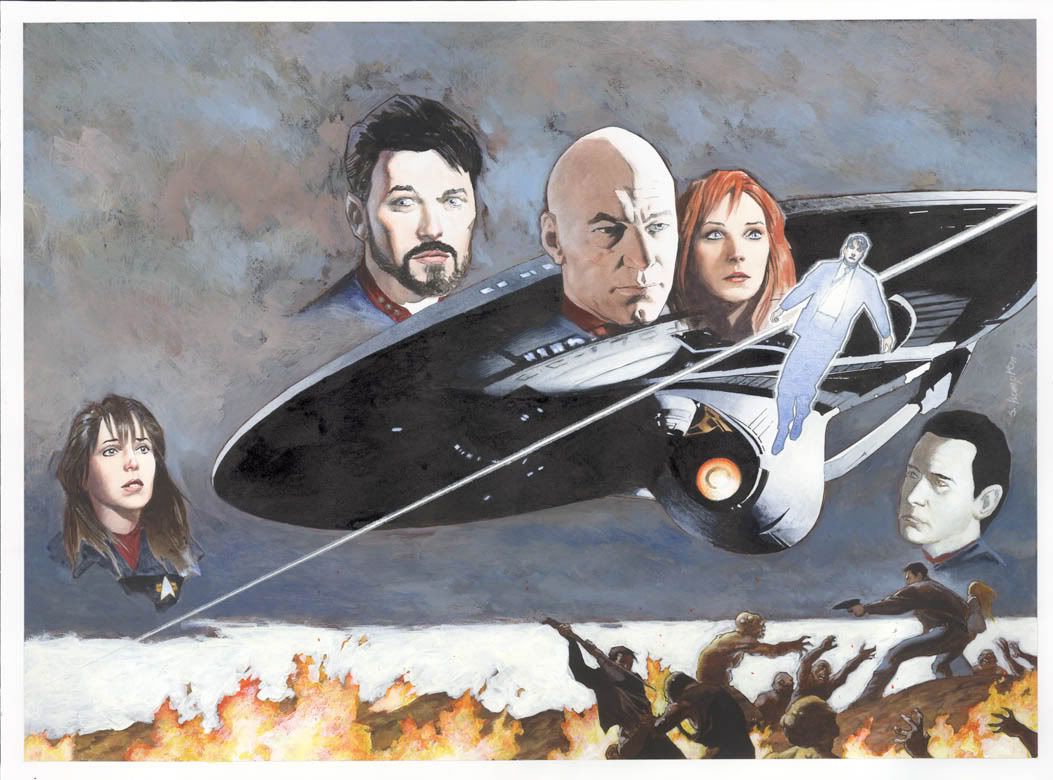
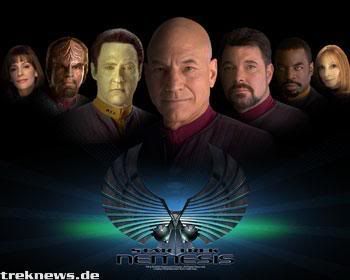
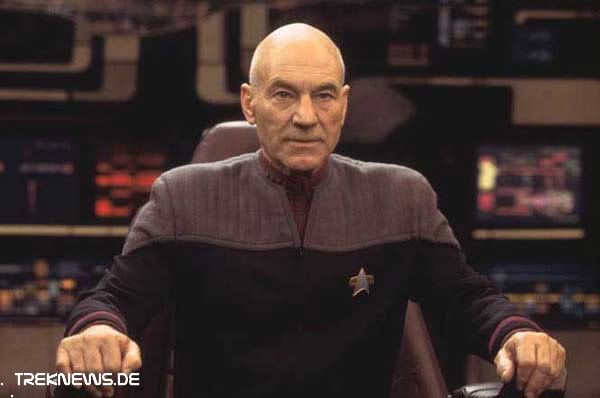
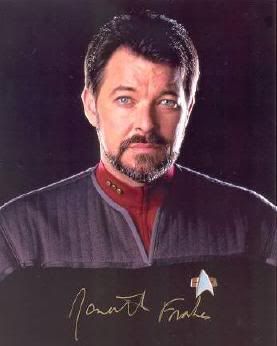
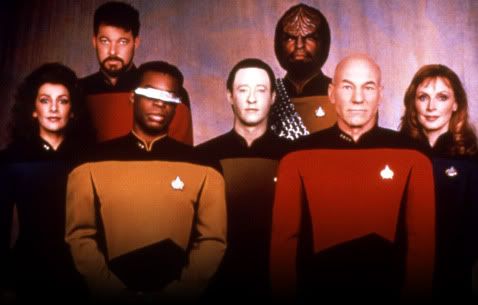
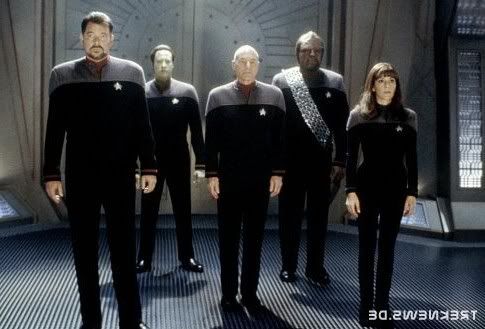
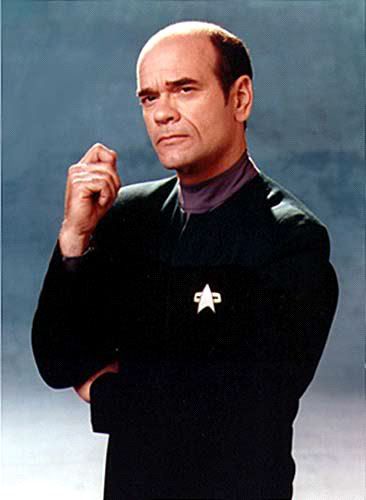
Star Trek: Nemesis cast

For many speculative fiction fans who came of age during the 1980s, Star Trek: The Next Generation‘s crew is still the best and the brightest of the franchise. This review assumes at least some familiarity with Star Trek, which has become a pop-culture phenomenon over the past 35+ years.

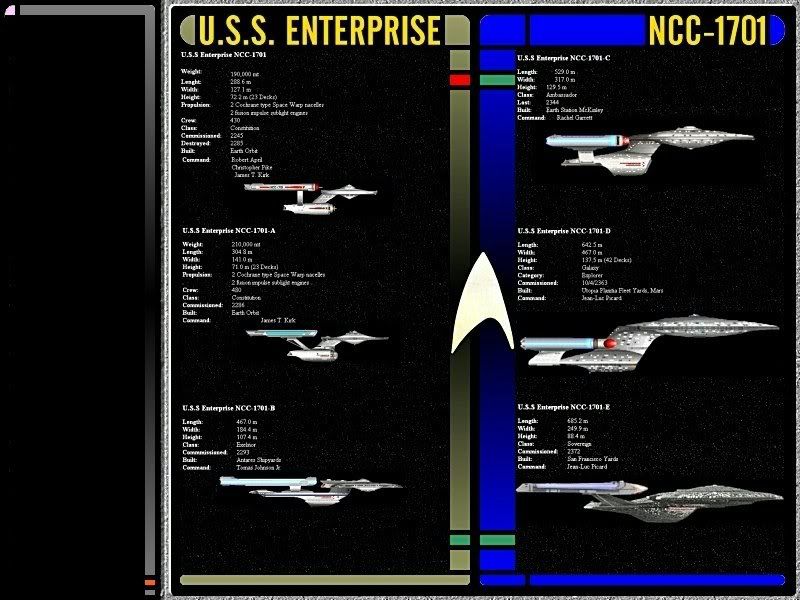
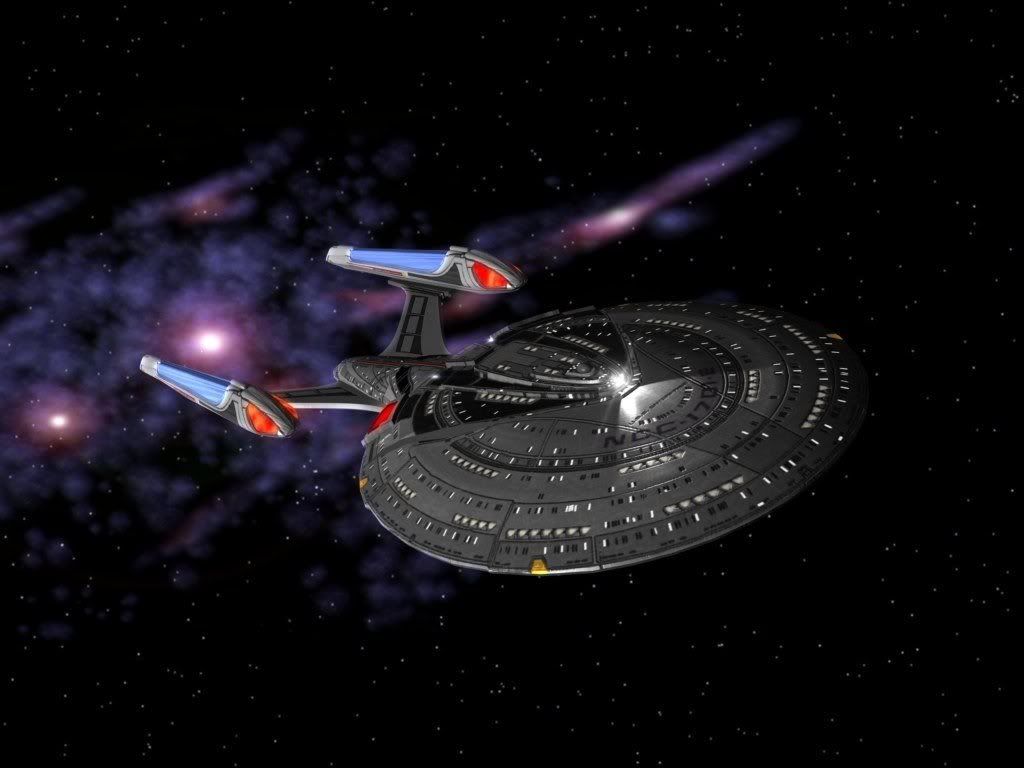
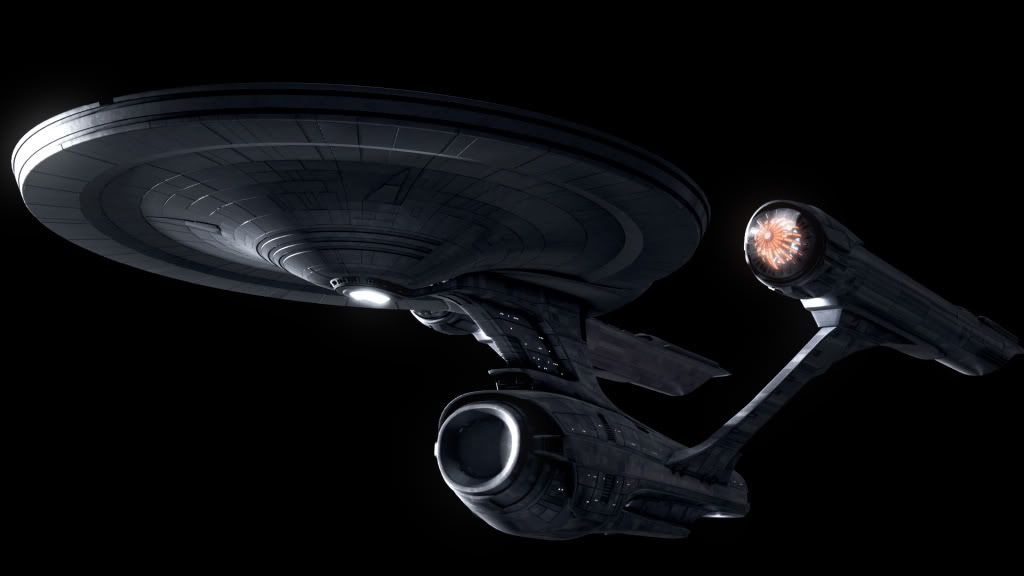
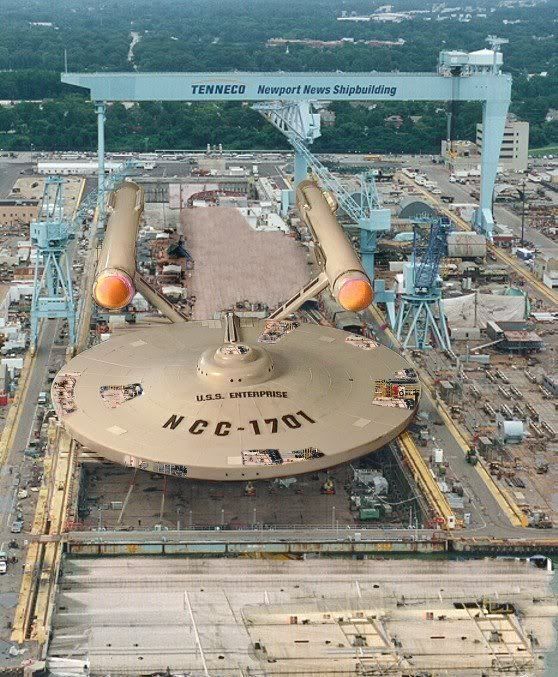
Plot and Script: Supposedly the “final journey of a generation,” this outing with the bridge crew of the U.S.S. Enterprise NCC-1701-E was written by Gladiator‘s John Logan, an avowed Trek fan.

The movie opens with some long-awaited gifts to “Trekkies/Trekkers” everywhere: character development. In an early scene, Capt. Jean-Luc Picard (Patrik Stewart, also known for playing Prof. Charles Xavier in the successful X-Men superhero movies) toasts newlywedsCmdr. Will T. Riker (Jonathan Frakes) and Counselor Deanna Troi (Marina Sirtis), who are about to take command of a ship of their own.

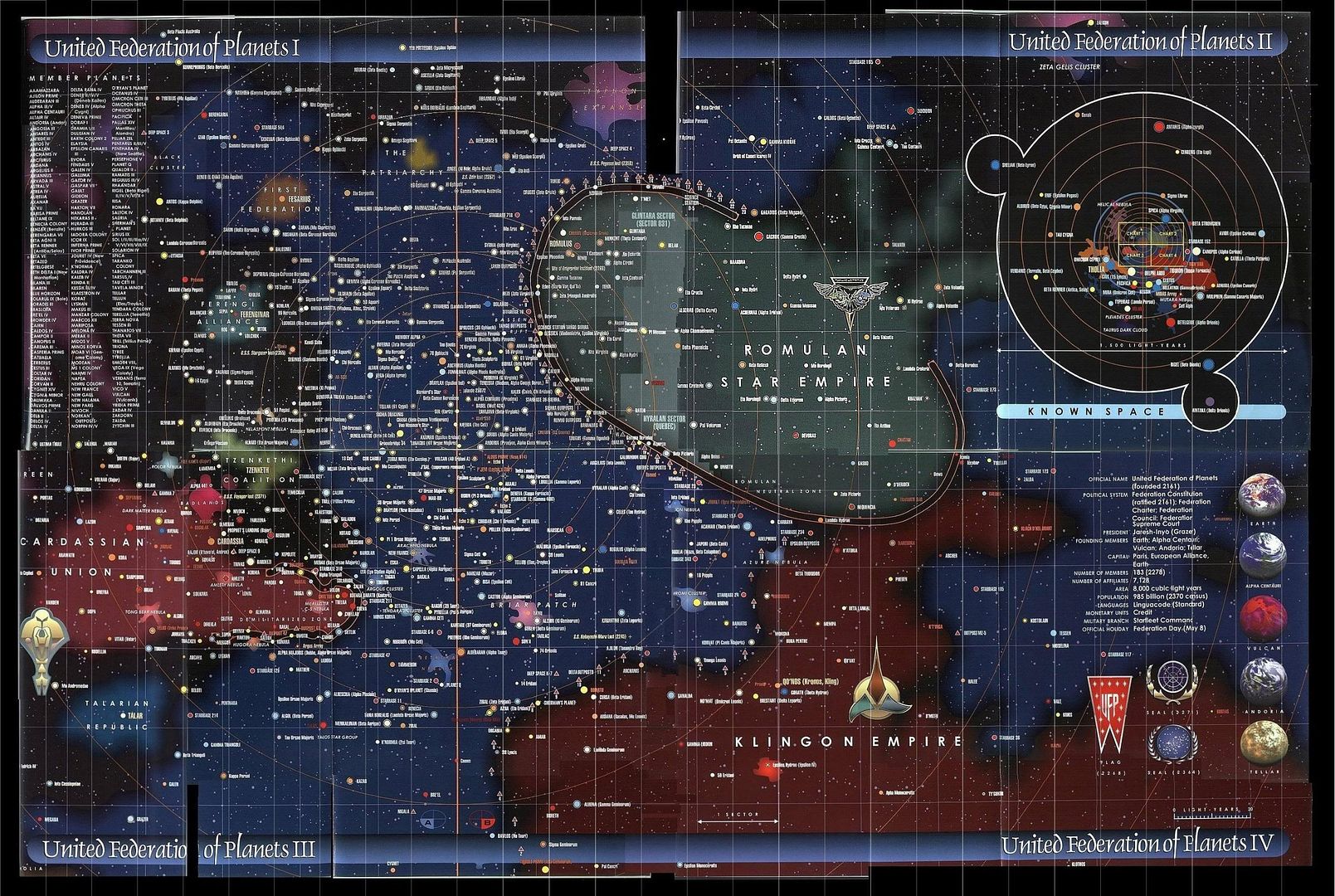
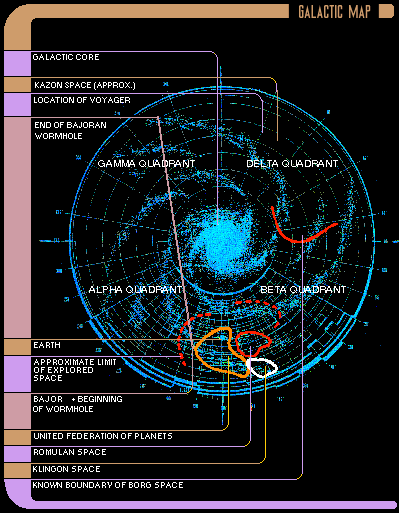
The cameos by Wil Wheaton (as Ensign Wesley Crusher) and Whoopi Goldberg (as former bartender Guinan) have been cut distressingly short, and only fans of Star Trek: Voyager may be pleased to see Kate Mulgrew as “Admiral Kathryn Janeway,” who reassigns the starship Enterprise to Romulan space to investigate a coup among the long-time foes of the United Federation of Planets.

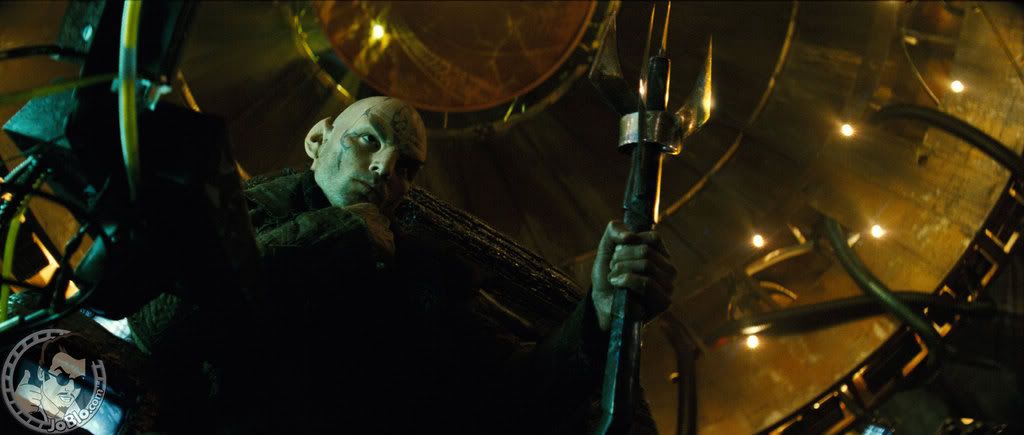
Apparently, the Remans, a Nosferatu-like subject race of the Romulan Empire, threaten to overthrow the balance of power in the quadrant under the leadership of Praetor Shinzon (Tom Hardy [now on TV’s syndicated fantasy Legend of the Seeker]), who turns out to be a deranged clone of Capt. Picard. Yes, I’ve given away some “spoilers” here, but the trailers and previews have already done so.

Like Die Another Day (James Bond 20), Nemesis raids its predecessors for plot devices. Sometimes, this works, as in the use of a nebula for a blazing space battle. However, having megalomaniac villains spouting Shakespeare and scenes of telepathic rape by a Reman viceroy (played by veteran character actor Ron Perlman [Hellboy]) have become cliches, even for Trek. The version of the script that was leaked to the Internet several months ago inspired even less confidence, however.

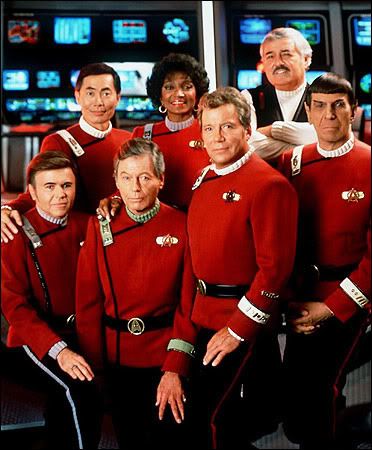
Star Trek II: the Wrath of Khan is widely considered to be the best movie in this series — including by me — but it has been copied a bit too slavishly in many of the subsequent flicks. Yes, Capt. James T. Kirk (William Shatner) and the 1960s-1980s crew were swashbuckling/cowboy adventurers, but Picard and company‘s strengths were as diplomats and explorers, which hasn’t really been shown in their movies.

Cameos by series veteran Spock (Leonard Nimoy) [which eventually happened in 2009’s reboot] or mischievous godling “Q” (John DeLancie) would have been more interesting than yet another crazed villain, IMHO. Even the fascinating Romulans are underused.

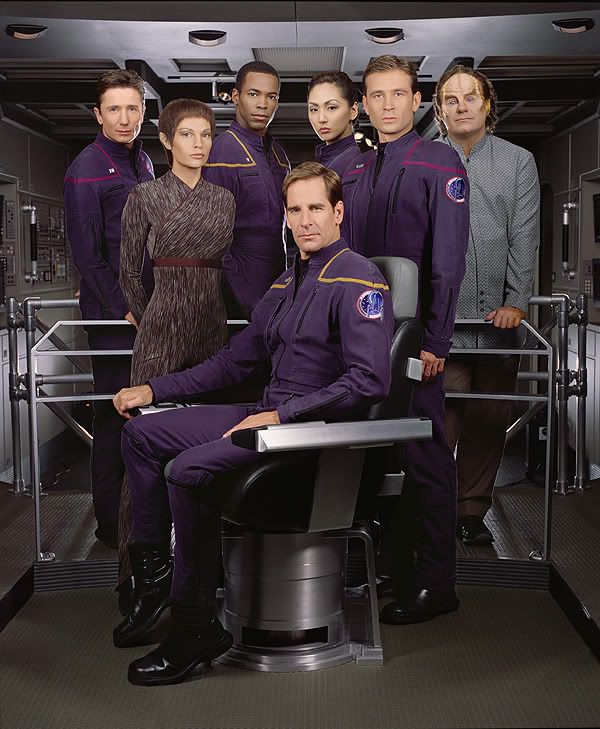
For the record, I believe that Star Trek: Deep Space Nine was about intrigue and preserving Starfleet‘s ideals on a turbulent frontier, Star Trek: Voyager was about maintaining teamwork while being very far from the comforts of Earth, and Star Trek: Enterprise hoped to tell the story of humanity’s first real steps into a then-unexplored galaxy. [As other reviews of mine noted, Enterprise got better too little, too late and was canceled because of low ratings.]

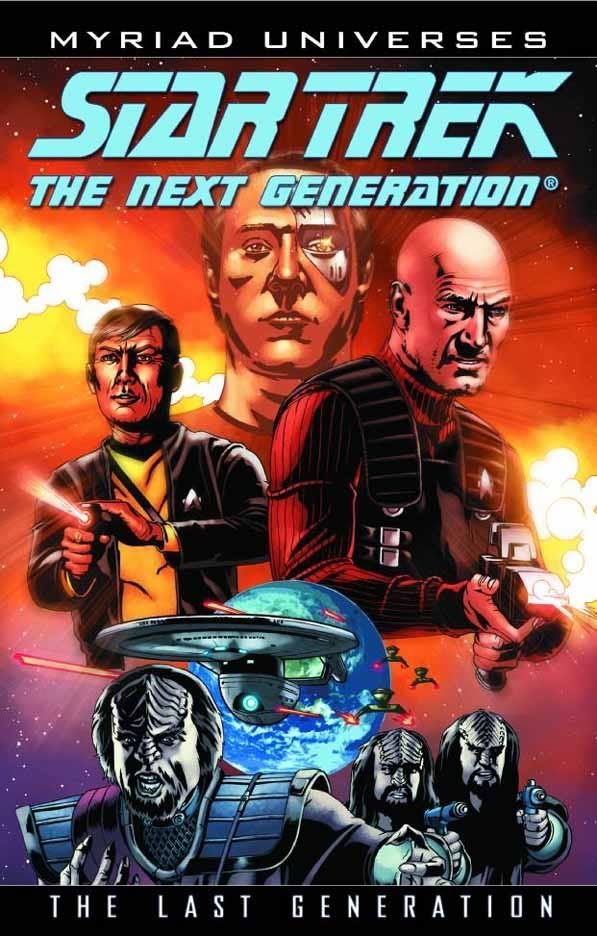
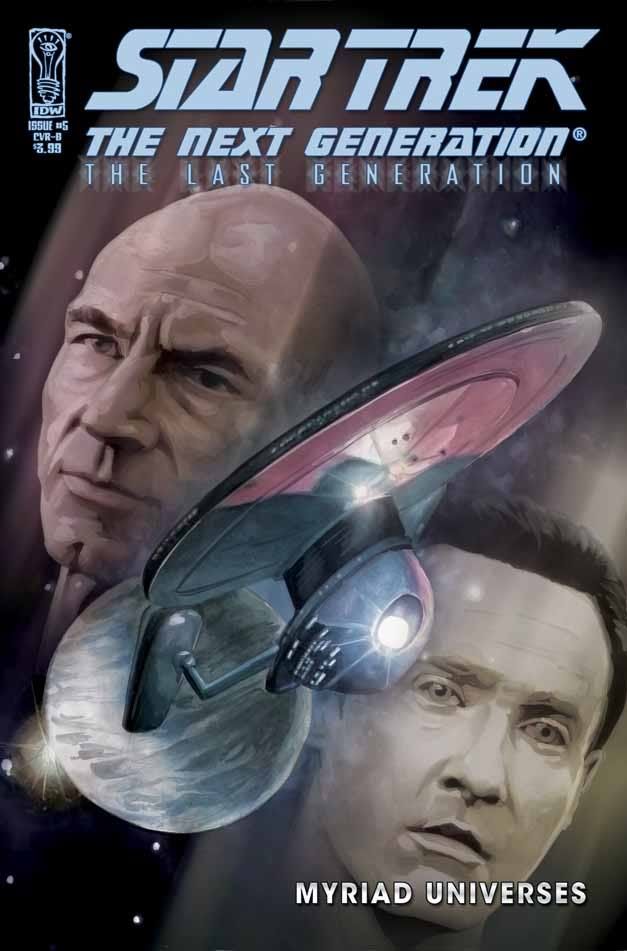
The parallels between Capt. Picard and Shinzon with Data and “B4,” another Sung prototype android, are overdrawn, but they suit the needs of the story. The issues of similarity and sacrifice were dealt with better in Wrath of Khan.

There is some “technobabble” in the dialogue, and the script pays lip service to Gene Roddenberry’s ideals of cooperation and having a sense of wonder. On the other hand, I was glad to see continuity respected, as events from the previous movies and television series were mentioned, such as the Dominion War.

Acting and Direction: “The fault lies not in the stars, but in ourselves.” Although the acting and direction were good, as a Trek fan, it was difficult to feel any sense of suspense. As always, it’s comforting to see familiar characters interacting, and the Next Gen crew was especially relaxed this time around. Director Stuart Baird does bring some fresh energy to the tired franchise, and the action scenes are decent.

I was disappointed to again see the excellent supporting cast so underused, from the Klingon Lt. Cmdr. Worf (Michael Dorn), to Dr. Beverly Crusher (Gates McFadden), to chief engineer Lt. Cmdr. Geordi LaForge (LeVar Burton). I’ve been fortunate to meet most of these actors at conventions over the years.

Cinematography: From a dune-buggy chase to the aforementioned battle between capital ships, the action is certainly magnified over the previous Star Trek [9]: Insurrection, again evoking Wrath of Khan and even First Contact [8].

The devastation aboard damaged ships is better shown than in the past (I understand that computer-generated imagery was used rather than models this time), but the hand-to-hand fights are still a combination of poor phaser/disruptor aim and fisticuffs. The soundtrack and end credits were more unobtrusive than in the past.

Summary: Overall, I’d give Nemesis only about a 7 out of 10. Does that correspond with the “even/odd-numbered curse?” As I’ve noted before, as one of the largest fictional universes, Star Trek has some of the best and some of the worst examples of space opera. Much of the best Trek material lately hasn’t been onscreen or in the numerous spin-off novels and comic books, but in the role-playing games [I’ve only glanced at video games, board games, and multiplayer online games]. Here are my ratings (out of 10) for the various Star Trek series:

Television series:

  • Star Trek (1966-1969) 9
  • Star Trek: the Animated Series (1973-1974) 8
  • Star Trek: the Next Generation (1987-1994) 9
  • Star Trek: Deep Space Nine (1993-1999) 8
  • Star Trek: Voyager (1995-2001) 6
  • Star Trek: Enterprise (2001-2005) 7

Movies:

  • Star Trek [1]: the Motion Picture (1979) 7
  • Star Trek II: the Wrath of Khan (1982) 10
  • Star Trek III: the Search for Spock (1984) 7
  • Star Trek IV: the Voyage Home (1986) 8
  • Star Trek V: the Final Frontier (1989) 5
  • Star Trek VI: the Undiscovered Country (1991) 8
  • Star Trek [7]: Generations (1994) 7
  • Star Trek [8]: First Contact (1996) 9
  • Star Trek [9]: Insurrection (1998) 6
  • Star Trek [10]: Nemesis (2002) 7
  • [Star Trek [11] (2009 reboot) 9]

Role-Playing Games:

  • Star Trek (FASA rules; 1980s) 7
  • Prime Directive (wargame/RPG; 1980s) 7
  • Star Trek (Last Unicorn version; 1999) 10
  • Star Trek (Decipher version; 2002) 9
  • GURPS Prime Directive (Amarillo Design Bureau; 2002) 8
  • Prime Directive D20 (Amarillo Design Bureau; 2005) 8

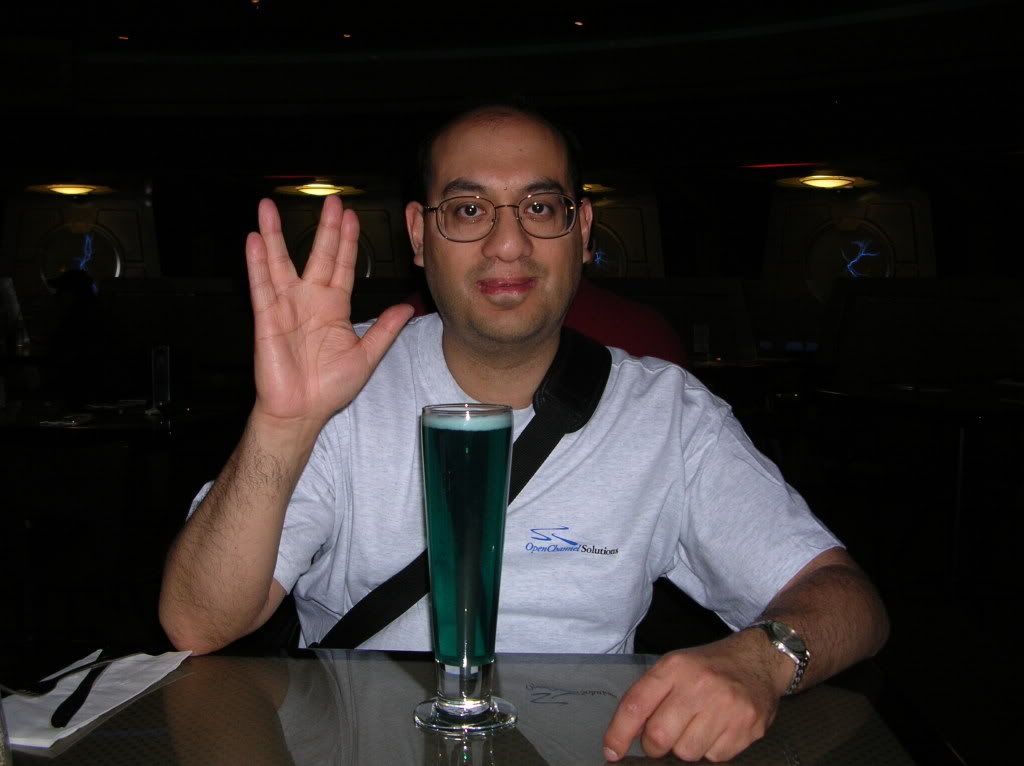
>>May all your holidays be happy, and live long and prosper, -Gene (“Capt. Tzu Tien Lung”)

As you can see, despite some missteps, the Trek is far from over!

Entry for May 11, 2009: Star Trek review

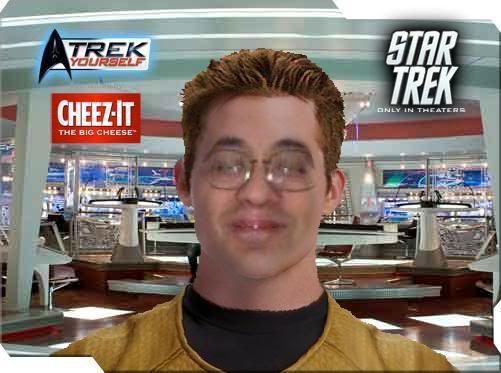
Fellow genre entertainment fans, on Saturday, 9 May 2009, Janice and I met Beruk A. and Thomas K.Y. at the AMC Framingham multiplex to screen the newest Star Trek movie. I enjoyed the film more than I expected to! Although I’m a fan of Gene Roddenberry’s long-running space opera franchise, this review is intended for anyone, including those unfamiliar with Star Trek.

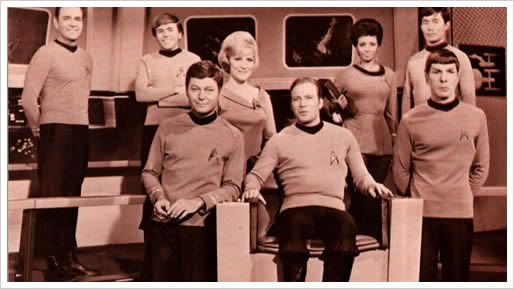
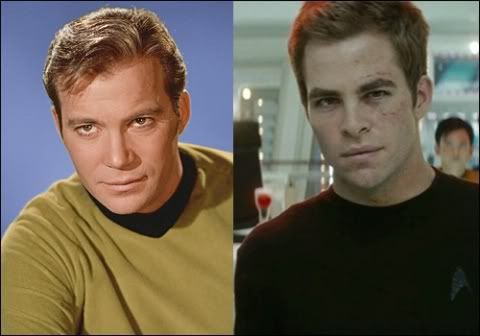
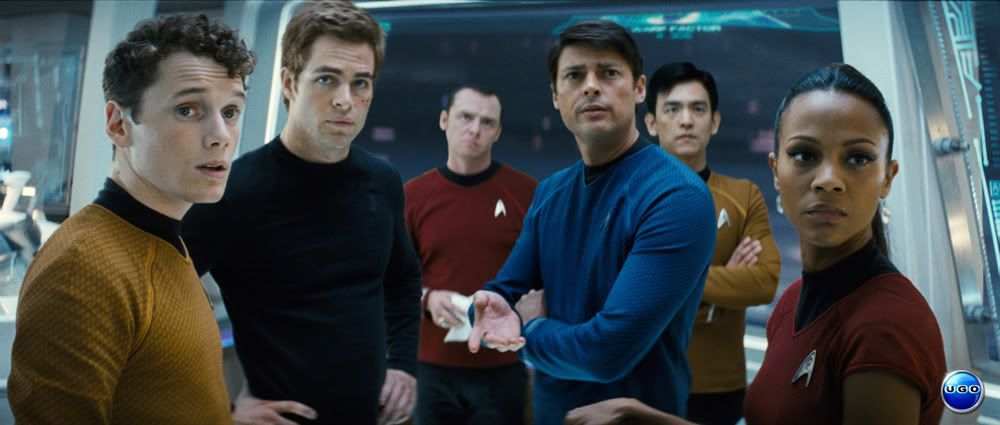
The new/old Star Trek cast
A familiar command crew for a new Enterprise

In the mid- to late 1960s, the original Star Trek television series became a popular-culture phenomenon, despite being canceled after only three seasons because of low ratings. Trek‘s appeal has endured not only because of its optimistic vision of the future, in which humanity has put aside its differences to explore the galaxy, but also because of its depiction of the crew of the U.S.S. Enterprise, whose intelligence and friendships enabled it to meet any challenge.

There was also sociopolitical allegory, fisticuffs and starship battles, swinging sex, and technobabble — and some excellent speculative fiction by respected authors. The original series (TOS) has influenced all genre television since with its archetypal characters, episode plots, and ensemble cast, even if it didn’t invent each of these things. While special effects have improved since early Doctor Who and TOS, the sometimes hammy acting and quasi-military Starfleet of the United Federation of Planets have been copied (Stargate SG1), parodied (Galaxy Quest), and reacted to (Battlestar Galactica) for 40 years.

I have many fond memories of watching TOS reruns while playing foosball late at night in college. The subsequent movies veered from campy to melodramatic, and the spin-off TV series — The Animated Series, The Next Generation, Deep Space Nine, Voyager, and Enterprise — had many fine moments, but they gradually lost focus and audience attention. Star Trek: Nemesis, the most recent flick in that shared universe, earned lackluster box office and reviews.

J.J. Abrams, who is best known for producing television’s Lost, has managed to update and shake up the Star Trek universe while preserving much of what made it compelling. I came out of the theater proud to be wearing my Trek T-shirt (Roddenberry was one of the first to realize the potential of licensed merchandise) and in the company of fellow “Trekkers” (or “Trekkies,” depending on your preference).

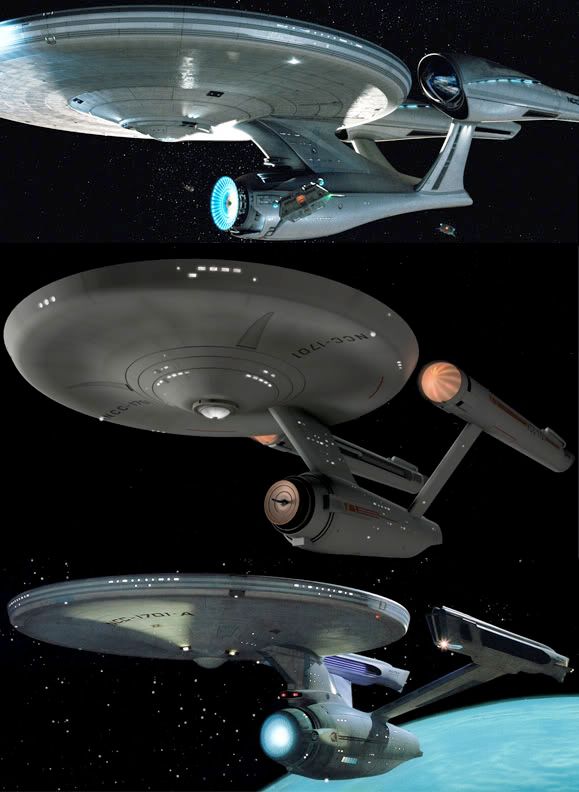
Without giving away any “spoilers” (which some of the reviews linked to in this review have) about the plot, the new Star Trek shows how the beloved command crew of the U.S.S. Enterprise NCC 1701 came together for the first time, about 200 years from now. In a significant twist, Nero, a nefarious Romulan miner from the even more-distant future, comes back seeking revenge on the logical (and also pointy-eared) Vulcans for the destruction of his homeworld.

The break in the timeline from previously established continuity happens in the opening scene, as the U.S.S. Kelvin is attacked by Nero’s massive space vessel, just as James T. Kirk is born. (A comic book miniseries ties this back to The Next Generation, if you care.) Many more people will suffer from the renegade Romulan’s plans, even as years pass and we see Kirk become a restless youth and a brash Starfleet cadet.

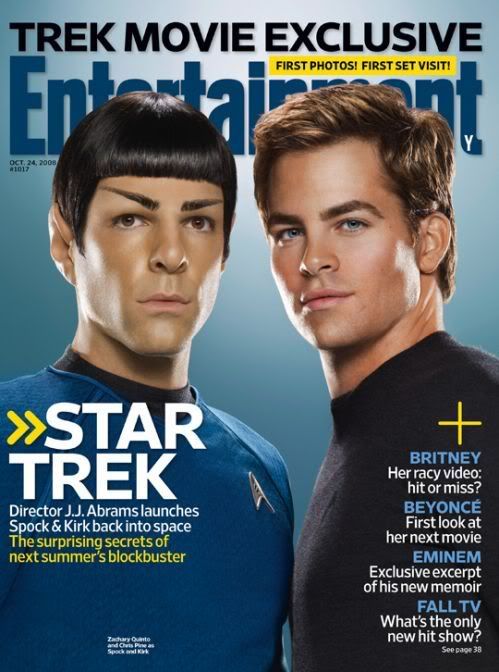
I was very impressed with the casting. The younger actors recreate the roles of their predecessors without sinking into mimicry or comedic impressions. Chris Pine has the right mix of cockiness and empathy for Kirk, mostly avoiding the often-imitated cadences of William Shatner’s line readings. The attractive Zoe Saldana is a catalyst as linguist Nyota Uhura, originally played by African-American pioneer Nichelle Nichols.

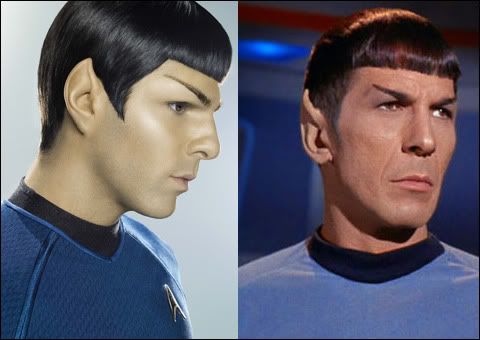
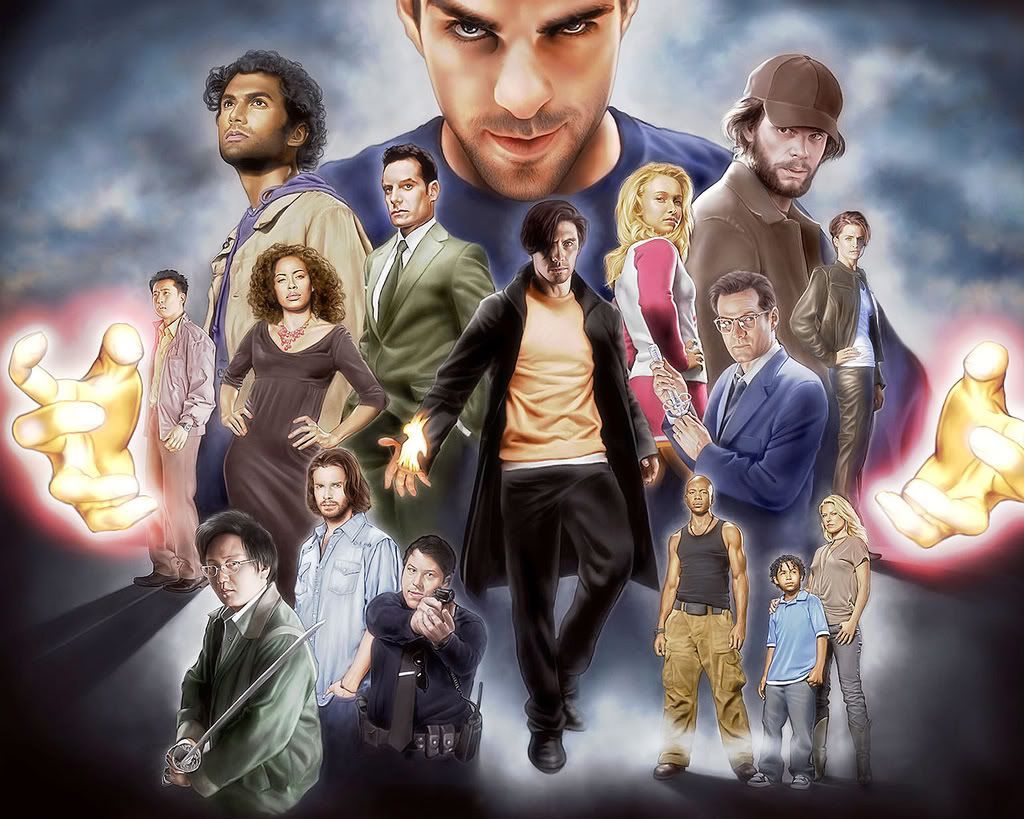
Zach Quinto, best known as the villainous Sylar on Heroes, is fascinating as the half-Vulcan/half-human Spock. Although he doesn’t have Leonard Nimoy’s baritone, he does hold his own, even opposite “Spock Prime” (thanks to the aforementioned time travel). Quinto’s Spock is torn between his logical Vulcan and emotional human sides — represented by Ben Cross, taking over for the great Mark Lenard as Ambassador Sarek, and Winona Ryder, as mother Amanda in truncated scenes, respectively.

Genre vet Bruce Greenwood plays Captain Christopher Pike, originally depicted by Jeffrey Hunter. Pike serves as a mentor to young Spock and Kirk, and is the subject of torture by Nero, played by Troy and Hulk‘s Eric Bana. Nero isn’t a villain on the level of Ricardo Montalban’s Khan Noonien Singh, but he’s better than the Romulan/Reman baddies of Star Trek: Nemesis. (I’ll repost my review of that later.)

My favorite was Karl Urban (Eomer in the Lord of the Rings films) as Dr. Leonard “Bones” McCoy. Although Urban isn’t quite the “old country doctor” as played by DeForest Kelley, his grumpiness and humanism perfectly complement Kirk’s id and Spock’s superego. Of a talented cast, Urban comes closest to replicating the spirit of the original actor and character.

The bridge of the starship Enterprise is eventually rounded out by John Cho as the swashbuckling Hikaru Sulu (replacing George Takei), Anton Yelchin as young ensign Pavel Chekov (originally Walter Koenig), and comic actor Simon Pegg capturing the enthusiasm of genius engineer Montgomery “Scotty” Scott (originated by James Doohan). I’ve been fortunate enough to meet many of the supporting actors at conventions over the years, and I was pleased that their characters were given more to do than they had been in several prior movies.

The script is witty, balancing the gravity of Kirk and Spock’s tragic family histories with the lively banter and catchphrases unique to Trek. In the process of saving starships and even planets, it was heartwarming to see Kirk, Bones, and Spock become the “big three” and to see the entire crew — and, by extension, the audience — become an unflappable team and family. The heroic optimism of Trek is relatively rare in space opera right now, and as relevant for the challenges we face with President Barack Obama as for those faced during President John F. Kennedy’s administration.

There is more action than in any previous Star Trek, partly thanks to a younger cast and a bigger budget. Fortunately, the funny quips and moments of character development make the pyrotechnics and loud space battles tolerable. Some of the physical comedy, as in a scene when Kirk is chased by a huge Cloverfield-style monster while marooned on an ice planet, or when Scotty is accidentally transported (teleported) into a water-circulation system, are classic Trek tropes that were lampooned in Galaxy Quest but balance the seriousness of the underlying story.

Speaking of the story, while I had reservations about the use of time travel and Romulans, I was pleased to see that bringing together the Enterprise crew was more important than the usual plot devices or villains. Originally, I would have preferred to continue forward from the era of The Next Generation/Deep Space Nine, but I understand Abrams’ reasons for going back to the best-known incarnation.

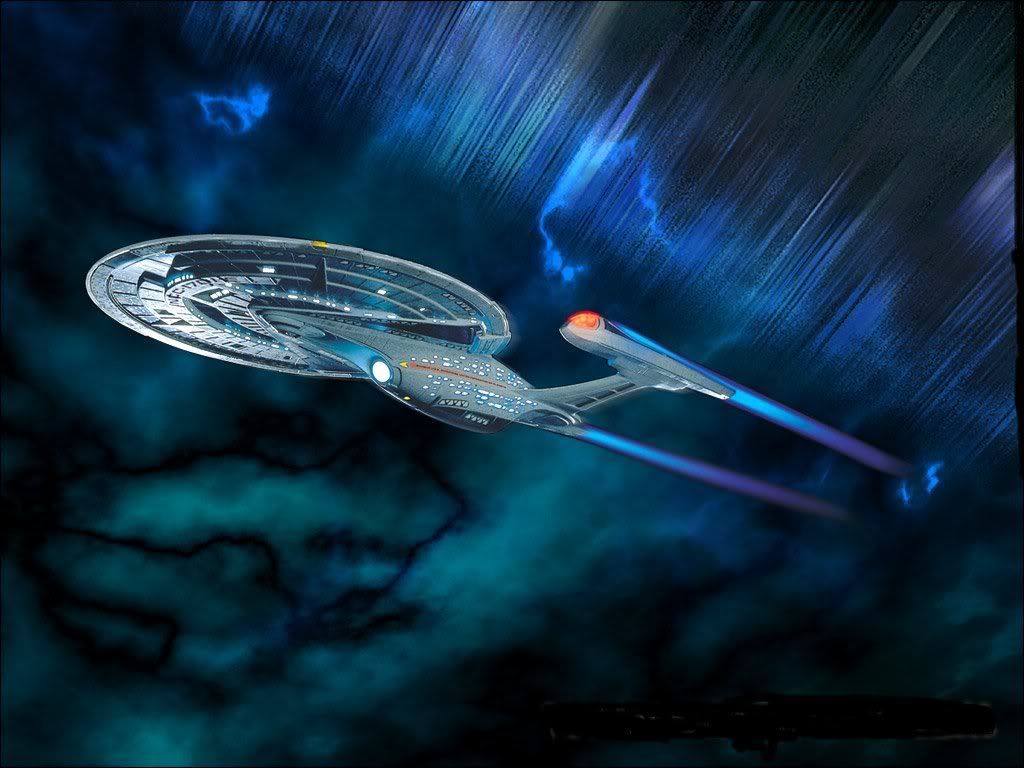
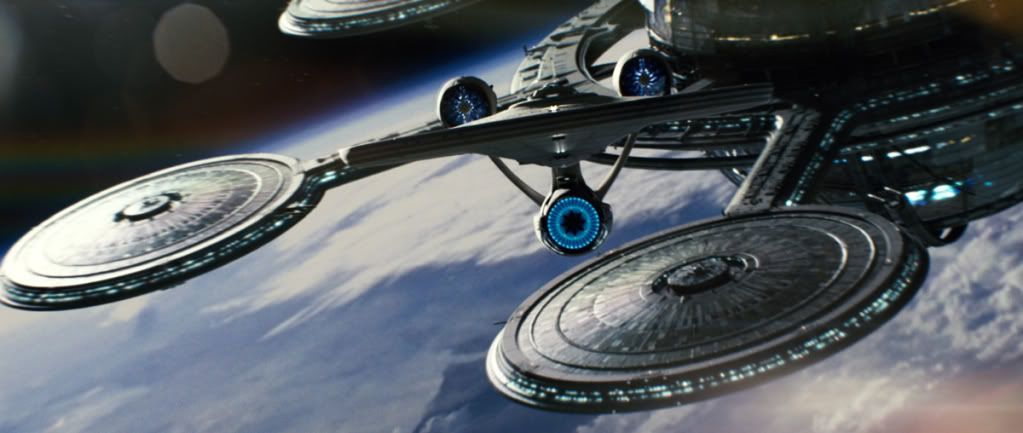
The visual effects were spectacular, and from the opening attack on the Kelvin to the final scenes of the Enterprise traversing interstellar space, the vessels and battles haven’t looked this good since Star Trek II: Wrath of Khan or Star Trek: First Contact. Perceptive fans will spot or hear references to Klingons, Tribbles, Cardassians, Adm. Archer, and the Kobayashi Maru test, but such allusions to the larger franchise don’t slow down the pace (although neither did any of the intellectual questioning of TOS).

Some fans and critics have complained that the retro/futuristic bridge set looks like an Apple Store, but I think that makes sense, given how our technology has evolved from the 1960s to the 2000s. Handheld communicators, portable computers, and graphical interfaces have caught up with the props of TOS.

On the other hand, much of science behind this science fiction isn’t much more plausible than in George Lucas’ Star Wars films, with exotic “red matter” creating black holes, some potential paradoxes, and a lack of explanation for standard Trek tech, such as transporters, force fields, invisibility cloaks, and warp drive. Still, the starship Enterprise is sleek but still recognizable, and I thought the updated costumes did a good job of evoking the era of beehive hairdos and go-go boots without looking dated.

The soundtrack is serviceable, but I have to admit that my emotions were touched upon hearing Alexander Courage’s original music and Nimoy’s voice-over late in the movie. I think that Abrams has succeeded in making an exciting movie that is still Star Trek, and I hope that both fellow fans and general audiences will rediscover what some of us have enjoyed for so long. Of the remakes I’ve seen, this is one of the best.

I’d give the new Star Trek a 9 out of 10, four stars, or an A. The movie is rated PG-13 for violence and some language. As Vulcans say, “Live long and prosper!”

Entry for March 31, 2009: Wonder Woman!

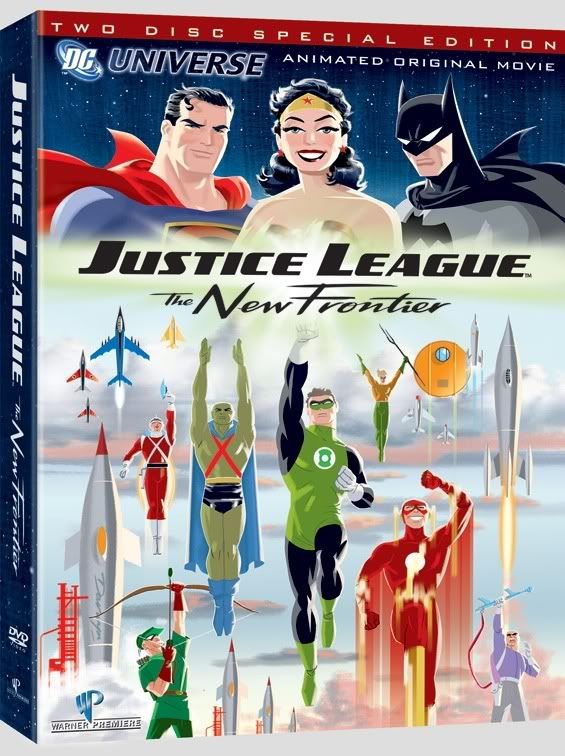
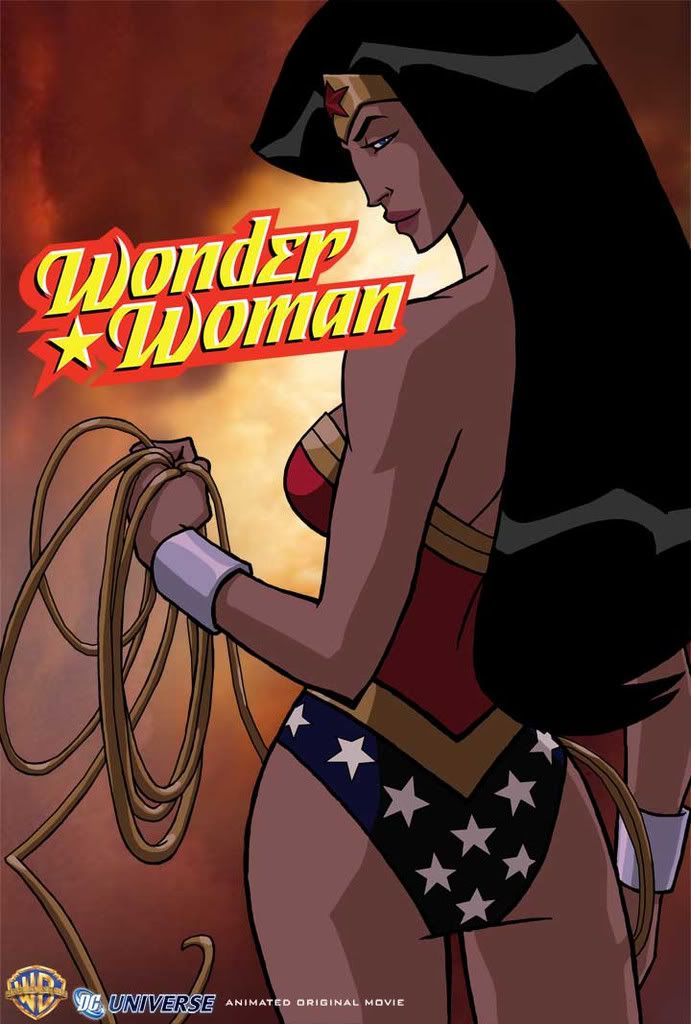
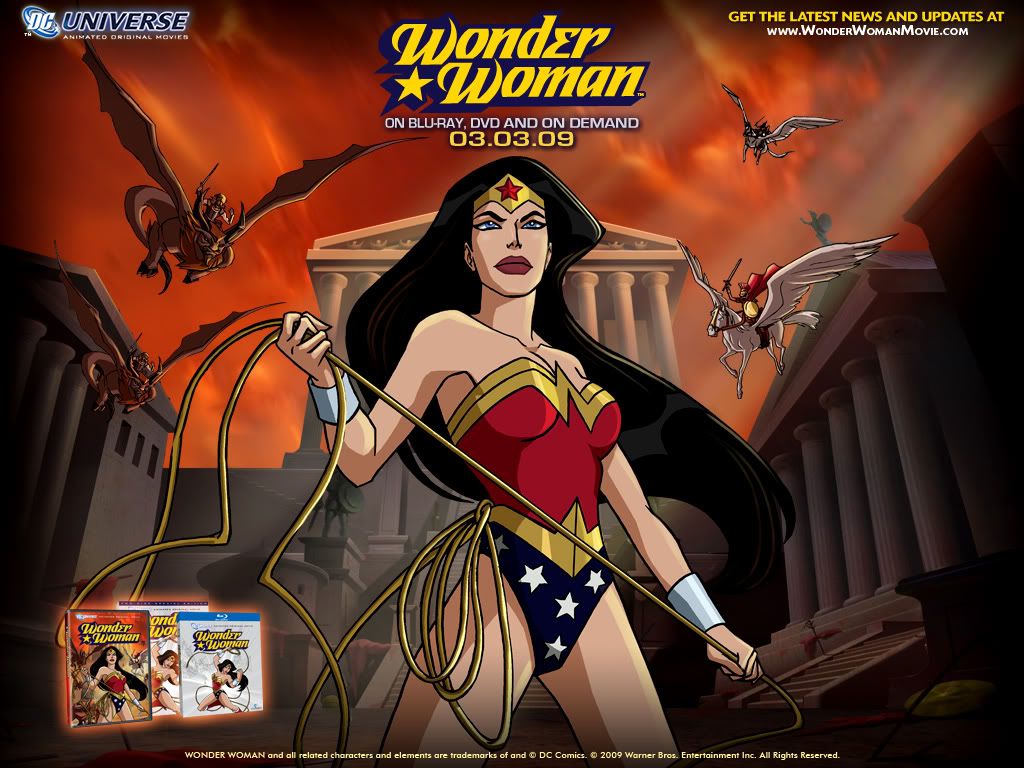
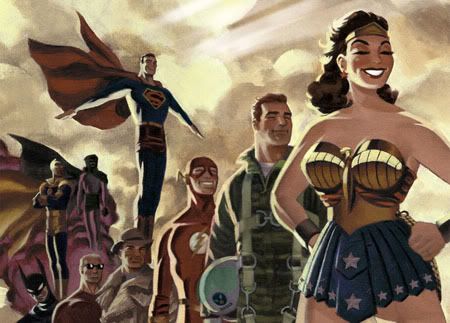
On Saturday, 21 March 2009, Janice and I picked up my subscription at New England Comics in Norwood, Massachusetts. In addition, we watched the new direct-to-DVD release of Wonder Woman. As with the retro Justice League: New Frontier and anime-style Batman: Gotham Knight, Wonder Woman is intended for an older audience than recent television cartoons based on DC Comics, such as the charmingly campy Batman and the Brave and the Bold.

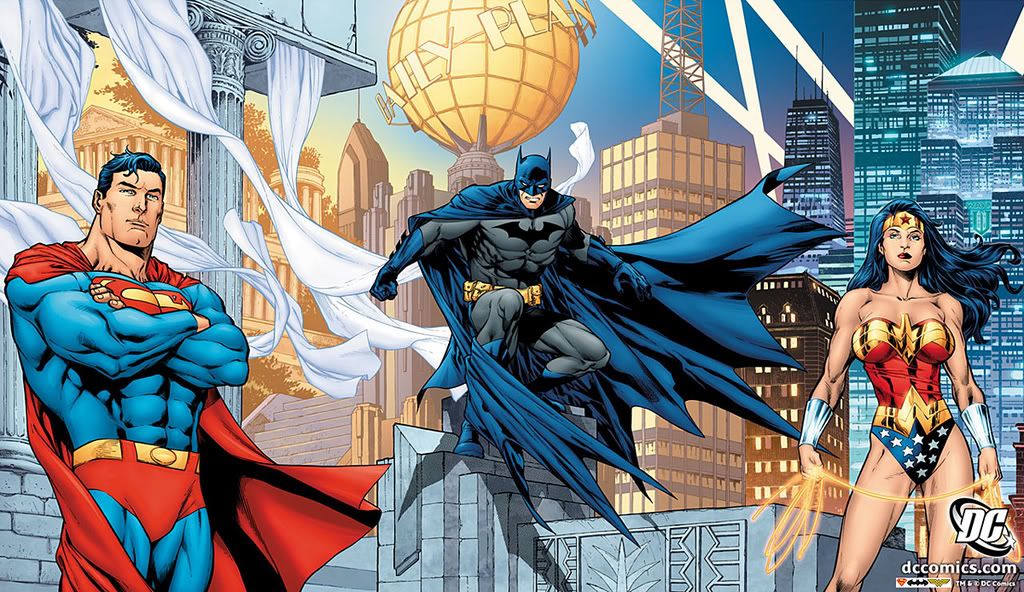
As one of the oldest and best-known costumed superheroes, Wonder Woman is considered one of the DC Universe‘s “big three,” along with Superman and Batman, but hasn’t been adapted into other media as often. I do remember her role in the Super Friends cartoon and the Lynda Carter television series back in the late 1970s, but even George Perez’s reboot after Crisis on Infinite Earths didn’t help Wonder Woman much in terms of popularity.

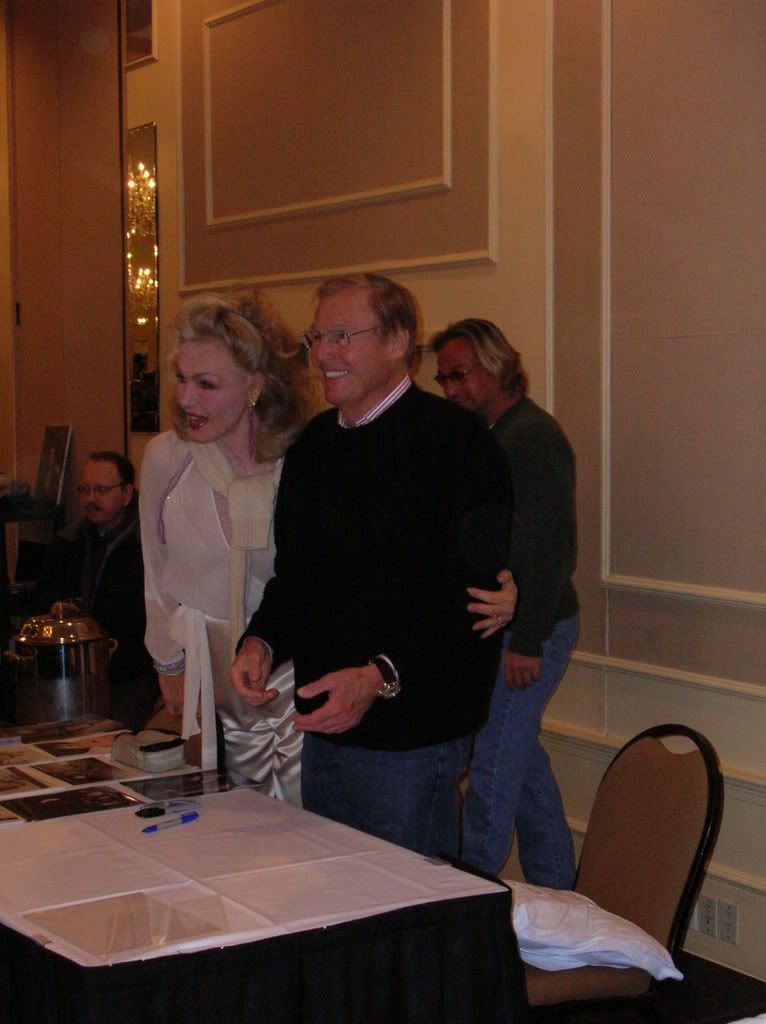
Fortunately, the recent Timm/Dini Justice League (now in reruns on Boomerang) helped revive interest in DC’s characters beyond print. While related big-budget movies have stalled — again, with the notable exceptions of Batman and Superman — at least the new video does justice to Princess Diana of Themyscira. On a side note, the actor who might have played Batman in George Miller’s Justice League had a cameo in this week’s episode of supernatural slacker comedy Reaper.

Wonder Woman retells the first superheroine’s mythic origin, from her creation from clay by Queen Hippolyta to her Amazon training to her departure for “man’s world” with U.S. pilot Steve Trevor. Her main opponents are petty Greek gods and the all-to-human vices of dishonesty, sexism, and war. The animation is solid, and the fight scenes earn the PG-13 rating for violence.

Wonder Woman!
Wonder Woman animated movie

The voice talent, picked by DC animation veteran Andrea Romano, is very good: Kerri Russell of Felicity and Waitress is the young princess, Virginia Madsen of Sideways is stern Hippolyta, and Firefly/Serenity and Castle‘s Nathan Fillion is a man in need of rescuing as Steve Trevor. Fans of Raiders of the Lost Ark and Spider-Man 2 will recognize Alfred Molina as the evil Ares, and Sin City‘s Rosario Dawson is the tough Artemis.

The writers, Michael Jelenic and Gail Simone, not only respect William Moulton Marston’s creation but also incorporate elements from more recent comic book storylines, having major battle scenes erupt in modern-day Washington D.C. I’d give Wonder Woman a 9 out of 10, or an A-.

The DVD’s extras include some insights into the production of the movie, episodes from Justice League Unlimited, documentaries about the history of Wonder Woman, and a preview of a promising direct-to-video Green Lantern. The documentaries were a bit repetitive, and I would have liked to see more about the television show’s effect on popular culture and comic book storylines since the Perez run. I do hope that the ambassador of Paradise Island will return to prominence in both print and live-action.

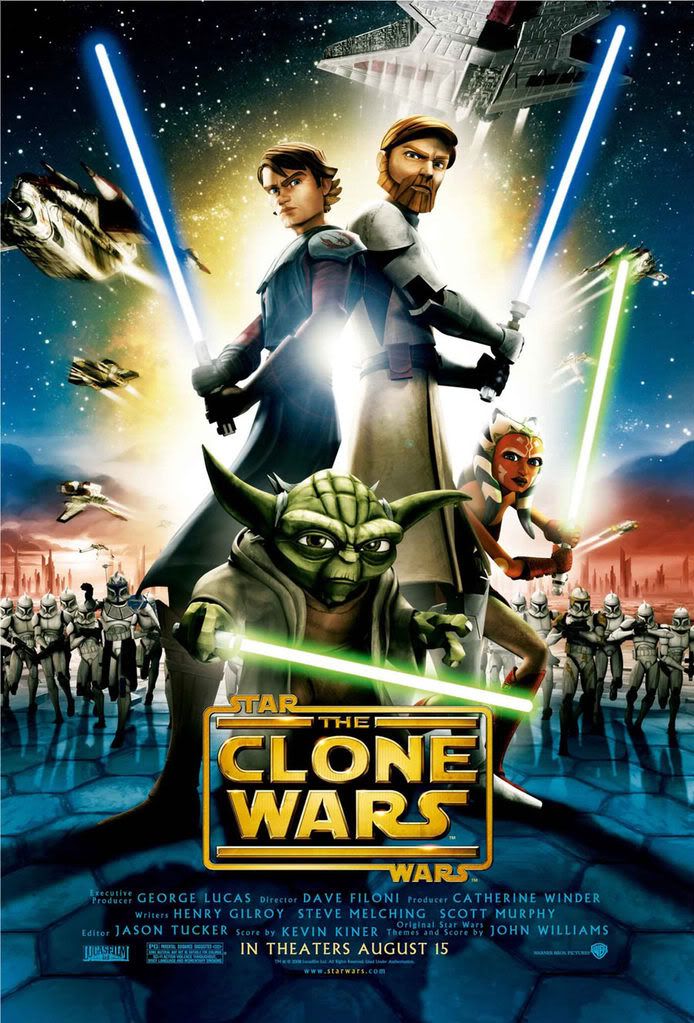
In other animation, I enjoyed the first season finale of Star Wars: the Clone Wars on the Cartoon Network. Speaking of DC heroines, Zatanna, the mistress of magic, made a guest appearance on Smallville last week. Janice and I also started watching our DVDs of the Kirk Alyn Superman serials from the late 1940s/early ’50s. This past weekend, we screened Monsters vs. Aliens, which I’ll review in my next blog post.

Entry for August 11, 2008: Why the Dark Knight shouldn’t return

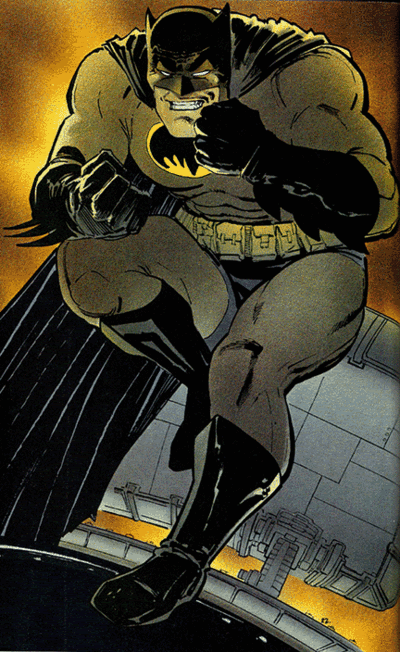
Batman and Robin in one dark future
Frank Miller's Dark Knight

With this summer’s spate of mostly successful movie adaptations of comic book superheroes (Iron Man, Incredible Hulk, Hellboy 2: the Golden Army, and especially Dark Knight), many fans have demanded that Frank Miller’s dystopic Dark Knight Returns (DKR) be made into a live-action movie. However, here are my top 10 reasons why it shouldn’t be done:

1. It’s dated. Although Watchmen may prove that a film making sociopolitical commentary using metahumans set in an alternate 1980s can be successful, DKR is filled with parodies of people such as President Ronald Reagan that may not resonate with current audiences. Not everyone has fond memories of the end of the Cold War and urban vigilantes such as Bernie Goetz.

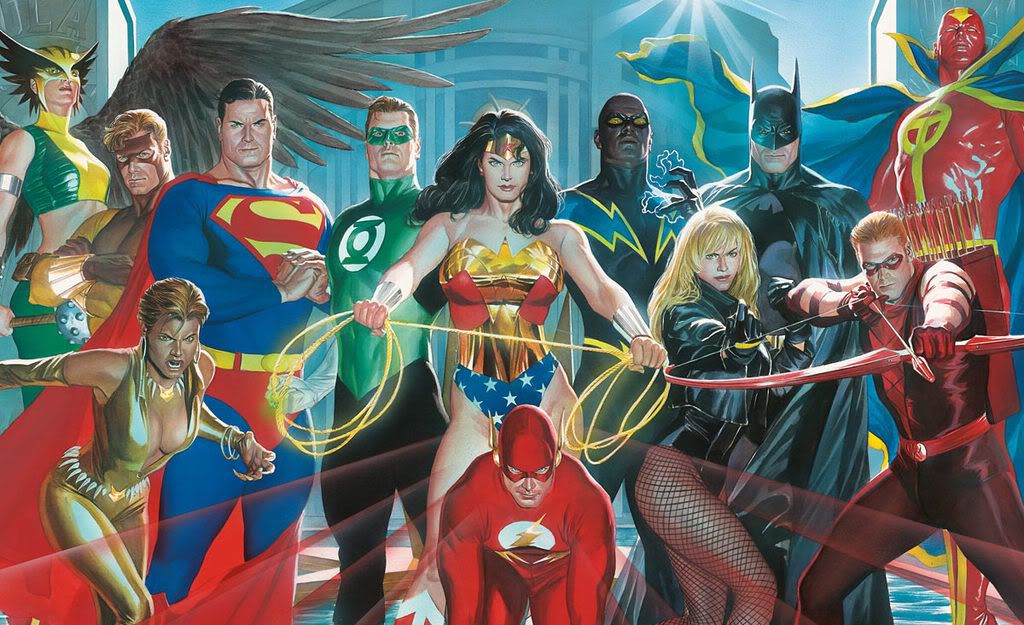
2. Its influence is already pervasive. As a move away from the campy Adam West television show of the late 1960s, DKR‘s grim approach to the caped crusader has been cited in Tim Burton’s 1989 Batman, numerous comic books (especially Mark Waid and Alex Ross’ similarly apocalyptic Kingdom Come), and even Batman Begins. Comic book writers have broken Batman’s back and are about to kill or retire him, however temporarily. A live-action version would almost be redundant at this point.

3. It has already been done — in animation. Episodes of The New Batman and Robin Adventures and the more recent The Batman directly alluded to Miller’s work, and the cyberpunk Batman Beyond owed its aged but still-determined Bruce Wayne to DKR. The Dini/Timm cartoons successfully balanced the detective, martial artist, and superhero aspects of Batman.

4. It could be done better — in animation. Warner Brothers’ direct-to-video efforts, including Justice League: The New Frontier, Batman: Gotham Knight, and the upcoming Wonder Woman, have been faithful to the source material and not constrained by effects budgets or live-action’s need for realistic style. Also, they’ve been free to pick and choose from DC Comics’ admittedly convoluted continuity, while a blockbuster movie could define the character — for good or ill — for a generation of potential fans.

5. Frank Miller is overrated. Although DKR is widely regarded as a classic graphic novel, his sequel, DK2: Dark Knight Strikes Again, wasn’t as good, and his All-Star Batman and Robin has been misogynistic, over-the-top camp (ironically, what DKR was supposedly turning away from) and not shipped on time. We’ll see if his version of Will Eisner’s classic masked gumshoe The Spirit is more of the same or truly innovative storytelling.

6. Other Frank Miller works are better. I’ve been impressed at the faithfulness of the film versions of his original noir crime drama Sin City and quasi-historical epic 300, and I’d love to see cyberpunk samurai story Ronin done well.

7. It would conflict with Christopher Nolan’s films. In terms of box-office returns, Warner Brothers will likely weigh this over the other considerations. Although similar in many aspects to DKR, Batman Begins was more directly based on Miller’s restrained Batman: Year One, just as Dark Knight owes much Batman: The Killing Joke and Long Halloween. Nolan has constructed his own version of the Dark Knight that eschews camp for psychological sturm und drang.

8. Other superheroes deserve some attention. As much of a Batman fan as I am, I’d like to eventually see well-done versions of Green Arrow, Flash, Aquaman, and Green Lantern, among other DC heroes. Why should Marvel have all the fun?

9. Why destroy a universe when it’s just being built up? With live-action Superman, Wonder Woman, and Justice League projects stalled for the moment, a deconstruction of the DC pantheon before it has been filmed seems premature at best, and self-defeating at worst.

10. It’s not my favorite incarnation. As I’ve noted before, I’ve enjoyed various versions of Batman in comics, television, and film, but I’m particularly fond of the 1990s animated series led by Bruce Timm and Paul Dini. There’s certainly room for multiple interpretations of Batman, such as fan film Batman: Dead End (just as with his fictional precursor Sherlock Holmes), but we should remember that the hyperviolent, armored warrior on crime is but one of them.

This is just my personal preference, and I realize that many people will strongly disagree with me, but such passions demonstrate how much life the 70-year-old character still has!

Entry for May 26, 2008: Indy 4 review

Friends, I hope that you’ve had a good Memorial Day weekend. On Saturday, 24 May 2008, Janice and I drove down to Norwood, Massachusetts, for lunch at Conrad’s and to pick up my subscription at New England Comics. From there, we went to the Emerald Square Mall in North Attleboro, Mass., where we ran into Sara F. & Josh C. After walking around a bit, we met Ken G. at the Showcase Cinemas nearby, later followed by dinner at Applebee’s. Here’s my review of Indiana Jones [4] and the Kingdom of the Crystal Skull.

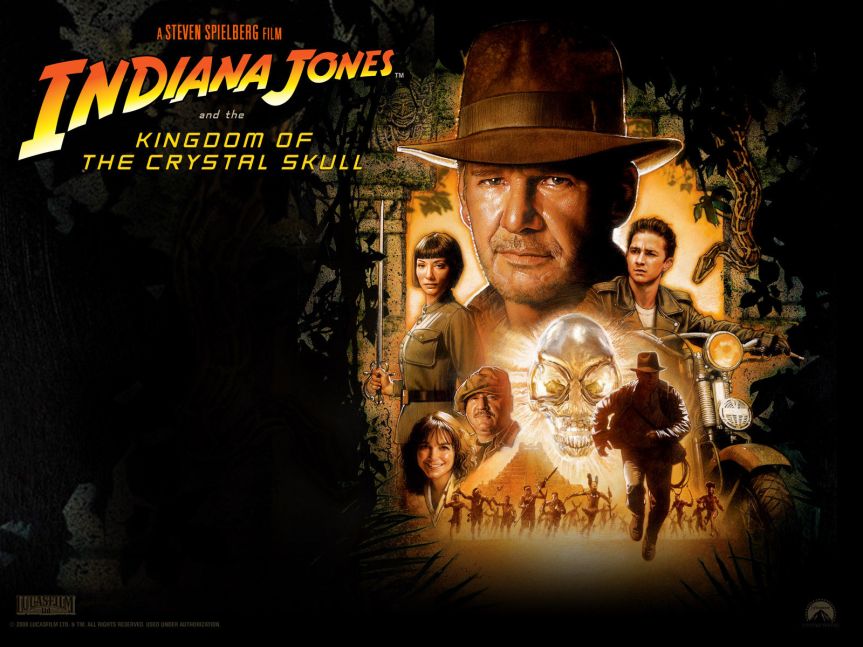
Indy 4 wallpaper
Once more, cliffhanging adventures

First, the usual disclaimer: I’ve been a fan of this cliffhanging franchise since seeing Raiders of the Lost Ark with my father back in 1981 (“It’s not the years, honey, it’s the mileage”). I own numerous DVDs, reference books, novelizations, comics, role-playing games, and toys associated with the works of producer George Lucas, director Stephen Spielberg, and lead actor Harrison Ford. And, yes, I did wear my safari shirt and fedora, but at least I left my whip at home! Thus, this is hardly an objective review, and since a movie ticket now costs about $10 a pop, I tend to like those films I choose to see in theaters.

Kingdom of the Crystal Skull, or “Indy 4” for short, picks up the story of our favorite adventuresome archaeologist in 1957. The Nazi and Thuggee adversaries of the earlier flicks have been replaced by Soviets, and the MacGuffin this time is a South American artifact that may be of extraterrestrial origin (I’ll try to avoid “spoilers,” but some of the reviews I’m linking to may give away more of the plot).

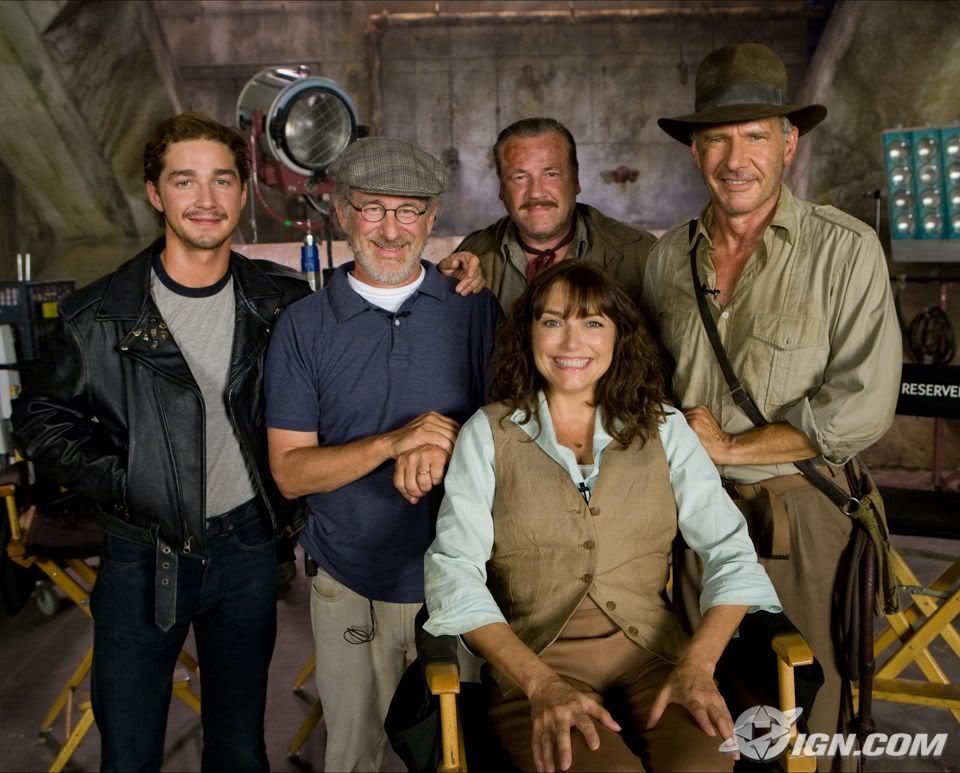
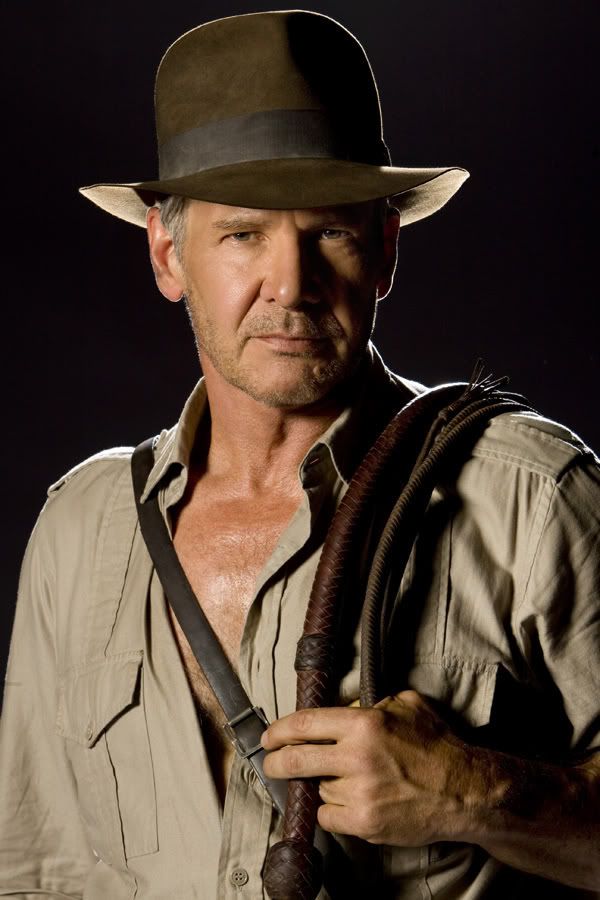
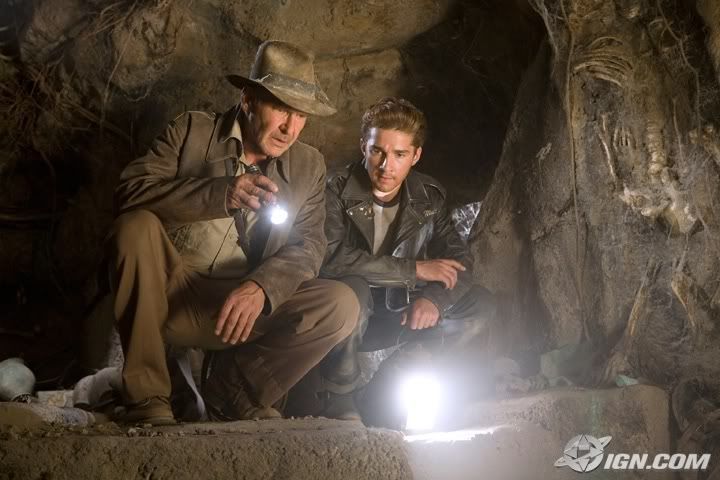
The strongest part of this movie is the cast, with Ford only slightly slowed by age as Professor Henry “Indiana” W. Jones Jr. and Karen Allen still attractive as a middle-aged Marion Ravenwood, Indy’s spunky onetime girlfriend. I missed the presence of the late Denholm Elliott as mentor Marcus Broady, John Rhys-Davies as Egyptian ally Sallah, and Sean Connery as Dr. Henry Jones Sr., but their absence was noted, and Jim Broadbent, Ray Winstone, and John Hurt do add a bit of gravitas to the ensemble, even if their roles are small.

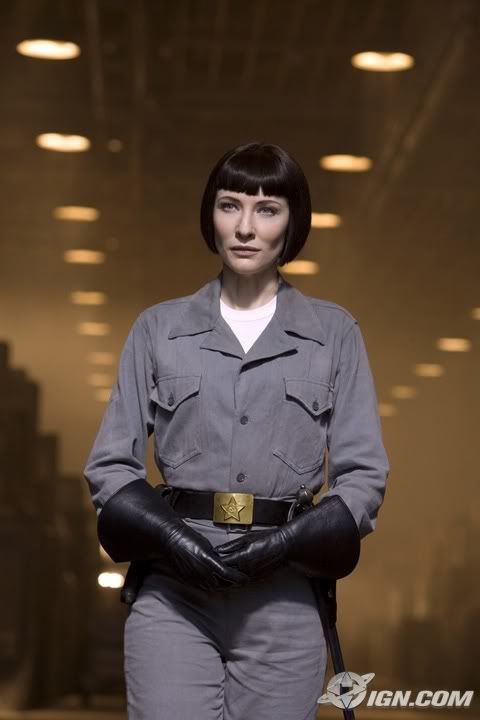
Newcomers to the franchise include Cate Blanchett as nefarious Soviet paranormal investigator Col.Dr. Irina Spalko and the ubiquitous Shia LaBeouf as youthful rebel without a cause Mutt Williams. As in last summer’s Transformers, LaBeouf acquits himself well and isn’t as annoying as he could be in a blockbuster movie. Lucas’ musings on father-son relationships, human history and belief, and the value of friendship are here as in his Star Wars space opera series.

The cinematography reminded me of how Raiders, Indiana Jones [2] and the Temple of Doom, and Indiana Jones [3] and the Last Crusade revived interest in the pulp entertainment of the 1930s. This time, Indy and his globe-hopping compatriots go from the desert of New Mexico to the groves of academe in the U.S. Northeast to the highlands of Peru. Computer-generated imagery smoothly replaced the matte paintings and animatronics of previous films.

Speaking of the previous films, there are several “Easter eggs” for alert fans, including references to the lost Ark of the Covenant, to the camaraderie of The Last Crusade, and even to the instructive Young Indiana Jones Chronicles television series, as well as the novel and comic book continuity.

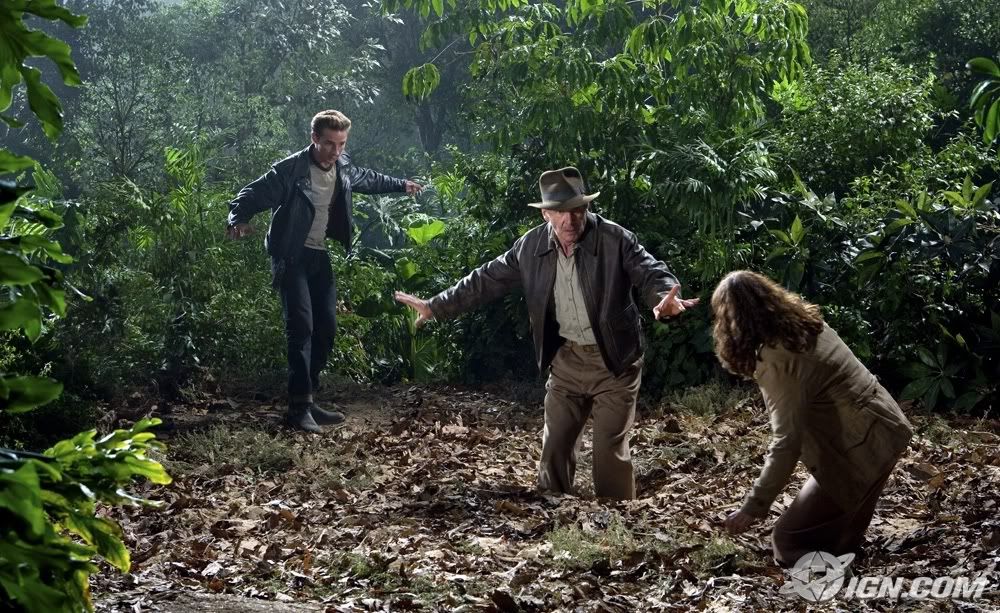
The set-piece action scenes are also well-done, playing to Spielberg’s strengths. They include fisticuffs in a secret government warehouse followed by a nuclear explosion, a swashbuckling chase scene through the jungle and down some waterfalls, and the usual trap-riddled tombs and temples. There are of course snakes, angry natives, and this time, ants. Yes, the pace is slower than it was in the original movies or in those that would carry on their legacy, such as The Mummy and National Treasure, but I think that gave the characters time to shine.

I would have preferred a more mystical MacGuffin or plot device, in keeping with the previous movies, but I understand the need for more science fictional elements since Indy 4 is set in the 1950s. In fact, I did like seeing the greasers and bobby-sockers of Lucas and Ford’s American Graffiti, visual allusions to Spielberg’s Close Encounters of the Third Kind, and displays of the patriotism and paranoia of the Cold War that are still strangely relevant. The movie quietly ends on a high note, if not quite the ride into the sunset of Last Crusade. On the other hand, I’m not sure if a continuation about Mutt would really count as an Indy flick.

Overall, I’d give Indiana Jones and the Kingdom of the Crystal Skull, which is rated PG-13 for violence and profanity, an 8 out of 10, or a B+. How does that compare with the previous installments? Raiders gets a 9 or a 10, or an A+. I’d give Temple of Doom a 7 or an 8, or a B+, while Last Crusade deserves an 8 or a 9, or a A-. I’d also give the Young Indiana Jones Chronicles (now on DVD) an 8, or a A-/B+.

Janice and others at dinner noted that they enjoyed Indy 4 more than Speed Racer or The Chronicles of Narnia [2]: Prince Caspian. We all liked Iron Man, which remains the genre film to beat so far this summer. I don’t know if I’ll get to the theater for computer-animated comedy Kung-Fu Panda, but I do hope to catch The Incredible Hulk in the coming month.

In related news, I belatedly watched Disney’s computer-animated Meet the Robinsons, which was fairly entertaining. The season finales of supernatural slacker comedy Reaper, superhero drama Smallville, and Showtime’s The Tudors were decent, although I’m not sure the latter was historically accurate.

Completely devoid of historical accuracy was Brian W.‘s fun “Savage Worlds: Paranoiaone-shot last week. It was the first of a series of games between the D&D3.5 “Vanished Lands: the Broken Chains” Arabian fantasy campaign and the Boston-area group’s first Dungeons & Dragons Fourth Edition party. The “Broken Chains” disbanded after many adventures; after fighting monsters, cultists, and demons, it was nice to end that party for now with the birth of one character’s children!

I thought Brian did a good job of melding the Savage Worlds rules-light pulp system with Paranoia‘s comedic cyberpunk. Tonight, I’ll be missing Josh C.’s Everway fantasy session because I’ll be running the D&D3.5 “Vanished Lands: Holy Steel” teleconferencing team. I’ve spent much of the holiday weekend catching up on reading and filing. Janice and I also recaulked our bathroom, although painting and plumbing issues remain. Next weekend, we’ll be visiting my family in Virginia.