Entry for August 11, 2008: Why the Dark Knight shouldn’t return

Batman and Robin in one dark future
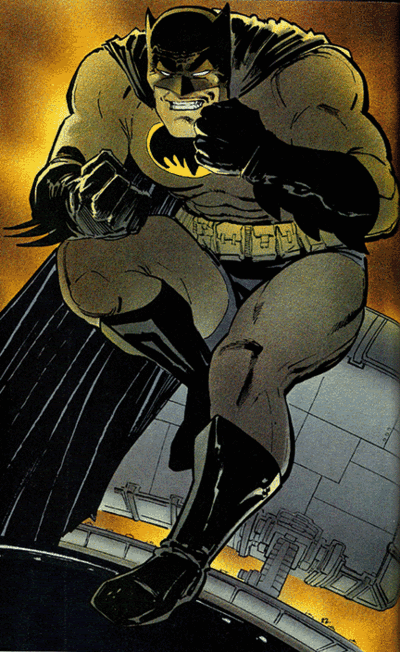
Frank Miller's Dark Knight

With this summer’s spate of mostly successful movie adaptations of comic book superheroes (Iron Man, Incredible Hulk, Hellboy 2: the Golden Army, and especially Dark Knight), many fans have demanded that Frank Miller’s dystopic Dark Knight Returns (DKR) be made into a live-action movie. However, here are my top 10 reasons why it shouldn’t be done:

1. It’s dated. Although Watchmen may prove that a film making sociopolitical commentary using metahumans set in an alternate 1980s can be successful, DKR is filled with parodies of people such as President Ronald Reagan that may not resonate with current audiences. Not everyone has fond memories of the end of the Cold War and urban vigilantes such as Bernie Goetz.

2. Its influence is already pervasive. As a move away from the campy Adam West television show of the late 1960s, DKR‘s grim approach to the caped crusader has been cited in Tim Burton’s 1989 Batman, numerous comic books (especially Mark Waid and Alex Ross’ similarly apocalyptic Kingdom Come), and even Batman Begins. Comic book writers have broken Batman’s back and are about to kill or retire him, however temporarily. A live-action version would almost be redundant at this point.

3. It has already been done — in animation. Episodes of The New Batman and Robin Adventures and the more recent The Batman directly alluded to Miller’s work, and the cyberpunk Batman Beyond owed its aged but still-determined Bruce Wayne to DKR. The Dini/Timm cartoons successfully balanced the detective, martial artist, and superhero aspects of Batman.

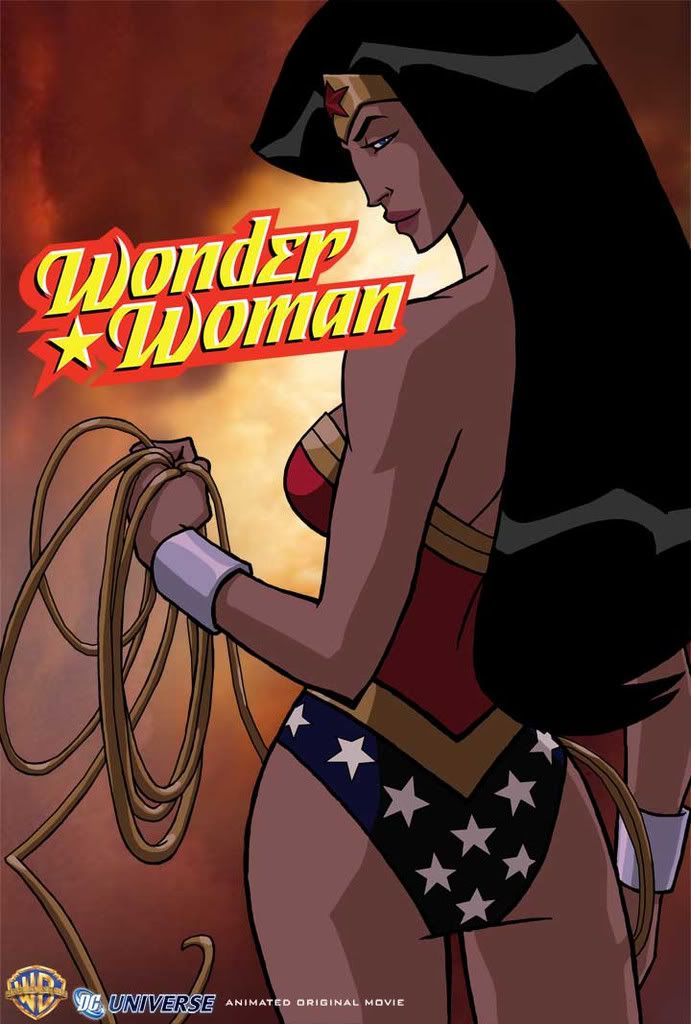
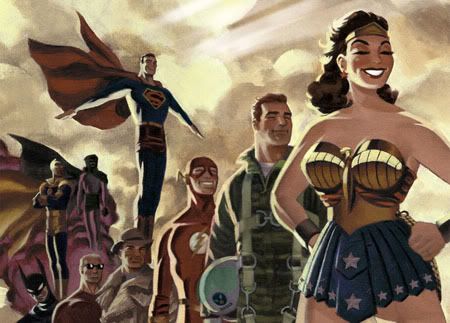
4. It could be done better — in animation. Warner Brothers’ direct-to-video efforts, including Justice League: The New Frontier, Batman: Gotham Knight, and the upcoming Wonder Woman, have been faithful to the source material and not constrained by effects budgets or live-action’s need for realistic style. Also, they’ve been free to pick and choose from DC Comics’ admittedly convoluted continuity, while a blockbuster movie could define the character — for good or ill — for a generation of potential fans.

5. Frank Miller is overrated. Although DKR is widely regarded as a classic graphic novel, his sequel, DK2: Dark Knight Strikes Again, wasn’t as good, and his All-Star Batman and Robin has been misogynistic, over-the-top camp (ironically, what DKR was supposedly turning away from) and not shipped on time. We’ll see if his version of Will Eisner’s classic masked gumshoe The Spirit is more of the same or truly innovative storytelling.

6. Other Frank Miller works are better. I’ve been impressed at the faithfulness of the film versions of his original noir crime drama Sin City and quasi-historical epic 300, and I’d love to see cyberpunk samurai story Ronin done well.

7. It would conflict with Christopher Nolan’s films. In terms of box-office returns, Warner Brothers will likely weigh this over the other considerations. Although similar in many aspects to DKR, Batman Begins was more directly based on Miller’s restrained Batman: Year One, just as Dark Knight owes much Batman: The Killing Joke and Long Halloween. Nolan has constructed his own version of the Dark Knight that eschews camp for psychological sturm und drang.

8. Other superheroes deserve some attention. As much of a Batman fan as I am, I’d like to eventually see well-done versions of Green Arrow, Flash, Aquaman, and Green Lantern, among other DC heroes. Why should Marvel have all the fun?

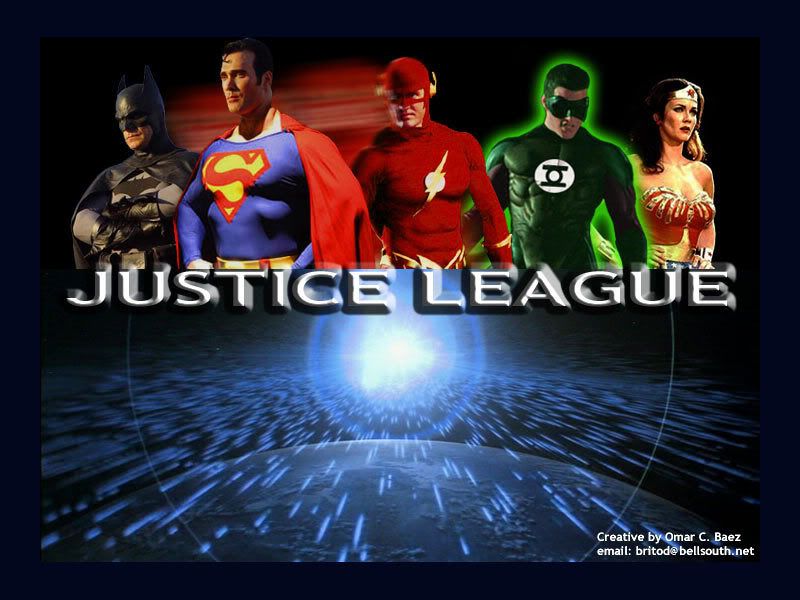
9. Why destroy a universe when it’s just being built up? With live-action Superman, Wonder Woman, and Justice League projects stalled for the moment, a deconstruction of the DC pantheon before it has been filmed seems premature at best, and self-defeating at worst.

10. It’s not my favorite incarnation. As I’ve noted before, I’ve enjoyed various versions of Batman in comics, television, and film, but I’m particularly fond of the 1990s animated series led by Bruce Timm and Paul Dini. There’s certainly room for multiple interpretations of Batman, such as fan film Batman: Dead End (just as with his fictional precursor Sherlock Holmes), but we should remember that the hyperviolent, armored warrior on crime is but one of them.

This is just my personal preference, and I realize that many people will strongly disagree with me, but such passions demonstrate how much life the 70-year-old character still has!

Entry for April 23, 2008: Pennsylvania trip

Friends, I hope you had a good weekend and a Happy Passover. My thoughts are with the ill parents of Ron J.K., Brian D.H., and Erik B.L. Speaking of family, this past weekend, Janice and I drove down to Pennsylvania to see her extended family. She normally tries to visit around Easter, but the holiday was early this year, and her mother was just recovering from knee-replacement surgery.

On Friday, 18 April 2008, we managed to avoid serious traffic on the long drive from Massachusetts to Pennsylvania, which held its presidential primaries this week (gas prices are hurting everyone). We met Janice’s parents, youngest sister Melinda, and Melinda’s children Amanda and Joshua at Perkins for lunch before checking into the Howard Johnson in Allentown, Pa. Melinda’s husband Gary wasn’t able to join us from Upstate New York.

We then caravanned out to Roadside America, a miniature village that we’ve gone to before. However, each time is a bit different as our nieces and nephews grow up. I’m a big fan of model railroads and such dioramas.

We then grabbed dinner at Saville’s Diner, where Janice’s paternal grandmother (Mammy) had taken us after Thanksgiving (I ate scrapple), before visiting Janice’s Uncle Billy, the boisterous brother of her mother Linda. Unfortunately, Josh became ill with some sort of stomach bug and slowly recovered through the rest of the weekend. Despite Joshua (and thus Melinda) being indisposed, it was nice to see that side of my in-laws.

On Saturday, April 19, we went to a local Earth Day fair/flea market before meeting Janice’s middle sister Shelly, her husband Melvin, and their children Becky, Laura, and David for lunch at Talarico’s, a longtime favorite for its cheesesteak subs.

We then went to Mammy’s apartment nearby, where we met more of Janice’s father Marvin’s side of the family. I spent much of that afternoon horsing around outside with smart Laura, rambunctious David, and precocious Amanda, while Becky talked about boys and Joshua slowly felt better. Janice and I also stopped by the Zern’s indoor flea market (we picked up some shoo-fly pie; see photo above). We later ordered pizza for dinner.

On Sunday, April 20, Janice and I stopped by the Blue Colony Diner in Connecticut on our way home. If, gentle reader, you’ve made it this far, by now you’ve no doubt observed my love of cuisine, specifically so-called comfort food. Why? Part of it is from growing up around New York City, where Jewish delicatessens and Greek diners are as much a part of the landscape as corner pizzerias (or, more recently, burrito chains).

Part of my affection is that in diners, one can get many types of food (breakfast, ethnic, dessert) at all times of day or night, served by swift, friendly, and unpretentious people. There are relatively few near where I now live in New England, so nostalgia no doubt plays a part. I realize that to eat grilled sandwiches or chocolate cake too often probably wouldn’t be especially healthy.

I’ve spent the past few days catching up on work, gaming, and genre television. The fourth season (series in the U.K.) premiere of the revived time-travel drama Doctor Who and the second season finale of conspiratorial spin-off Torchwood were both surprisingly serious, with significant character casualties, as was the latest season finale of young metahuman ensemble Smallville.

Although I didn’t get to the New York Comic-Con, I’ve been catching up on news from the event, most of which pertains to cinematic adaptations of comic book superheroes. I’ll be catching up on the hardcopy versions, but this coming weekend’s editorial off-site retreat and next week’s opening of Iron Man should be good. More on those to come!

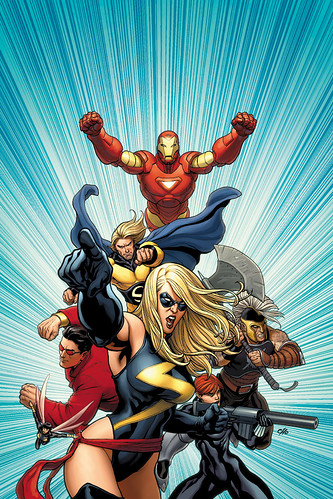
Superhero collection
Josh’s action figures

Entry for November 06, 2007: Crime, crafts, and comics

On Saturday, 3 November 2007, Janice and I stayed in due to the Nor’easter. Fortunately, the remnants of Hurricane Noel didn’t cause much damage around us, but a recent murder in Needham, Massachusetts, did have residents on edge.

We caught up on reading and recorded television episodes (more on that in a moment). On Sunday, we drove into Boston for a craft show. Although we didn’t buy much art, the numerous free samples of dipping sauces, baked goods, and soups in the tasting aisle were a hit as always. We may attend the Sugarloaf Craft Festival in Hartford, Connecticut, next weekend. In addition, I watched the New England Patriots narrowly defeat the Indianapolis Colts.

The writer’s guild strike will no doubt affect genre entertainment, but right now, my favorite shows include supernatural comedies Reaper and Pushing Daisies, animated fantasy Avatar: the Last Airbender, and even belatedly improved superhero drama Smallville. The second tier of television I watch includes Chuck, Heroes, Journeyman, Women’s Murder Club, Legion of Superheroes, The Batman, and Torchwood.

I haven’t been to the cinema in a while, but the coming weeks will bring theatrical releases of the original Star Trek pilot, “The Menagerie,” and Battlestar Galactica: Razor, as well as Neil Gaiman’s computer-animated Beowulf. I’ve also got to track down Day Watch, the sequel to the moody modern Russian horror movie Night Watch, which I have on DVD.

Before I get to my current favorite comic books, here are 10 trends I’ve noticed in the past few months, mainly with the “big two” publishers, DC Comics and Marvel Comics:

Looking Back: As I get older, I have a greater appreciation for the Golden Age (1930s to 1950s) and Silver Age (1960s to 1970s), so it isn’t surprising that some writers and artists want to get beyond the timebound Bronze Age (1970s to 1980s) and the grim outlook of the Iron or Modern Age (late 1980s to present).

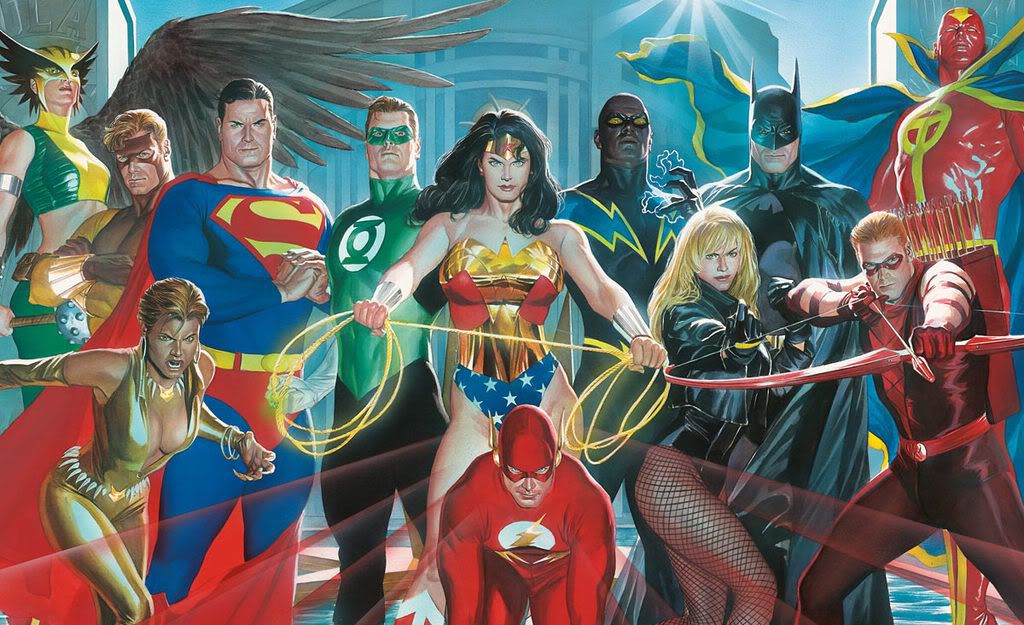
Artist Alex Ross has almost single-handedly spearheaded this idealistic nostalgia, from Marvels and Justice to the upcoming Superpowers and Avengers/Invaders. I like the four-color heroics of such graphic novels, and I wish more mainstream titles could recapture that sense of entertainment. On the other hand, I also like the faster pace of modern storytelling and progress in artistic styles.

Crossover Fatigue: While I understand that publishers need to get people to buy as many issues as possible to stay profitable, keeping track of sprawling continuities is burning out many longtime fans’ interest and discouraging new readers from joining our hobby. Like the graphic violence and variant-cover speculation that harmed comic books’ reputation in previous decades, this could again stunt its reputation.

DC’s Identity Crisis/Infinite Crisis/52/One Year Later/Countown to Final Crisis started out with some good development of secondary characters but has become a drawn-out exercise in muddling history, despite achieving the feat of coming out mostly on schedule. Marvel’s event-based Civil War/the Initiative and House of M/Endangered Species/Messiah Complex have been more focused in terms of story but have had problems shipping on time.

Mistrust of Government: Thinly veiled allegories of recent U.S. politics could be found in the aforementioned stories, which crossed through multiple monthly and even weekly titles. In the DC universe, Batman and Checkmate, among others, struggled with paranoia and espionage within the metahuman community.

In the Marvel universe, Iron Man‘s leadership in getting the Superhuman Registration Act passed and during the subsequent Civil War dealt more directly with the questions of civil liberties vs. security raised in the so-called war on terror. Even if I’m sympathetic to liberal writers’ views, some of these tales have been rather heavy-handed.

A-Team, B-Team: While many costumed vigilantes were involved in the big crossovers, the better-told stories actually involved other teams, including Green Lantern‘s Sinestro Corps War, Civil War: Frontline, and World War Hulk. Not all were successful, with Wonder Woman: Amazons Attack suffering from weak writing and timing.

Other examples include the fact that DC’s Justice Society of America has been more compelling than Justice League lately or that I find myself enjoying the divided Avengers (Mighty and New) more than the various X-Men teams.

Resurrected Sidekicks: While Bruce Wayne’s parents and Peter Parker’s Uncle Ben may remain dead, both DC and Marvel altered longstanding continuity by bringing back Jason Todd/Robin II and Bucky Barnes, Captain America‘s World War II partner. Both came back with bad attitudes and some popularity. Since I like Tim Drake/Robin III and Cap’s postwar career, I don’t see the need for more angst, even if I think the writing around Bucky/”the Winter Soldier” is well-done.

On a related note, the secret identities of various masked men and women of mystery has also been a conceit honored more i
n the breach lately. Yes, Clark Kent’s disguise is thin at best, but I’m not sure Daredevil and Spider-Man needed to be “outed” only to be put back in the closet by events such as “One More Day.”

Villains Unite: One of the more interesting trends lately is that the bad guys have learned from their nemeses and are organizing while the superheroes argue among themselves. Sure, various paramilitary groups, cults, and ad hoc villain teams have existed for years, but the newest ones, led by Avengers foe the Hood and Lex Luthor’s Injustice League, have real menace as they outmaneuver the good guys.

Slain Heroes: Unfortunately, the corollary to the above is that Dan DiDio, editor in chief of DC, and Joe Quesada, EIC of Marvel, seem to enjoy killing off beloved characters. Again, I’ve been favorably impressed with the writing on Captain America even after the assassination of icon Steve Rogers. Early rumors on the Net suggest that Batman may be next to die (no doubt to be reborn after much hype).

Ever since Sherlock Holmes — and more recently, Superman — popular characters have been killed and brought back at a whim. I’d rather see the creativity and hype be directed at maintaining icons and developing their settings.

All-Ages Titles: As with nostalgia for the Golden and Silver Ages, comic book publishers have made attempts to recapture their original audience of children. The results have been mixed: Some titles have been fun (such as DC’s “Johnny DC” line and Marvel’s “Adventures” line), but family-friendly titles are now in sort of a ghetto. I certainly don’t want to go back to the censorship of the Wertham Commission and the Comics Code, but some balance might help with wider distribution.

Movie Madness: Within the industry and among some fans, there has been much hand-wringing over crossover fatigue, but to the general public, costumed vigilantes have never been more popular, thanks to several successful movie adaptations. My favorites among the recent batch include X-Men 2, The Incredibles, and Hellboy, not to mention various animated versions. Both of my nephews and numerous trick or treaters are apparently big fans of the caped and cowled set.

With Iron Man, the Dark Knight, Hellboy 2, and other adaptations in the works, as well as the multimedia appeal of the San Diego ComiCon, we can only hope that the best material rises to the top and enjoy the wave while it lasts.

Licensed properties: Dark Horse‘s Star Wars, Conan, the Lone Ranger, and Buffy: the Vampire Slayer, and Dynamite‘s Red Sonja and Battlestar Galactica are some of the better examples of this. IDW has also revived the Star Trek space opera franchise, which is in hibernation in other media for now. I’ve been favorably impressed with most of these adaptations, which have the advantage of established fan bases. As long as these publishers strive to be creative while remaining faithful to the core concepts of each work, I’ll be happy.

Entry for July 10, 2007: SFTV and music

Friends, I hope that you had a good weekend. On Friday, 6 July 2007, I chatted with role-player Byron V.O. in St. Louis. Unfortunately, fellow “Holy Steel” teleconferencer Dexter V.H. was unable to join us in time, but at least I recorded the solid third-season premiere of the BBC’s revived Doctor Who.

The long-running, time-travel television show has had regular rounds of turnover, not unlike my gaming groups. While Christopher Eccleston gave the good Gallifreyan a strong relaunch, I’ve grown to like David Tennant, who in these most recent episodes reminded me of the swashbuckling third doctor, Jon Pertwee.

While Freema Agyeman has been somewhat controversial as new companion “Martha Jones,” I thought she has been an intelligent addition in the episodes I’ve seen thus far. Granted, comedienne Catherine Tate was funny as the “Runaway Bride,” and we’ll see her again in Series 4.

I’m still catching up on recorded episodes of the BBC’s latest Robin Hood. I’d also like to mark the passing of science fiction author Fred Saberhagen, whose “Berserker” novels were favorites of my brother Peter and me.

On Saturday, July 7, Janice and I drove to various used bookstores in Sharon and Waltham, Massachusetts in an unsuccessful initial attempt to sell four boxes of used books that we got from Robert A.S., who recently moved to North Carolina.

We also caught an early matinee of computer-animated culinary comedy Ratatouille, which we liked. I would compare the Disney/Pixar movie favorably to Dreamworks SKG/Aardman’s Flushed Away, which also had clever rodents trying to find how to coexist in a society that mirrors that of humanity. I’d give “Ratatouille” an 8 or 8.5 out of 10.

Later, we watched some of the Live Earth concerts on Bravo and NBC. Thanks again to Steve M.R., who notified me of the events on his blog. A good mix of musical acts performed around the world for the worthy cause of raising ecological awareness and starting to change consumer behavior.

Speaking of music, in recent weeks, I also watched the tribute to the late Diana, princess of Wales, and to Paul Simon. Princes William and Harry organized a nice tribute to their mother, but the audio quality of the broadcast from Wembley Stadium wasn’t very good.

I thought that the best songs in the latter special were those with Simon’s old collaborator Art Garfunkel, a rockin’ medley with Stevie Wonder, and songs with South Africa’s “Ladysmith Black Mambazo.”

During the various Fourth of July concerts, I was glad to catch a few songs of Bebe Neuwirth, best known as Frasier Crane’s shrewish wife Lilith in Cheers and Frasier. Neuwirth was also the star of Broadway’s Chicago revival, which Janice and I later saw in Boston before the recent movie with Catherine Zeta Jones, so it made sense for her to sing numbers from various Bob Fosse musicals.

In a related genre, current pop favorite Amy Winehouse is a young British singer whose latest album harkens back strongly to 1960s soul. The song “Rehab” is as catchy and retro as Gnarls Barkley’s “Crazy” was last summer, with dark undertones but a sense of humor.

Of other current Top 40 music and video hits, I like Rihanna’s “Umbrella” (O.K., perhaps seeing her gyrate painted a la Goldfinger has something to do with that, but so does the beat), the “Black-Eyed Peas'” Fergie stretching a bit in “Big Girls Don’t Cry,” and Carrie Underwood’s righteous fury in “Before He Cheats.”

As various games resume this week, I’m already making plans to screen Harry Potter [5] and the Order of the Phoenix with some of the local group this coming Saturday and Live Free or Die Hard [4] with visitor Ron J.K. on Sunday. I’ll try to post a review of those and more role-playing games in the coming week.

While my primary blog is part of my Yahoo 360 site, I have posted a few things to my MySpace page, including the results of a “What Superhero Are You?” quiz and a link to a preview of the animated adaptation of D.C. Comics’ Death of Superman.

Entry for May 14, 2007: Spider-Man 3 review

Friends, since several of you have asked for my review of Spider-Man 3, here it is. Thanks again to Ken G., who organized the gathering of about a dozen of his friends, as well as Thomas K.Y. and fellow co-worker Mark H., on Sunday, 6 May 2007! We met for an early matinee at the IMAX theater next to Jordan’s Furniture in Framingham, Massachusetts, and found moviegoers already in line. Warning: There are a few plot “spoilers” below.

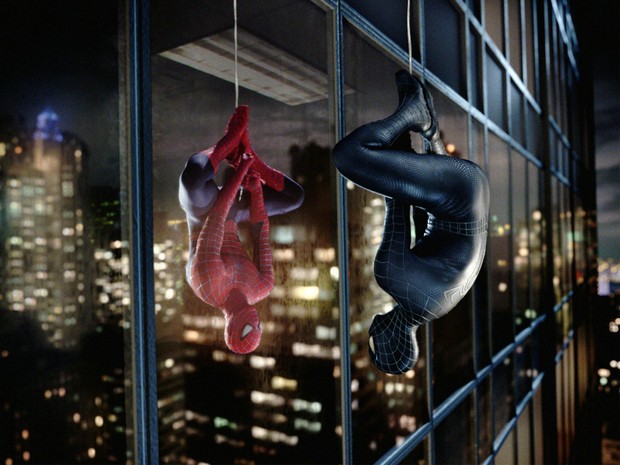
Spider-Man 3
Third Raimi/Maguire Spidey flick

The superhero sequel had some of the same strong elements as its predecessors: spectacular fight scenes and computer-generated imagery (New York City has never looked so good) and good humor and acting (co-creator Stan Lee and genre veteran Bruce Campbell make more cameos). I also liked the themes of compassion and forgiveness.

On the other hand, as with the “Batman” franchise in the 1990s, “Spidey 3” suffers from sequel bloat: too many villains (Sandman, the “new” Goblin, and Venom), too long a runtime of almost three hours, and an annoying romantic subplot. The alien symbiote Venom was added over director Sam Raimi’s initial objections when the studio wanted a more recently popular villain. When Peter Parker briefly gives in to his darker side, the effect is more silly than scary.

I’ve always had a problem with the casting of these otherwise excellent Marvel Comics adaptations. While J.K. Simmons is perfect as bulldog Daily Bugle editor in chief J. Jonah Jameson, I’ve always found Tobey Maguire and Kirsten Dunst too dour as hero Peter Parker and struggling actress Mary Jane Watson, respectively. Thomas Haden Church was convincing as the shape-shifting Sandman, as was Bryce Dallas Howard as romantic complication Gwen Stacy.

However, Topher Grace, who was so good in sparring with Laura Prepon on That ’70s Show, was more snarky than menacing as Eddie Brock/Venom. As for James Franco as the tortured Harry Osborn/new Goblin, I liked him and think he would have done well as Anakin Skywalker in the Star Wars prequels (along with Keira Knightly as Queen Amidala instead of Natalie Portman).

Overall, I’d give Spider-Man 3 about a 7 or 8 out of 10 — close to the first film, but not as good as Spider-Man 2, which had the best villain in Alfred Molina’s Doctor Octopus. Even a weaker Spidey, however, is better than many comic book adaptations, in my opinion (see also more discussion with co-workers Ken G. and Brian F.). 

Why do genre movie series tend to peak at the second installment? Star Trek: Wrath of Khan, The Empire Strikes Back, Aliens, Superman II, X-Men 2, and now, Spider-Man 2 are all examples. Sure, there are some that barely get off the ground with a strong first installment but disappointing sequels (Highlander and The Matrix come to mind), and a few others don’t mature until later, such as the “Indiana Jones” or “Harry Potter” series.

My theory for the strength of certain sequels is that after re-establishing iconic characters, the second installments in many franchises have both the faithfulness to the source material and the freedom to expand upon their fictional universes. By contrast, the third and subsequent flicks tend to suffer from directorial excess (again, see the “Batman” franchise) or sacrifice fidelity to the tone of the source material for the sake of a larger audience. Having just rewatched Superman Returns this past week, I can only hope that Bryan Singer’s overly reverential reintroduction is followed by a strong sequel.

In the coming week, I hope to catch up on this blog with planned postings about travel, other entertainment, gaming, and work. In the meantime, as Stan “the man” Lee would say, Excelsior! -Gene