Monday, 31 August 2009: Work, food, and Ponyo

Ponyo

On Tuesday, 18 August 2009, I received a minor promotion from assistant site editor to associate site editor at TT. In addition to my existing duties at the technology journalism company, I’m helping to coordinate coverage of this week’s VMworld conference in San Francisco and taking on more Web page management responsibilities.

On the bright side, I’ve already been treated out to sushi lunches at Fuji in Needham,
Massachusetts, twice by current and future managers! I’m flattered that they’ve had such confidence in my organizational abilities after only three months, and I hope to earn their trust.

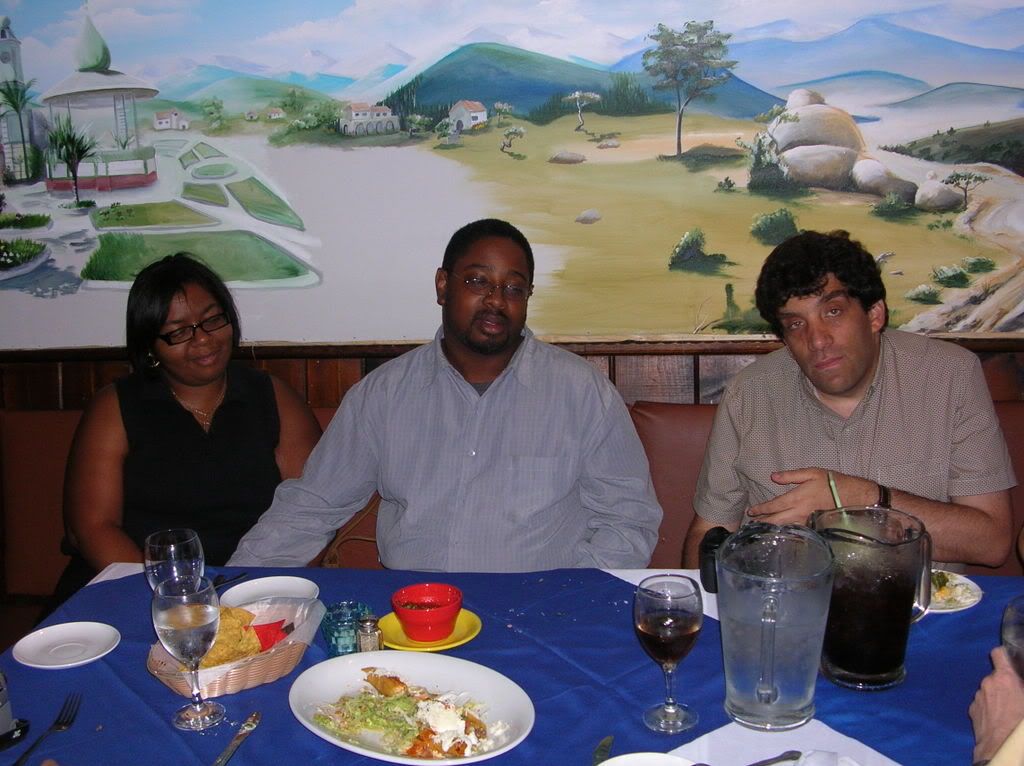
On Monday, Aug. 24, Janice and I met with former CW co-workers Michele D. and Bob R. for a pleasant dinner at the Watch City Brewery on Moody Street in Waltham, Mass. I still hope to get together with other former colleagues, including Monica S., Donna S., and Brian F.

On Saturday, Aug. 29, I met Ken G. for lunch at Rawbert’s Vegan Café before going to an exhibit on comic book history at the Wenham Museum. The big news in the world of superheroes is that Disney is buying Marvel. I don’t expect any immediate changes in the comics or movies, but the move puts more pressure on DC Comics and Warner Brothers to try to catch up.

On Sunday, Janice and I had brunch at the ’50s Diner in Dedham, Mass., and went to the Dedham Community Theater to screen Ponyo. A few months ago, I saw and liked the subtitled version of the latest Miyazaki anime, and I found the English-dubbed
version
to be better paced. I’d still give this PG-rated variation on The Little Mermaid an 8 out of 10, or a B+.

Although I’ve had to cancel this coming week’s games, I did catch the first-season finale of BBC America’s supernatural melodrama Being Human, which may not have the popularity of True Bloodor Twilight, but it was enjoyable nonetheless. The regular autumn genre television season begins in the next few weeks, but first, I’ve got lots of work to do!

28 August 2009: Game updates

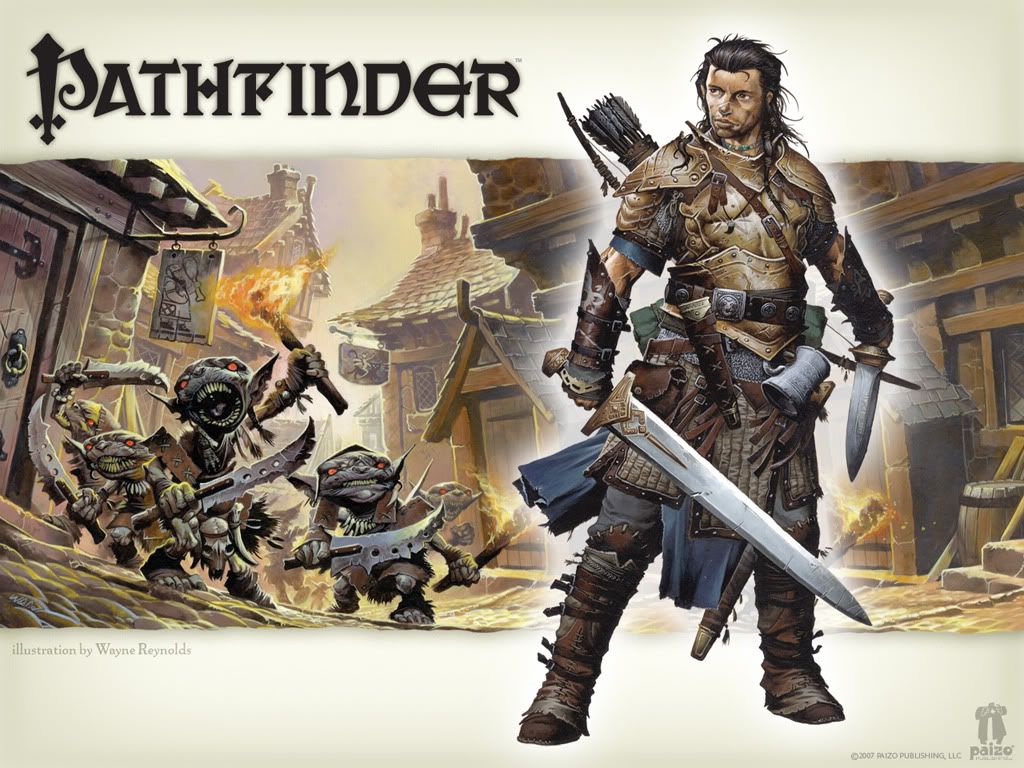
Fantasy RPG wallpaper
"D&D3.75"

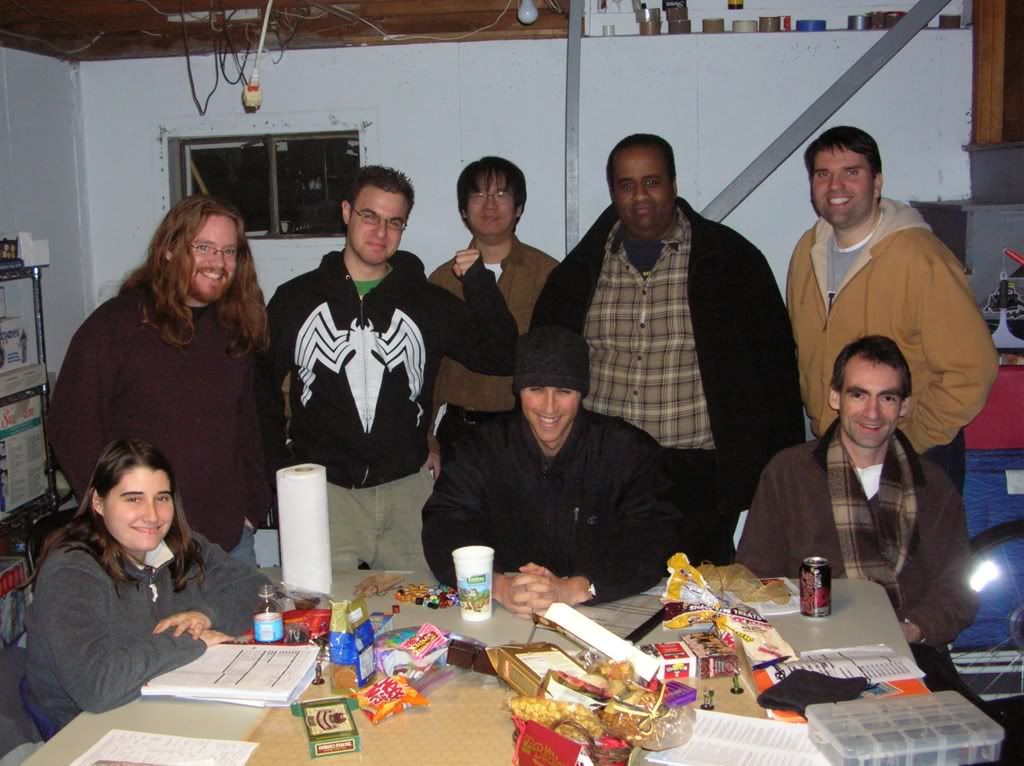
On Sunday, 23 August 2009, the “Holy Steel” teleconferencing team resumed, now using the Pathfinder core book, which revises the Dungeons & Dragons Edition 3.5/D20 System Reference Document. So far, despite this rule set’s complexity and the tome’s heft, I like Paizo’s iteration of the world’s most popular fantasy role-playing game more than Wizards of the Coast’s Dungeons & Dragons Fourth Edition (D&D4e)/Game System License.

Although Dexter V.H. has been too busy with family commitments to rejoin our virtual sessions as Drow Ranger “Faelonia,” Byron V.O., Beruk A., and Paul J. have
continued their exploration of the
pyramid of Unas as Paladin “Ibrahim,” Rogue “Milos,” and Wizard “Derek,” respectively. Their adventuring party has fought monsters and is searching for the Book of Thoth, which it believes cultists of Set are also after.

I’ve had to cancel two weeks’ worth of D&D4e “Vanished Lands: the Faith-Based Initiative” face-to-face (F2F) games because of work. We’ll probably meet again around Labor Day. After about 50 consecutive sessions, I don’t think missing a few Monday nights will hurt the momentum of that party, which is investigating smugglers in the
Hifalendorin human capital of Hesolin. Overall, “Holy Steel” has had more interesting investigations by Player Characters (P.C.s), and the “F.B.I.” has had more action scenes. A good group has a balance of the two.

I’m still looking forward to taking a break after the “F.B.I.” winds down, although that has taken longer than I expected. On the one hand, several people prefer Pathfinder or other systems to D&D4e, and the Player Characters (P.C.s) are approaching Tenth Level, which used to be “name level” — the midrange in power that usually marks the end of my campaigns.

On the other hand, the current Boston-area P.C.s have been gaining in experience and knowledge, and some gamers are understandably interested in maximizing their abilities. I still hope to give other Game Masters a shot and to run shorter-term steampunk, superhero, and/or space opera scenarios, most likely using a D20 variant, although I’ve seen mostly favorable reviews for the rules-light and pulp-flavored Savage Worlds.

I don’t expect my F2F game to return to the “Vanished Lands” setting, probably using Pathfinder, until spring of 2010. Since I’ve been building that fictional world since 1982, I’d like to take some time to tweak it to properly challenge and entertain
another party, which won’t be easy because most of the current group is now
familiar with it.

I ended my subscription for Lord of the Rings Online because college chums David I.S. and Dexter haven’t had the time to play regularly. The “Dimensional Corps Online” supergroup for the City of Heroes multiplayer online game is still going strong, and Dex invited me to try Champions Online (now separated from the Hero System 6th Ed. license). I have, however, enjoyed Wii Sports Resort. Batman: Arkham Asylum also looks cool, but it isn’t available for the Wii.

Coming soon: Superheroes and work!

27 August 2009: District 9 review

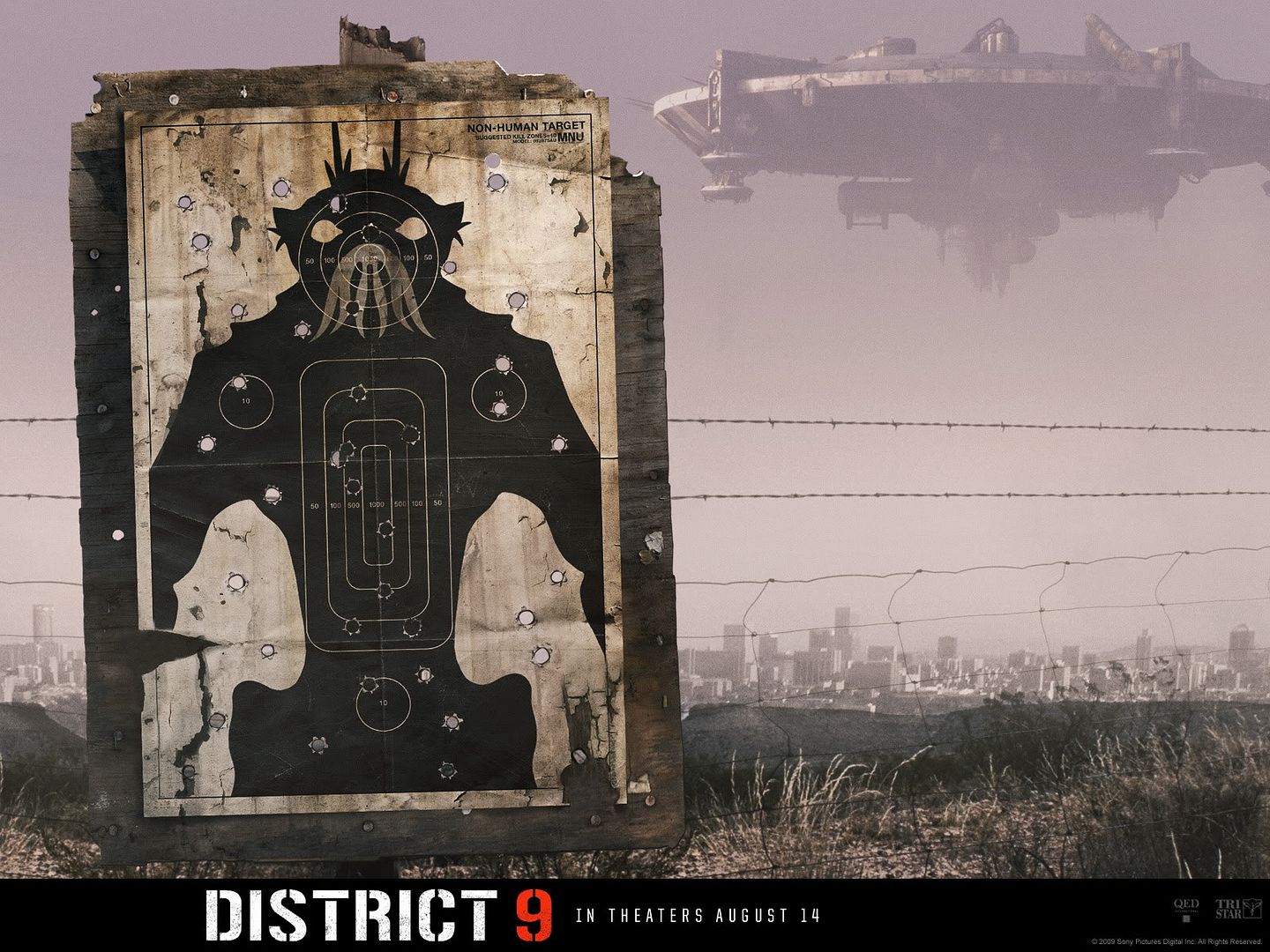
District 9 wallpaper

On Saturday, 22 August 2009, Janice represented the Animal Rescue League of Boston as a volunteer at the “Blues and Brews” festival in Westford, Massachusetts. I met Brian W. and a friend at the AMC Framingham cineplex to screen District 9.

We enjoyed the science fiction film, which was an overt allegory about apartheid (although some viewers seem to have missed that). Sharlto Copley plays Wikus van de Merwe, a clueless employee of a government contractor managing camps for extraterrestrial refugees nicknamed “Prawns.” The abject poverty, casual racism, and enclaved middle class are all the more believable because of the South African setting. Footage of actual riots is used for some scenes.

DirectorNeill Blomkamp poses the uncomfortable question of who are the monsters — the marooned aliens or ruthless humanity? Other movies, such as Alien Nation and Enemy Mine, have warned “civilized” audiences to beware of the brutality lurking just under
our skins. The first half of District 9 plays like a documentary, while the second half is more of an action/horror flick, similar to Aliens or The Fly.

Despite a modest budget, the special effects are impressive as van de Merwe inadvertently
becomes the center of attention by the government, the news media, the Prawns, and a criminal warlord. District 9 is rated R for graphic violence. This may explain why five of the six trailers we saw before the movie were for horror flicks, with the last one inexplicably for
Where the Wild Things Are.

Producer Peter Jackson, best known of the Lord of the Rings adaptation, no doubt helped this movie get a wider release, which it deserved. I’d give District 9 an 8.5 out of 10, or an A-. Despite Hollywood’s reliance on established franchises, it’s nice to see something relatively original.

Coming soon: Gaming, work, dining out, and superheroes!

Tuesday, 25 August 2009: Virginia vacation

UVA

On Saturday, 8 August 2009, Janice and I ran errands in Norwood, Massachusetts,
and had lunch at Minerva Indian Restaurant. The next day, we began the long drive south to see my family. We stayed the night in Pottstown, Pennsylvania.

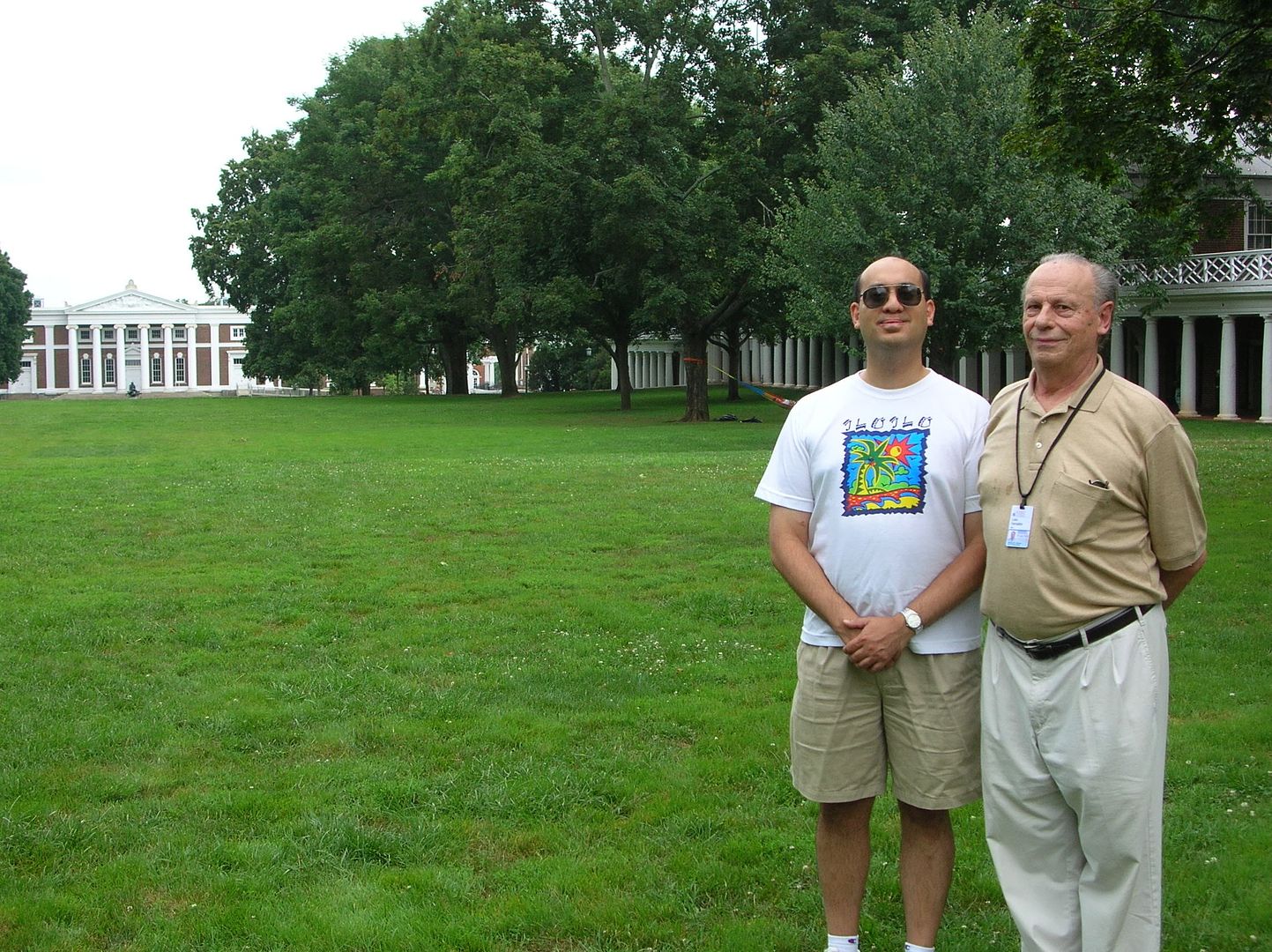
On Monday, Aug. 10, Janice and I visited her grandmother before continuing on our way to Virginia. We arrived in the town of “Little” Washington that afternoon and were treated to my mother’s cooking. After a restful Tuesday, we all went to Charlottesville. My father took us to the pleasant campus of the University of Virginia, where he teaches, and we enjoyed a classy buffet lunch at the Boar’s Head Inn and a cheese tray for dinner from Feast.

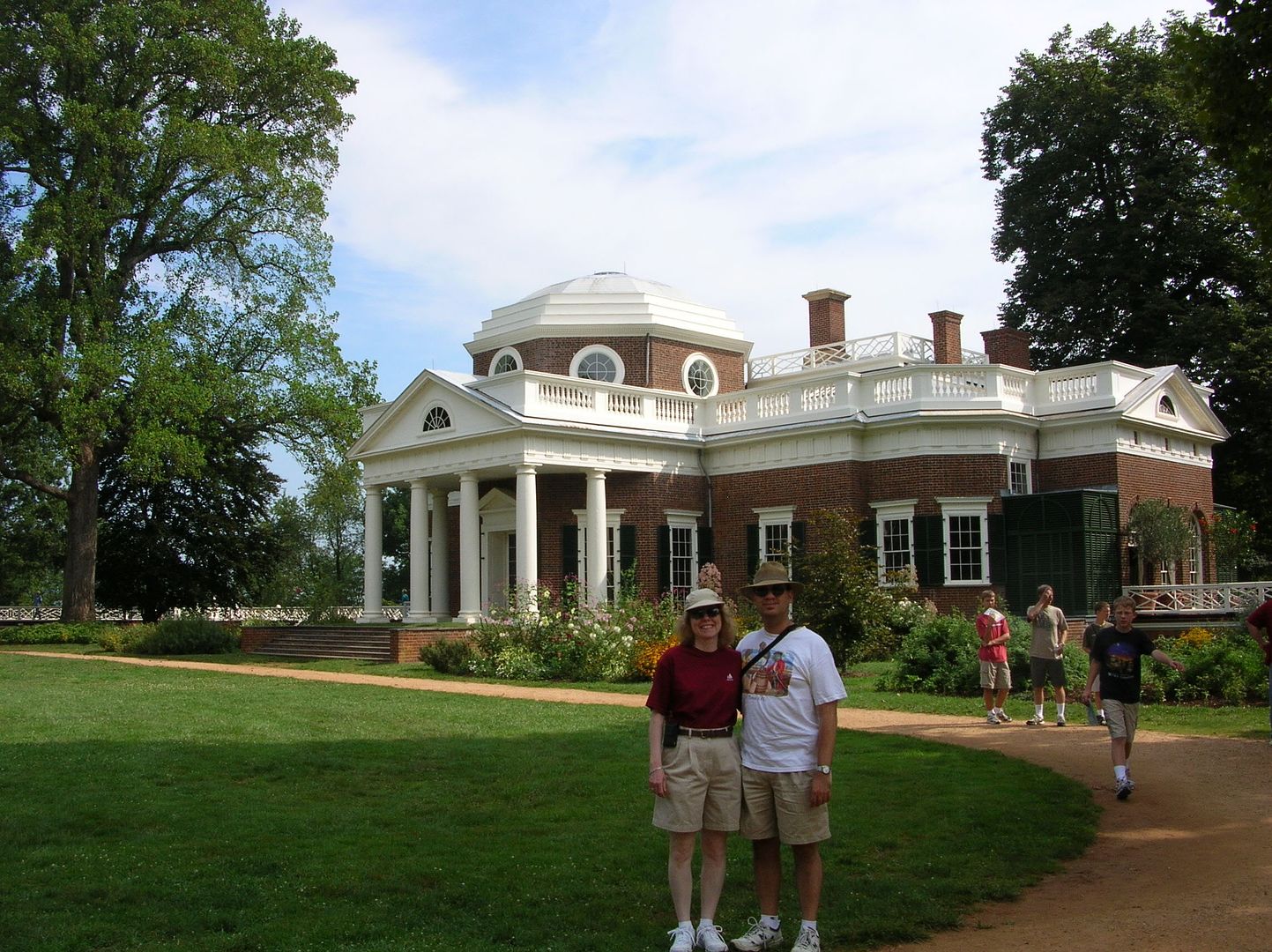
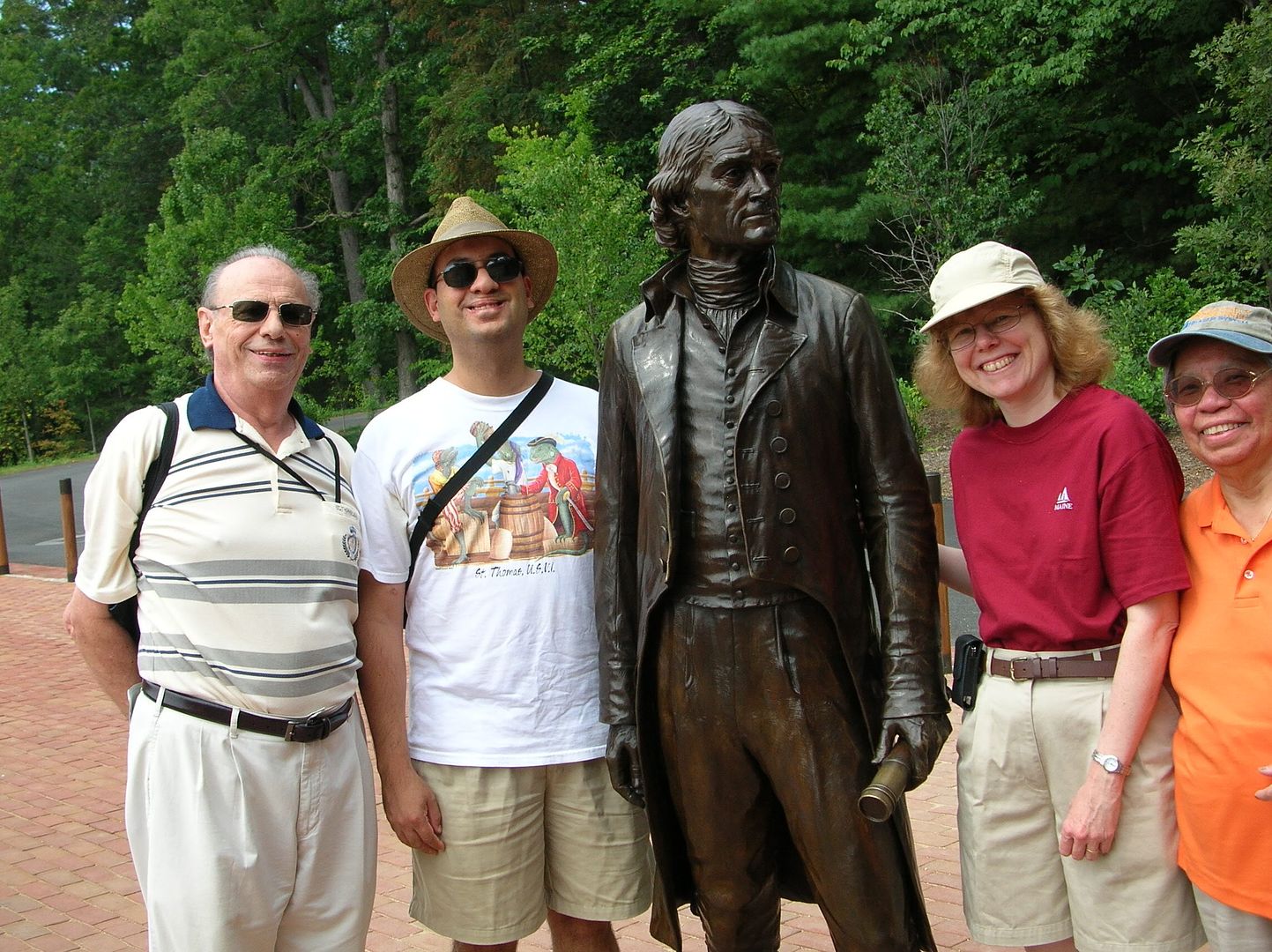
On Thursday, Aug. 13, we went to Monticello, the estate of President Thomas Jefferson. I had been there before, most recently a decade ago for the swearing in of my
mother
as a U.S. citizen, but Janice had not. I thought the new visitor center was a model of modern museum exhibits, and the tour of the mansion and grounds provided an interesting glimpse into the talents and contradictions of the drafter of the Declaration of Independence, architect, and slave owner.

That afternoon, Janice and I drove from the Blue Ridge Mountains to the suburban sprawl of Northern Virginia. We met my brother Peter, his wife Kelly, and their daughters before heading to the home of Corbin A.Y. & Andria K.Y. and their new arrival, Maia. Steve M.R. & Aleece Z.R. and their children, Connor and Lauren, joined us for a fun fajita dinner.

On Friday, Peter, Kelly, Ava, Lili, and Janice and I took the Metro into Washington, D.C., where we checked out the Smithsonian Institute‘s Museum of Natural History
and the newly renovated National Museum of American History. As always, there were many interesting exhibits. The girls behaved well, despite missing a nap and dealing with the summer heat and crowds on the Mall.

Later that night, the adults watched Confessions of a Shopaholic on TV. It was a frothy, forgettable comedy that wasn’t as good as, say, The Devil Wears Prada. Not my usual genre fare (science fiction, fantasy, comic book superheroes, mystery, etc.), but I look forward to the English-dubbed version of Ponyo, among other autumn movies.

On Saturday, Aug. 15, my parents joined us for a barbeque lunch to belatedly celebrate their birthdays. Janice and I left by midafternoon, grabbing dinner in the Palisades Center shopping mall and stopping for the night at the Spring Hill Suites by Marriott in Tarrytown, New York. By breaking up our travel, we managed to avoid most of the usual end-of-weekend traffic jams in New Jersey and Connecticut.

Since returning to the regular routine, I’ve also been catching up on recorded genre television, e-mails, and gaming. I hope to blog about work, movies such as District 9,
and more in the coming weeks.

19 August 2009: We need health care reform

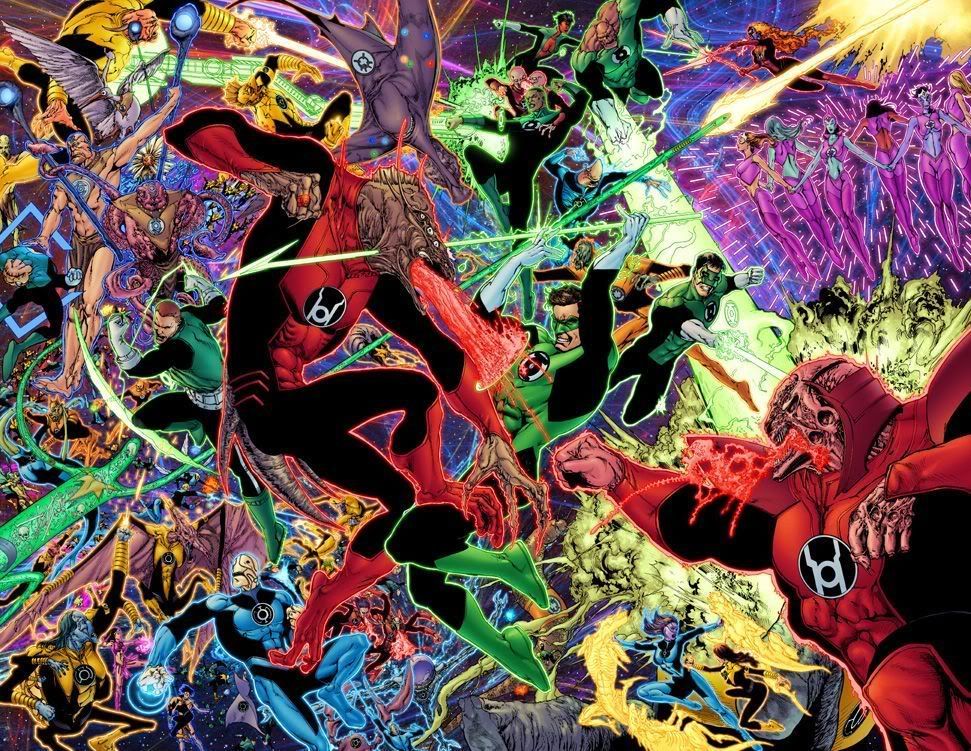
Green Lantern: Blackest Night
Friends, I hope you've had a good fortnight. I'll try to post a blog entry soon about my Virginia vacation once I've had a chance to upload some photographs. In the meantime, however, I've been watching the acrimonious debate over proposed health care reforms.

As the Clintons learned more than a decade ago, President Barack Obama has found that guaranteeing affordable health insurance coverage for all Americans is easier said than done. Not only are there complicated connections among employers, insurers, regulators, and health care providers, but the political process has also been contaminated by money and demagoguery over the public interest.

The basic responsibility of government is to protect the citizenry, whether from hostile nations, corporate (and its own) corruption, or natural disaster. The New Deal of the 1930s and the Great Society of the 1960s tried to add safety nets for the poor, elderly, and ill before they were derailed by wars, bureaucratic bloat, and laissez-faire backlash.

Since then, both Democratic and Republican administrations have expanded middle class and business entitlements through tax credits, spending earmarked for key states, and a resulting growth in federal spending. A growing reliance on private contractors and the largest military budget in the world have also contributed to the U.S.'s fiscal problems.

The current economic recession has further highlighted workers' vulnerability to mass layoffs, climbing insurance premiums, and increasing costs of living that are partly the result of dependence on fossil fuels. In past generations, angry mobs might have protested in the streets or joined unions (themselves potential agents of progress and corruption), but public outrage has been hard to find until recently.

Conservatives have been looking for so-called wedge issues to divide and conquer the popular support for Obama. Gay marriage, stimulus spending, and even the wars in Iraq and Afghanistan served them no better than they had during the presidential campaign. However, by exaggerating the threat to middle-class entitlements such as Medicare, labeling Obama's proposals "socialistic," and focusing on tried-and-true controversies such as abortion and euthanasia, they finally got traction.

Even if the U.S. wanted to follow the example of socialized medicine in Europe and elsewhere, problems with providers' existing infrastructure and practices, cultural differences, and the sheer scale of the problem make such an idea impractical at best.

Despite gains in public opinion and at the polls, liberals are still seen (and arguably still see themselves) as disunited underdogs and have also expressed disappointment with elements of Obama's plan. As a recent victim of a layoff, I myself would prefer employee portability of insurance plans — not to mention 401(k) retirement accounts — and I wonder how we'll pay for increased health coverage.

On the other hand, the amount of paperwork, marked-up fees, and disparities between care for the richest (the "best in the world," we're continually told) and for the more numerous poorest all need to be addressed as soon as possible. If my father, a college professor, and my mother, a retired nurse, have difficulty understanding their coverage without aid from a daughter-in-law who works in human resources, what chance does the average person have?

Health costs are already putting a drag on the U.S. economy, and as with education and transportation, a public utility has been turned into a profit center beholden to stockholders rather than patients. An aging population, numerous stories of fraud at every level, and proliferating demands for worthy research (not to be confused with the latest pharmaceutical commercials) make the need for reform all the more urgent.

I believe that only by spreading the expenses among the largest possible amount of people, thus requiring federal organization, can we afford to improve health care. I also believe that a society should be judged more by how it cares for its neediest and nurtures its resources than for the conspicuous consumption of a competitive minority.

I would like to see a bipartisan consensus on health care reform, but vested interests such as insurers have spent millions of dollars lobbying in Congress, and Republicans are understandably (if not altruistically) making the most of public uncertainty. I support any plan that serves more people equitably, controls costs, and avoids the dangers of bureaucratic, individual, or corporate fraud.