How I would reboot Wonder Woman

NBC's Wonder Woman
The latest Wonder Woman

As more details emerge about DC Comics’ renumbering this coming autumn, there has been a lot of discussion about what fans want to keep or change in that publisher’s continuity. So far, the costume redesigns and making the major characters younger don’t bother me much, even though I like how Batgirl, the Birds of Prey, Green Arrow, Nightwing, and Oracle have evolved to date. The proof will be in the writing and art.

Batman and Superman have been subject to numerous successful interpretations, Wonder Woman has lagged behind the other members of the “big three” in terms of popularity or steady depiction. Here’s how I’d approach DC’s iconic superheroine, in print comics, animation, or live-action television or movies:

Diana Prince, an athletic and poised woman in her early 20s, arrives in Washington, D.C., to study international relations (or history with a focus on ancient warfare, if that’s easier). She’s obviously of Mediterranean descent, but she’s estranged from her mother and looking for her father. This is similar to Smallville in showing a younger, somewhat less confident heroine unaware of her full origin and powers, but it doesn’t quite drag us back to a high school soap opera.

Her roommate is Etta Candy, an African-American blogger who helps her get an internship at the U.S. Department of Defense. There, Diana meets Air Force Col. Steve Trevor and Titus Martin, head of contractor Ares Industries (actually an avatar of Ares, god of war, himself). Could either of these men be her father? In general, the casting of supporting characters should be diverse and color-blind.

Another classmate of Diana’s is potential love interest Billy Barnes, who volunteers at a women’s shelter in a neighborhood beset by poverty and crime (where she can occasionally fight street-level villains). Diana’s professors include secretly fascist psychologist Edgar Cizko (Dr. Psycho), spymistress Anita Maru (Dr. Cyber/Poison), archaeologist Julia Kapatelis, and historian Helena Sandsmark.

At the Pentagon, martial arts classes, or Capitol Hill, Diana would also meet Tom Tresser, a con man turned secret agent and another potential romantic interest. Diana could eventually mention that she has a younger sister, Donna, for a later cameo or supporting role. Rival Artemis could be another classmate and rival whom Diana struggles to win over.

When she’s not spending time with her friends, studying, or fighting crime, Diana would get mysterious missives from Athens (Athena) through Hermes Delivery, but they’re not from her mother. They’d tip her off to bigger problems to fight, such as the abuse of women overseas, diplomatic attempts to avert wars (sometimes putting her at odds with Col. Trevor or Tom), and even mythical monsters and alien invasions — within the limitations of budgets and computer imagery, of course.

If possible, it would be great to get Lynda Carter as Diana’s mother Hippolyta, queen of Themyscira, which the producers of the failed NBC pilot had hoped to do. The historical Themiscyra was on the Black Sea in what’s now Turkey. I’d like to see a mix of regular thugs, villainous masterminds, and magical opponents for Wonder Woman to fight with her wits and fists. Cameos by other DC heroes and heroines could also eventually occur.

Diana should be a feminist and seek peace when possible, but she should also eventually be unafraid of sexuality or conflict. I don’t want Wonder Woman to fret over shoes, boys, or toy sponsorships, but she should have a sense of humor and be an optimist (brooding is for other characters such as Bruce Wayne). She should grapple with modern controversies, including religious fundamentalism of any kind, ethnic rivalries, sexism, abortion, and militarism.

As for props and costumes, I think that DC Comics and NBC have been headed in the right direction. Wonder Woman should have multiple outfits for different occasions. The classic shorts and bustier could be worn under her clothing or when going somewhere warm (like Washington in the summer).

In fact, Wonder Woman’s costume should reflect modern athletic wear rather than mid-20th century circus outfits. The tiara, bracers, and lasso are must-haves, while the stars, red-and-blue color scheme, and eagle can reflect her (and her mother’s) admiration for American ideals.

The longer pants and a top with shoulder straps would be more practical for regular crime fighting, and Greek-style armor would be appropriate for wading into high-powered battles. I’d also give her good fashion sense (without dwelling on it too much, see above) and casual and formal wear as needed. Creator William Moulton Marston‘s interest in polygamy, lie detection, and bondage could come up in villains’ plots rather than Diana’s outlook or costume.

While JMS and Jim Lee‘s recent reboot of Wonder Woman by stripping her of her memory and traditional costume was a better-than-average attempt, it’s not as good as George Perez’s in the mid-1980s. I think that Wonder Woman, who is still widely recognized and could be a role model for girls, deserves better. (DC, feel free to use my ideas!) What do you think?

Horror and fantasy thrive on TV

Camelot wallpaper
Starz's Camelot

Since horror is one of the more accessible genres, supernatural dramas are perennially popular on television. I’ve enjoyed BBC America’s Being Human, and I can appreciate why SyFy’s U.S. version, as well as Supernatural, Vampire Diaries, and HBO’s True Blood, all have strong fan bases. I don’t know if any of them will have the popularity or influence of Buffy: the Vampire Slayer, but Joss Whedon always had an eye for talent and an ear for dialogue. Greg D.C. has been running a Dresden Files game using FATE.

In fact, after the demise of superhero shows and the struggles of space opera on TV, the networks are again banking on fairy tales and police procedurals for their fall schedules, with Alcatraz, Awake, Gifted Man, Grimm, Once Upon a Time, Person of Interest, River, Secret Circle, and Touch. Never mind that shows such as Journeyman, New Amsterdam, Eli Stone, Reaper, and Eastwick all failed. Of the upcoming shows, I may check out Grimm and Awake.

For more traditional sword-and-sandals action, I wonder how Season 2.5 of Spartacus will manage with a new star. I’ve seen only the premiere of the fantasy Game of Thrones, which sports strong writing and production values, but Camelot on Starz should satisfy my sword-and-sorcery (and sex) quota and is not to be confused with the BBC/SyFy young-adult Merlin.

Camelot is based on Thomas Malory’s Le Morte de Arthur, which isn’t my favorite version of the legends, but the series has taken a new look at mythic Britain’s romantic intrigues and attempts to establish chivalrous code. I recently enjoyed Tony Hays’ The Beloved Dead, the third book in a series of Arthurian mysteries that Janice pointed me to. They’re more historical than mystical, like The Last Legion and the 2004 King Arthur.

I’ve considered including court intrigues in my current Pathfinder/Skype: “the Vanished Landstelecom fantasy campaign, but the current teleconferencing party is rather low in experience/power level. If I was to run an Arthurian scenario, I might use GURPS Camelot, D20 Legends of Excalibur or Relics & Rituals: Excalibur, or FATE 3e Legends of Anglerre.

As far as scheduling goes, it looks like Friday nights will again be crowded, with Young Justice, Star Wars: Clone Wars, Chuck, Fringe, and Grimm, among others. It’s worth remembering that for every successful genre TV show, there are many that never make it out of the pilot phase. What upcoming programs are you looking forward to? Have a good Memorial Day weekend!

Space opera’s TV struggles

Comparison of fictional space vessels
Starship comparisons

Like other genres, space opera has also taken a beating on television this year, with Doctor Who facing a minor backlash for being too scary and continuity-driven, Stargate Universe ending that long-running franchise, and Caprica getting canceled in favor of Blood and Chrome, another spinoff of the “reimagined” Battlestar Galactica (“BSG”).

I’m surprised that the producers of science fiction shows haven’t learned from the experiences of Star Trek and Babylon 5 (“B5”). Both Star Trek: the Next Generation and Stargate SG1 featured humanity’s best and brightest exploring a dangerous galaxy (not to mention the original 1960s Star Trek). Like B5, their sequels, Deep Space Nine and Atlantis, respectively, took place on remote space stations surrounded by war.

However, the next wave — Star Trek: Voyager, Babylon 5: Crusade and Legend of the Rangers, and Stargate Universe — all “darkened” the tone of their respective universes with postapocalyptic themes and wandering ships without the inspirational heroes and occasional humor of their predecessors.

The newer BSG also followed that trend in its melodramatic makeover of the 1970s series, while Andromeda, Firefly, and Farscape tried to balance heroes and antiheroes and were quickly canceled. (I am, however, cautiously optimistic about Doctor Who spinoff sequel miniseries Torchwood: Miracle Day, but Doctor Who and Torchwood are more about time travel and conspiracies than space opera.)

Like Star Trek: Enterprise, Caprica was a BSG prequel that filled in backstory that we either already knew or that wasn’t as engaging as the main exploration and conflicts. That’s not to say that each of these programs didn’t have compelling moments and good actors — they all did — but they didn’t hold onto audience goodwill or ratings with obviously rehashed plots or continuity conflicts.

On the other hand, Star Wars: Clone Wars shows that a space opera prequel can be done well. Initially dismissed as entertainment only for children who like George Lucas’ inferior movie prequels, the computer-animated Clone Wars has redeemed Episodes I through III with intertwined plot threads, actual character development, and blazing action in keeping with the tone of the entire saga. Sure, Season 3 had its share of heavy-handed political episodes, but they provided a context for the Sith’s schemes and Republic’s battles.

I know that human spaceflight hasn’t captured the public’s imagination as it did during the Cold War, but I think that the concepts of unity, exploration, and adventure are as valuable as ever. As a fan of serials from the 1930s Flash Gordon through Clone Wars, I hope that good space opera continues to find a place on TV. What do you think?

Coming soon: Animation and fantasy TV!

Transitions in TV thrillers

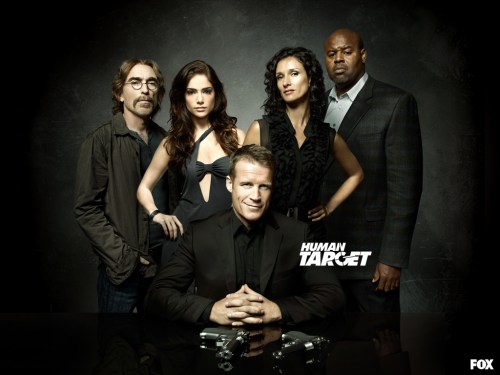
Cast of the late Fox thriller
Human Target's TV cast

Continuing my look at seasonal television turnover, espionage has fared slightly better than live-action superheroes. I was disappointed, but not surprised, by the cancellation of Human Target, which was a fun throwback to the action shows of the 1980s.

I had already dropped Undercovers and Nikita and was somewhat surprised that the latter (the fourth version of the waif turned assassin) got renewed. Spy spoof Chuck, which I’ve kept watching just as I stuck with Smallville, managed to avoid the axe one final time, and we’ll see whether the Charlie’s Angels remake is any good.

In related genres, conspiracy dramas V, The Event, and Survivors joined Flash Forward and Dollhouse in cancellation. I had kept up with the V remake, although the alien invasion plot took a long time to develop suspense. Speaking of aliens, Spielberg’s Falling Skies and time-travel Terra Nova are getting a decent amount of prelaunch hype, but we’ll see if they can avoid similar disappointment.

Cryptozoology and weird science fans still have Fringe, Sanctuary, and Warehouse 13, which may even have a steampunk spinoff. I thought that the season finale cliffhangers of Fringe, Chuck, and Castle were all pretty good this year.

Comedic procedural Psych and related caper shows Burn Notice, White Collar, and Leverage are similar to Castle but no doubt managed to hang on because they’re on cable, which has more modest audience expectations. Breaking In, which featured Reaper and V‘s Bret Harrison, wasn’t so lucky.

It’s too soon to say whether this autumn’s batch of shows will do any better, but let’s hope the best rise to the top in the networks’ game of trial and error.

Coming soon: Space opera, animation, and fantasy on TV!

Superheroes fly off of TV

Season 6 cast of Smallville
Smallville's cast as of Season 6

Genre television has experienced a virtual bloodbath in the past few weeks, with numerous shows getting canceled. Granted, many were doing poorly in the ratings, but that’s partly because broadcast and cable TV haven’t caught up to the increasing use of DVRs and Netflix for time-displaced viewing. It’s also a tricky niche.

Of the shows that are ending, I’ll miss The Cape and No Ordinary Family, which tried to capitalize on the popularity of superhero movies. Like Heroes, they had difficulty balancing the perspectives of ordinary people thrust into extraordinary circumstances with showing more and more metahumans (and exhausting limited special effects budgets).

Unlike the surprisingly successful Smallville, most of this recent batch of superpowered shows got bogged down with increasingly complicated and implausible scenarios. Of course, comic books often have the same problem of mistaking melodrama for character development. I’d contrast this with the retro, campy, and episodic fun of the also-ended Spectacular Spider-Man and Batman and the Brave and the Bold.

Speaking of Smallville, it’s hard to believe that what many critics originally dismissed as “Superboy meets Dawson’s Creek” became the longest-running live-action superhero show on U.S. TV. As David I.S. and I have discussed, Smallville wisely made the transition from “kryptonite monster of the week” to the larger DC universe as its characters and audience matured.

The show was far from perfect, with erratic villains, dropped storylines, and much-loathed bans on “flights and tights” and cameos by Batman and Wonder Woman (because of movie rights). I know that some fans will be disappointed by Superman’s rare computer-generated appearances in flash-forwards, but the Kirk Alyn serials from the 1940s also used animation for the tricky flying sequences.

On the other hand, Smallville (even up to its finale) provided new insights into the self-doubting young Clark Kent (played by Tom Welling), his nurturing human parents (played by John Schneider and Annette O’Toole), and his friends and foes.

I thought the supporting performances of Alison Mack as Clark’s pal Chloe Sullivan, Justin Hartley as colleague Oliver Queen/Green Arrow, and Erica Durance as rival/love interest Lois Lane were all strong, despite inconsistent writing, often silly costumes, and slow individual arcs. Michael Rosenbaum was one of the best Lex Luthors ever, with able assistance from John Glover as his domineering father Lionel and Cassidy Freeman half-sister Tess Mercer.

Numerous other DC Comics characters eventually appeared, including the Justice Society, Legion of Superheroes, Legion of Doom, and a mix of Teen Titans and a proto-Justice League. Like the first appearance of Jimmy Olsen in the radio show, aspects of Smallville eventually influenced comics in return.

In addition, the show paid homage to its predecessors with cameos by Chris Reeve, Margot Kidder, Terence Stamp, Helen Slater, Dean Cain, and Teri Hatcher. Like Stargate SG1, many young actors like Amy Adams got their start thanks to Smallville. I’ve been fortunate to meet several cast members at various conventions over the years.

Although I’m more of a fan of most Batman incarnations than of Superman, I think Smallville deserves to be considered alongside the George Reeves, Dean Cain, and Bruce Timm-animated versions. Let’s hope that Zach Snyder’s attempt to reboot the first true modern superhero on the big screen is successful!

Coming soon: More SFTV turnover and how I would revive Wonder Woman!