Entry for November 19, 2007: Batmobile and Beowulf

Friends, I hope you had a good weekend. On Saturday, 17 November 2007, I drove out to the Sheraton Framingham for the annual Super MegaFest. The genre entertainment convention was somewhat better organized than last year, but with relatively few events of its kind in the Boston area, it was pretty crowded.

Unfortunately, I didn't see co-workers Tom L. or Ken G., who also planned to attend, nor did any of the local gamers join me. However, I did have a good time meeting celebrities, browsing in the dealers' rooms, and hanging out with fellow pop-culture fans.

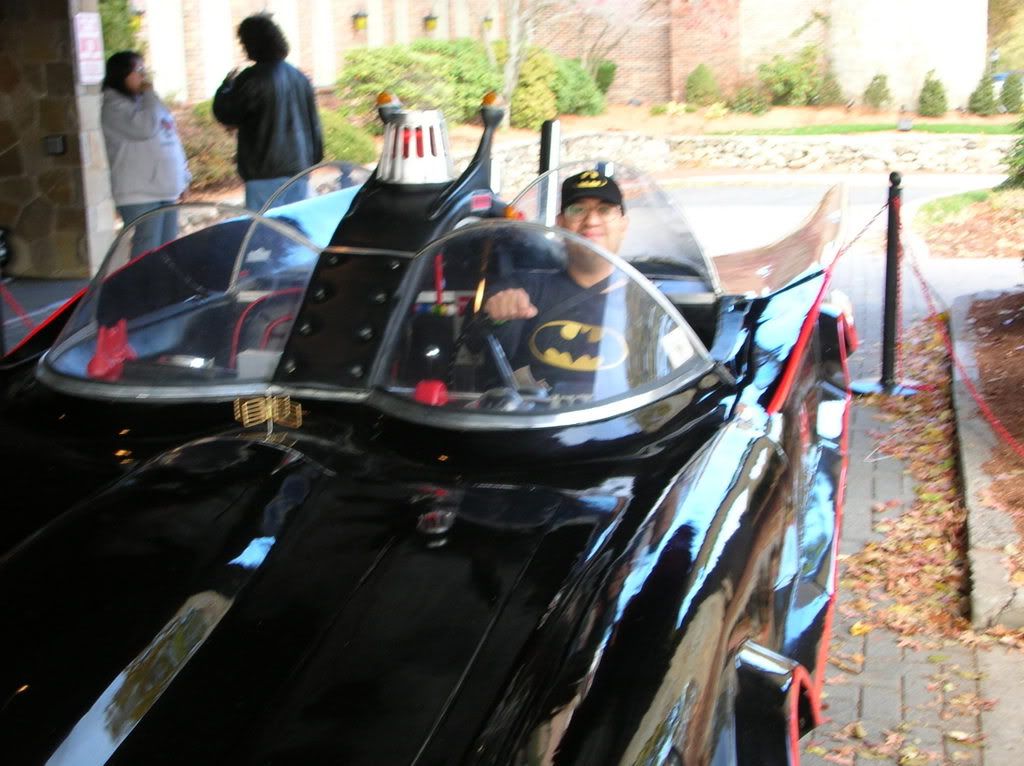
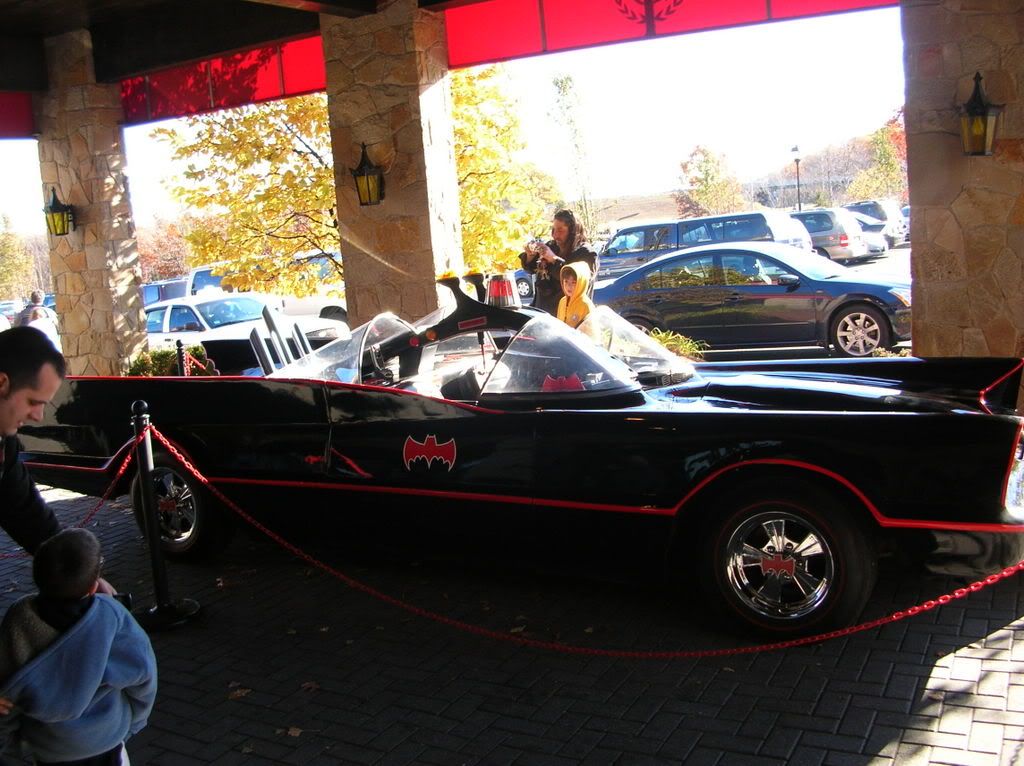
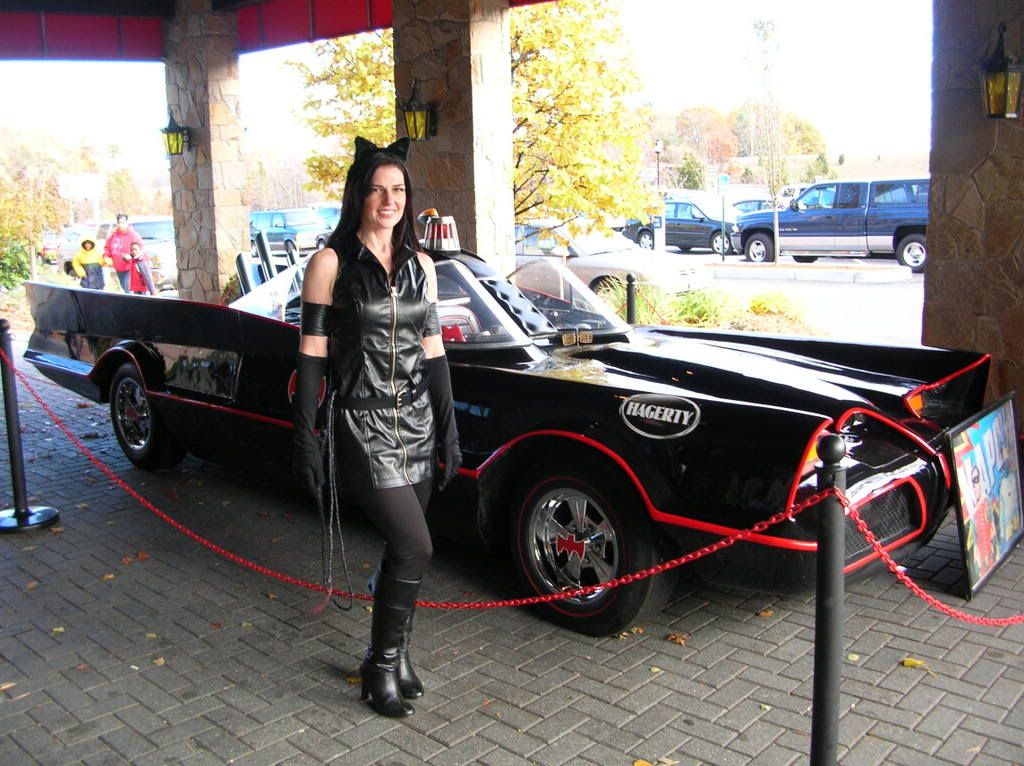
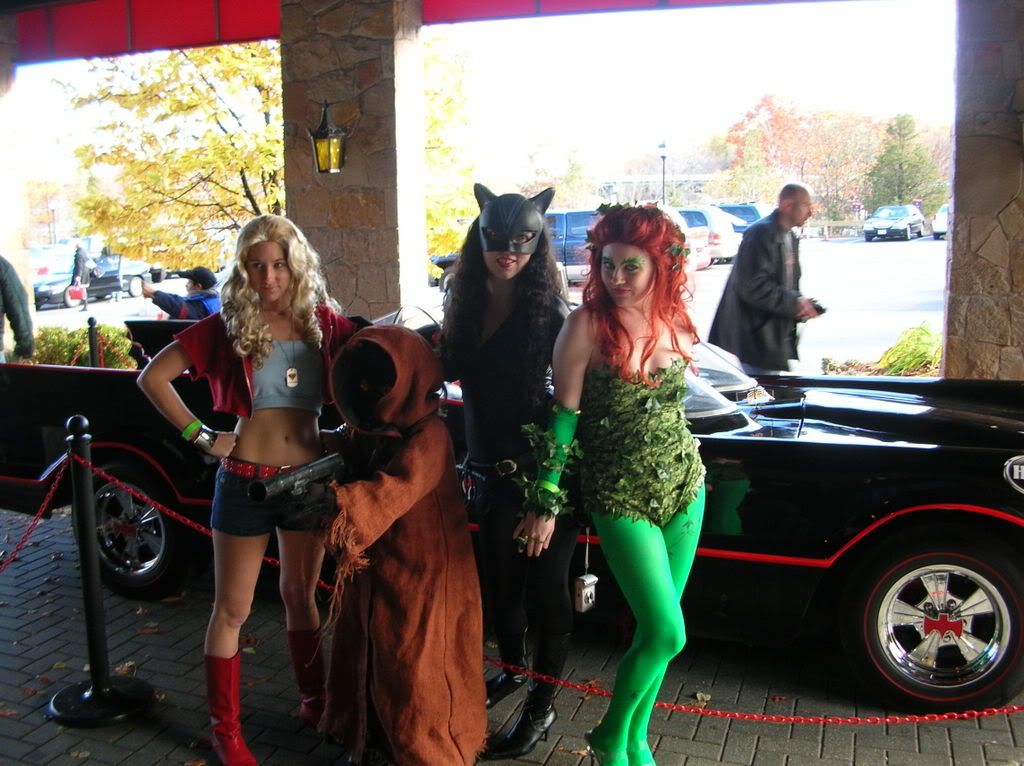
Among other things, I got to sit behind the wheel of the Batmobile, one of several seen in the campy 1960s Batman television series. "Rockets to power, turbines to speed!" — it's one of the more recognizable vehicles from fiction.

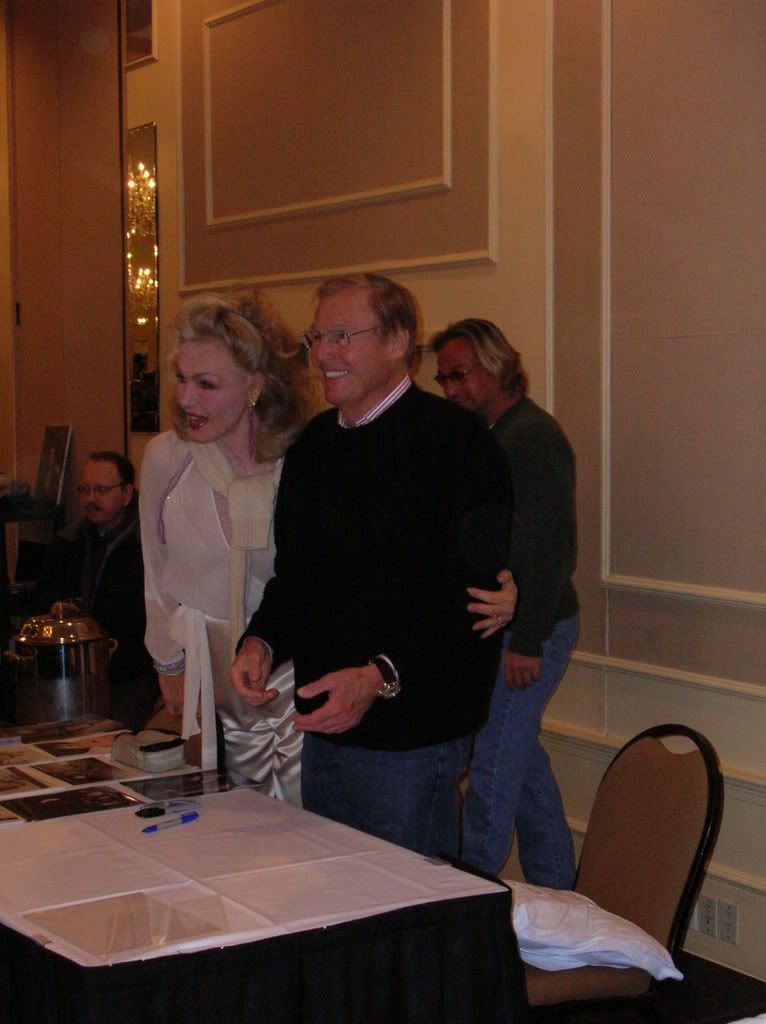
Speaking of Batman, I got an autograph from onetime "Robin" Burt Ward. I had met his "old chums" Adam West and Julie Newmar (Batman and Catwoman respectively), as well as Eartha Kitt (another Catwoman), Yvonne Craig (Batgirl), and Frank Gorshin (the Riddler) at previous shows. They were all quite friendly.

While the Net buzzes with speculation about a planned live-action Justice League movie, even during the writers' strike, I was glad to indulge in nostalgia. Like everything else, signed photos have become more expensive (now at $20 to $50 each), but it's easier to hold brief conversations with the actors than at larger conventions.

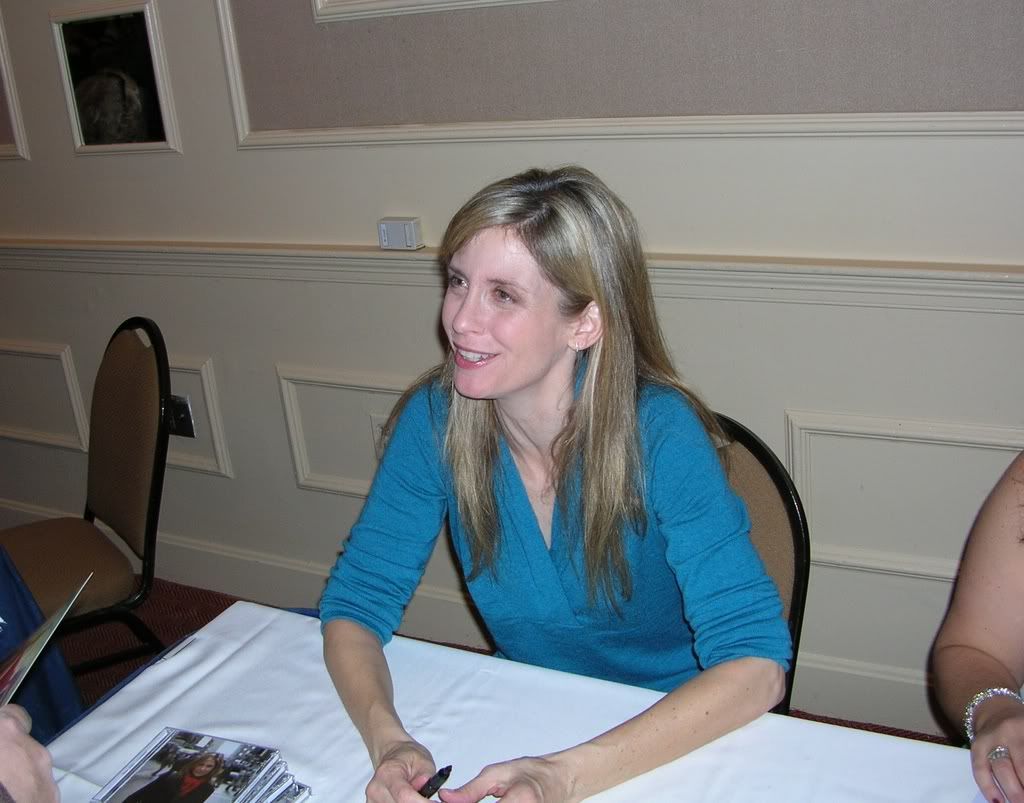
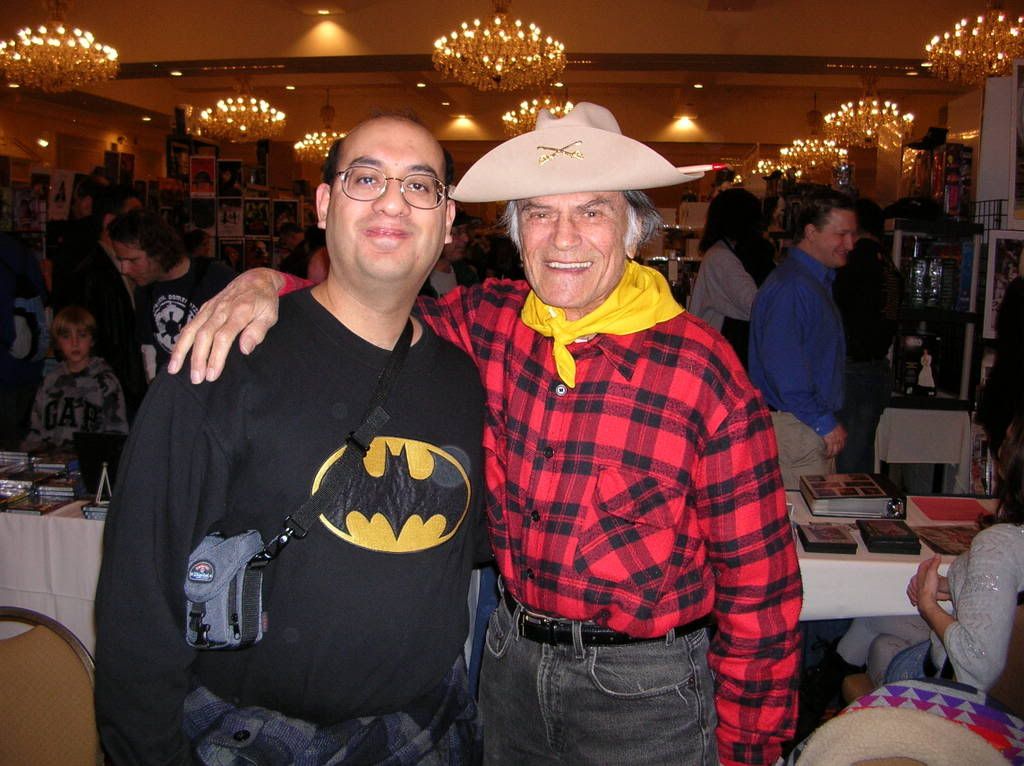
I also met former Supergirl (and, more recently, "Lara" on Smallville) Helen Slater, who has aged well. Larry Storch, from comedic Western F Troop, was as funny as ever. In addition to the usual aging Playmates, Butch Patrick ("Eddie Munster" on The Munsters), Margot Kidder (Lois Lane from the early 1980s Superman films), William Katt (from The Greatest American Hero), and Jeremy Bulloch (Boba Fett in the original Star Wars movies) were all present.

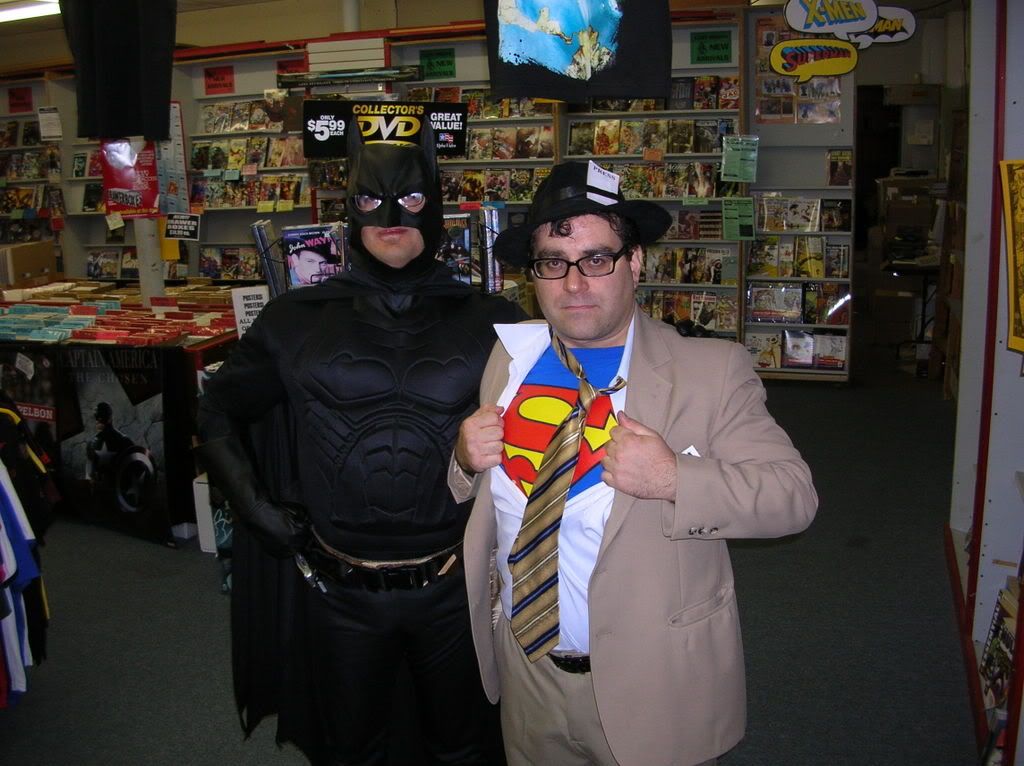
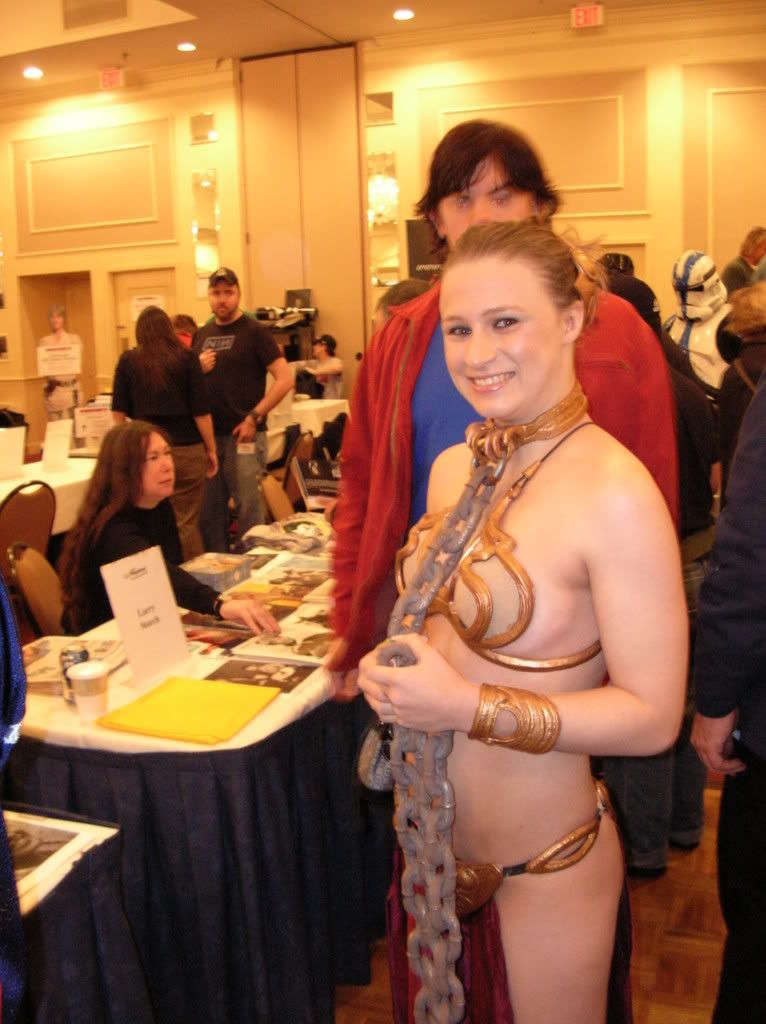
In keeping with the Batman theme, several people were in costume as characters from that franchise. In the dealers' rooms, there were numerous DVDs, comic books, action figures, props, and other memorabilia. I bought a few HeroClix miniatures for my D20 Mutants & Masterminds 2nd Ed. superhero game, but not much else this time around.

It was a busy week for fans for speculative fiction, with the Battlestar Galactica: Razor and Star Trek: the Menagerie theatrical premieres (see earlier blog postings); strong new episodes of Heroes and Journeyman; and the Super MegaFest. In related news, there were the mixed reactions to Marvel Comics' announcement of its online initiative, the Doctor Who charity video (thanks to Thomas K.Y.), and a preview of the Star Wars: Clone Wars computer animated television series.

The next local convention that I may try to attend is Arisia, which focuses more on the literary side of science fiction, in mid-January of 2008. Later in the weekend, Janice and I caught up on recorded shows, including Pushing Daisies, and I look forward to an Avatar: the Last Airbender telemovie.

In addition, Janice and I met Beruk A., John C.M., and Sara F. and her boyfriend Josh for a 3-D screening of Beowulf at Jordan's Framingham IMAX theater. The Old English epic, rendered by computer animation, was adapted by respected British author Neil Gaiman. Director Robert Zemeckis has improved on the motion-capture technology he previously used in The Polar Express.

Beowulf featured a distinguished cast that included future Indiana Jones IV sidekick Ray Winstone as the Geat hero, Sir Anthony Hopkins as King Hrothgar, Princess Bride's Robin Wright-Penn as Hrothgar's long-suffering queen, creepy Crispin Glover as the monstrous and childlike Grendel, and Angelina Jolie as Grendel's seductive and vengeful mother.

In short, the story begins with Danish King Hrothgar's new mead hall being plagued by attacks by the murderous Grendel. Mercenary and boastful, but also brave and honorable, Beowulf arrives in a Viking longship to kill Grendel and claim a reward in gold, which he doesn't realize carries a curse. Beowulf later fights a dragon in a spectacular battle.

This movie's fight scenes were well-choreographed, even if the gratuitous nudity was occasionally unintentionally amusing, especially in a PG-13 flick. While the last third of Beowulf diverges from the original pagan poem, recorded in the fifth century A.D. by Christian monks, Gaiman and company's plot changes make sense, and I'd compare this movie favorably with Frank Miller's 300, which took some liberties with actual Greek history. I'd give Beowulf about a 7 or 8 out of 10, or a B+.

The next genre movies that might be worth seeing are the postapocalyptic horror I Am Legend, starring Will Smith, and The Golden Compass, featuring Casino Royale's Daniel Craig and Eva Green, as well as Sir Ian McKellan, Nicole Kidman, and Sam Elliott.

This past weekend, Janice and I also raked leaves and began Christmas shopping, and I played City of Heroes online with our full supergroup online for the first time in weeks. I don't expect to enjoy the next few days' worth of work or the long drive down to Virginia to see my family. Still, I hope that you and yours have a Happy Thanksgiving!

Entry for November 14, 2007: Current comics faves

Fellow genre entertainment fans, here's my long-promised list of favorite comic book titles, updated from June 2007 to November 2007:

1. Favorite Fantasy: Conan. This sword-and-sorcery series has stayed faithful to Robert E. Howard's pulp novels about an ancient world, with spin-off Red Sonja close behind. Fantasy fans might also like Disney's Gargoyles or various adaptations of Dungeons & Dragons novels.

2. Favorite Historical/Literary Adaptation: Age of Bronze. Eric Shanower's thoroughly researched retelling of the Illiad approaches the Trojan War without its usual mythological trappings. Still, the historical accuracy and tangle of relationships make this epic engrossing. I also still enjoy Dynamite's Lone Ranger.

3. Favorite Family-Friendly Title: Mouse Guard. If you're fond of Watership Down, Redwall, or Neotopia, you'll probably like this anthropomorphic epic about medieval mice. It's a bit violent, but the painted pages are impressive to behold. Mice Templar, Marvel Adventures: Avengers, and Teen Titans Go! have a similar all-ages appeal.

4. Best Retro Book: The Spirit. It remains to be seen if the next writer/artist team can do as well as Darwyn Cooke at updating and honoring Will Eisner's gumshoe and if Frank Miller's live-action movie will capture its style and verve. Paul Dini's pulpy Madame Mirage is in a similar style, with femme fatales, crime bosses, and guns blazing.

5. Favorite Horror Franchise: Buffy: the Vampire Slayer. Creator Joss Whedon has managed to turn a failed horror/comedy movie into a successful franchise, with the early 2000s television show and Angel garnering a loyal following. For those of us who wondered what happened after the series finales of Buffy and Angel, the new comic books are considered canon. The Tron, Highlander, and Battlestar Galactica titles are in the same vein.

6. Favorite Dead Hero: Captain America. Even with its title character dead for several months and about to be replaced, if only temporarily, Cap has been an engrossing read, thanks to writer Ed Brubaker's espionage sensibilities. Artist Alex Ross, in addition to working on Justice Society (see below), has designed the updated uniform of whoever will be replacing Steve Rogers. I also recommend Thor, which Babylon 5 creator Joe Michael Straczynski has rebooted.

7. Best Team Title: Justice Society of America. Although I generally enjoy team titles, this one does the best job of balancing multigenerational drama with idealized and idealistic heroes. As I discussed in a previous post, DC and Marvel's convoluted continuities and a darkening tone have made Justice League of America/Countdown to Final Crisis, Titans/Outsiders, Legion of Superheroes, New/Mighty Avengers, and X-Men: Messiah Complex less fun to follow. Speaking of ensembles, as with Buffy and Star Trek, NBC's Heroes is moving to graphic novel format.

8. Favorite Superheroines: Birds of Prey. I'm as much a fan of cheesecake as the next guy (see Sheena, Shanna, and Frank Cho's Jungle Girl for examples), but I like "BoP" because its mostly female ensemble is portrayed as intelligent and relatively realistically complex people in addition to being butt-kicking hotties. Let's hope writer Gail Simone can work her magic on Wonder Woman, which has struggled to make its title character both iconic and approachable. I also look forward to the continued adventures of Black Canary in her new shared title with Green Arrow, one of my favorite DC heroes.

9. Favorite Solo Superhero: Batman, in Detective Comics. As you may have seen from one of my Halloween costumes, the Dark Knight is still one of my all-time faves, thanks in part to the 1990s animated series. It's no coincidence that Bruce Timm has been entrusted with DC's direct-to-video animation and that Paul Dini gave Detective a boost with one-off stories before helming the Countdown to Infinite Crisis tangle. Despite rumors that Bruce Wayne may join the late Steve Rogers next summer, I'm still enjoying Batman, Catwoman, Nightwing, and Robin in the meantime.

10. Favorite Science Fiction: Star Trek: Year Four. As with other space opera franchises (Star Wars, Battlestar Galactica, Firefly/Serenity), the crew of the classic 1960s television series continues its adventures in comic books. Although I've read the old Key Comics, Marvel/DC versions, and even the manga, the latest iteration has been well done, with thoughtful plots and clean art. By the way, here's a cool computer-animated spa
ce battle: www.youtube.com/watch?v=Ho-uIXGTE9g

Books that were on my previous list but that didn't make the cut this time around, mostly because of delays between issues, include All-Star Superman, Astonishing X-Men, Astro City, Marvel's Mythos, and Powers. In terms of multimedia, we'll see how Marvel's online initiative pays off, and I expect DC's New Frontier to be one of the better direct-to-DVD adaptations.

In addition, Green Ronin will be publishing sourcebooks based on the "Wild Cards" novels for its Mutants & Masterminds 2nd Ed. role-playing game, marking a continuing shift in support for superhero role-players from GURPS Supers 3/4e to D20/True 20. As friend and game design professor David I.S. has noted, we also have the Lego Star Wars, Batman, and Indiana Jones videogames to look forward to! City of Heroes may have competition for our attention…

Entry for November 13, 2007: BSG: Razor

Fellow genre entertainment fans, last night (Monday, 12 November 2007), I attended a free preview of the Battlestar Galactica: Razor telemovie at the AMC Framingham multiplex near my work. Although co-workers such as Stephanie F. and Tom L. weren't able to get tickets, I was surrounded by fans of the military space opera, most of whom were in their 30s. One couple was in uniforms from the SciFi Channel's "reimagined" series that they bought on eBay.

If you're not familiar with either the late 1970s or early 2000s incarnations of Battlestar Galactica, here's a quick summary: After peacefully settling on 12 planets (named after the traditional signs of the zodiac), humanity's colonies are nearly wiped out by the robotic Cylons. A few thousand survivors in a rag-tag fleet follow the lone Battlestar, Galactica, on a search for a lost home, called Earth…

The original series is known for its space battles influenced by Star Wars, a storyline derived from the Biblical Book of Exodus, and the velour uniforms of its cast (closer to the 1960s Star Trek in style). The revisionist take is much darker in tone, with fewer sympathetic characters but strong writing and better visual effects. Both have loyal followings.

After sitting through some Microsoft advertisements, we watched as the plot centered on a young soldier named Kendra Shaw (played by Stephanie Chavez-Jacobsen) who finds herself on the Battlestar Pegasus during the Cylon attack. Shaw becomes a trusted aide to the merciless Commander Cain (Michelle Forbes, also "Ensign Ro" on Star Trek: the Next Generation; the character was memorably played by Lloyd Bridges in the original series).

Going back to events that took place between the second and third seasons of "BSG," Shaw later works alongside crew members from sister ship Galactica while fighting personal demons in addition to Cylons. This is interspersed with scenes from a previous war, which are expanded in the Flashbacks "webisodes."

In the long wait between Seasons 3 and 4, this was mostly satisfying and well done, answering a few questions about both previous and upcoming story lines. I still believe that the infighting among the human survivors of the Cylon genocide, even if realistic, makes it harder to root for them. Yes, BSG shows loyalty and a fatalistic sense of honor, but does every single character need to be emotionally scarred? We'll see how the main series plays out next year. "Razor" will air on the SciFi Channel and be available on an extended DVD in the coming weeks.

I've mentioned the current genre television season enough in recent blog entries, but I do want to cite Heroes and Journeyman as two shows that have become more interesting lately. Smallville and Stargate: Atlantis are struggling to do so, but I still like Reaper and Pushing Daisies.

As I begin to compile holiday wish lists, I have a few recommendations: The Young Indiana Jones Chronicles, Volume 1, has just been released on DVD. This underrated spin-off of George Lucas' cliffhanging movies takes a look at the archaeologist's adventures through history before World War II.

A Wish for Wings That Work is "Bloom County" creator Berkeley Breathed's whimsical Christmas special, which hasn't been available on video for years. Amid this past summer's blockbuster sequels, I liked Disney/Pixar's computer-animated Ratatouille and even Transformers best. In addition to the motion-capture Beowulf this coming weekend, I hope to screen the fantasy Golden Compass, which comes out on December 7. Still to come: comic book reviews!

Entry for November 12, 2007: Apocalypse soon?

Friends, I hope you had a good weekend. On Saturday, 10 November 2007, Janice and I drove down to Hartford, Connecticut, for the latest Sugarloaf Crafts Festival. There was more fine art but fewer food vendors than at the fair we attended in Boston the previous weekend.

Unfortunately, I've been fighting a bad cold since then, but we did manage to take down our Halloween decorations yesterday. We also watched a bit of The Next Iron Chef America on the Food Network and Ninja Warrior on G4. Even with genre television soon to be affected by the writer's guild strike, I've still got more than enough shows and comic books to catch up on.

Tonight, I'll be attending a free theatrical screening of Battlestar Galactica: Razor. While I've become disenchanted with the dour revisionist take on the 1970s military space opera, I am curious about the backstory in the long break between the SciFi Channel's official seasons. I also hope that the strike won’t affect my other favorite shows, such as Heroes, which are just picking up steam in terms of plot this autumn.

Unfortunately, I'll be missing the Star Trek: "the Menagerie" cinematic event tomorrow night because of the regularly scheduled D&D3.5 "Vanished Lands: the Broken Chains" fantasy session. Next weekend, I plan to attend the Super MegaFest in Framingham, Mass., and screen the computer-animated Beowulf, perhaps on 3-D IMAX. On the other hand, I may have to work, since Thanksgiving is fast approaching.

Mindful of the sacrifices of past and present soldiers and their loved ones, the real-world news from Pakistan and the Middle East, combined with apocalyptic scenarios in shows like Heroes and BSG (see image above) have led me to consider the following scenario:

A few years from now, conflict continues in southwestern Asia. Pakistan (which already has nuclear capability) and/or Iran (which is working on obtaining such capability) is dominated by an anti-Western militarist theocracy. A missile strikes Tel Aviv, killing many thousands immediately and affecting millions of people. Arab and Muslim populations rally to the cause, even if it's against their own self-interest.

Israel and the U.S. retaliate in kind, destroying entire cities. Of course, dwindling Mideast oil reserves become inaccessible to the rest of the industrialized world, causing widespread economic and environmental hardship. Russia, unhappy with the use of such weapons near its southern frontier, tries to broker a cease-fire with support from the European Union but fails and is drawn in. China and India are eventually also pulled into the conflict because of fallout, refugees, and crumbling regional stability. Millions more die from disease, starvation, and erupting religious/ethnic strife.

Domestic opinion in the U.S., as in other capitalist democracies, is torn, but a grim resolve sets in, especially after terrorist attacks resume in/on U.S. cities. National security, civil liberties, and even the ability of large nations to feed themselves are all disposable as warfare deepens and humanity devolves into armed bands.

How can this not unlikely doomsday scenario be avoided? The U.S. has provided billions in military aid to numerous parties in the Middle East, in the vain hope of strengthening regional security, supporting allies, and guaranteeing access to oil. Increasing defense spending without accountability is probably not the right solution. Nor is research in autonomous combat robots, which goes against the warning of numerous science fiction novels and movies, the answer.

We should be aware that the current presidential campaigns in the U.S. have higher stakes than the usual partisan conservative/Republican vs. liberal/Democrat wrangling. Both sides should agree that avoiding the situation outlined above is a high priority and should propose meaningful, if difficult, solutions, ranging from serious multiparty negotiations to true nation-building over years, to more careful and thorough applications of force than those we're currently engaged in. There's still time to avert disaster and build a safer, more stable world!

On a lighter note, my next post will cover my current favorite comic books…

Entry for November 06, 2007: Crime, crafts, and comics

On Saturday, 3 November 2007, Janice and I stayed in due to the Nor’easter. Fortunately, the remnants of Hurricane Noel didn’t cause much damage around us, but a recent murder in Needham, Massachusetts, did have residents on edge.

We caught up on reading and recorded television episodes (more on that in a moment). On Sunday, we drove into Boston for a craft show. Although we didn’t buy much art, the numerous free samples of dipping sauces, baked goods, and soups in the tasting aisle were a hit as always. We may attend the Sugarloaf Craft Festival in Hartford, Connecticut, next weekend. In addition, I watched the New England Patriots narrowly defeat the Indianapolis Colts.

The writer’s guild strike will no doubt affect genre entertainment, but right now, my favorite shows include supernatural comedies Reaper and Pushing Daisies, animated fantasy Avatar: the Last Airbender, and even belatedly improved superhero drama Smallville. The second tier of television I watch includes Chuck, Heroes, Journeyman, Women’s Murder Club, Legion of Superheroes, The Batman, and Torchwood.

I haven’t been to the cinema in a while, but the coming weeks will bring theatrical releases of the original Star Trek pilot, “The Menagerie,” and Battlestar Galactica: Razor, as well as Neil Gaiman’s computer-animated Beowulf. I’ve also got to track down Day Watch, the sequel to the moody modern Russian horror movie Night Watch, which I have on DVD.

Before I get to my current favorite comic books, here are 10 trends I’ve noticed in the past few months, mainly with the “big two” publishers, DC Comics and Marvel Comics:

Looking Back: As I get older, I have a greater appreciation for the Golden Age (1930s to 1950s) and Silver Age (1960s to 1970s), so it isn’t surprising that some writers and artists want to get beyond the timebound Bronze Age (1970s to 1980s) and the grim outlook of the Iron or Modern Age (late 1980s to present).

Artist Alex Ross has almost single-handedly spearheaded this idealistic nostalgia, from Marvels and Justice to the upcoming Superpowers and Avengers/Invaders. I like the four-color heroics of such graphic novels, and I wish more mainstream titles could recapture that sense of entertainment. On the other hand, I also like the faster pace of modern storytelling and progress in artistic styles.

Crossover Fatigue: While I understand that publishers need to get people to buy as many issues as possible to stay profitable, keeping track of sprawling continuities is burning out many longtime fans’ interest and discouraging new readers from joining our hobby. Like the graphic violence and variant-cover speculation that harmed comic books’ reputation in previous decades, this could again stunt its reputation.

DC’s Identity Crisis/Infinite Crisis/52/One Year Later/Countown to Final Crisis started out with some good development of secondary characters but has become a drawn-out exercise in muddling history, despite achieving the feat of coming out mostly on schedule. Marvel’s event-based Civil War/the Initiative and House of M/Endangered Species/Messiah Complex have been more focused in terms of story but have had problems shipping on time.

Mistrust of Government: Thinly veiled allegories of recent U.S. politics could be found in the aforementioned stories, which crossed through multiple monthly and even weekly titles. In the DC universe, Batman and Checkmate, among others, struggled with paranoia and espionage within the metahuman community.

In the Marvel universe, Iron Man‘s leadership in getting the Superhuman Registration Act passed and during the subsequent Civil War dealt more directly with the questions of civil liberties vs. security raised in the so-called war on terror. Even if I’m sympathetic to liberal writers’ views, some of these tales have been rather heavy-handed.

A-Team, B-Team: While many costumed vigilantes were involved in the big crossovers, the better-told stories actually involved other teams, including Green Lantern‘s Sinestro Corps War, Civil War: Frontline, and World War Hulk. Not all were successful, with Wonder Woman: Amazons Attack suffering from weak writing and timing.

Other examples include the fact that DC’s Justice Society of America has been more compelling than Justice League lately or that I find myself enjoying the divided Avengers (Mighty and New) more than the various X-Men teams.

Resurrected Sidekicks: While Bruce Wayne’s parents and Peter Parker’s Uncle Ben may remain dead, both DC and Marvel altered longstanding continuity by bringing back Jason Todd/Robin II and Bucky Barnes, Captain America‘s World War II partner. Both came back with bad attitudes and some popularity. Since I like Tim Drake/Robin III and Cap’s postwar career, I don’t see the need for more angst, even if I think the writing around Bucky/”the Winter Soldier” is well-done.

On a related note, the secret identities of various masked men and women of mystery has also been a conceit honored more i
n the breach lately. Yes, Clark Kent’s disguise is thin at best, but I’m not sure Daredevil and Spider-Man needed to be “outed” only to be put back in the closet by events such as “One More Day.”

Villains Unite: One of the more interesting trends lately is that the bad guys have learned from their nemeses and are organizing while the superheroes argue among themselves. Sure, various paramilitary groups, cults, and ad hoc villain teams have existed for years, but the newest ones, led by Avengers foe the Hood and Lex Luthor’s Injustice League, have real menace as they outmaneuver the good guys.

Slain Heroes: Unfortunately, the corollary to the above is that Dan DiDio, editor in chief of DC, and Joe Quesada, EIC of Marvel, seem to enjoy killing off beloved characters. Again, I’ve been favorably impressed with the writing on Captain America even after the assassination of icon Steve Rogers. Early rumors on the Net suggest that Batman may be next to die (no doubt to be reborn after much hype).

Ever since Sherlock Holmes — and more recently, Superman — popular characters have been killed and brought back at a whim. I’d rather see the creativity and hype be directed at maintaining icons and developing their settings.

All-Ages Titles: As with nostalgia for the Golden and Silver Ages, comic book publishers have made attempts to recapture their original audience of children. The results have been mixed: Some titles have been fun (such as DC’s “Johnny DC” line and Marvel’s “Adventures” line), but family-friendly titles are now in sort of a ghetto. I certainly don’t want to go back to the censorship of the Wertham Commission and the Comics Code, but some balance might help with wider distribution.

Movie Madness: Within the industry and among some fans, there has been much hand-wringing over crossover fatigue, but to the general public, costumed vigilantes have never been more popular, thanks to several successful movie adaptations. My favorites among the recent batch include X-Men 2, The Incredibles, and Hellboy, not to mention various animated versions. Both of my nephews and numerous trick or treaters are apparently big fans of the caped and cowled set.

With Iron Man, the Dark Knight, Hellboy 2, and other adaptations in the works, as well as the multimedia appeal of the San Diego ComiCon, we can only hope that the best material rises to the top and enjoy the wave while it lasts.

Licensed properties: Dark Horse‘s Star Wars, Conan, the Lone Ranger, and Buffy: the Vampire Slayer, and Dynamite‘s Red Sonja and Battlestar Galactica are some of the better examples of this. IDW has also revived the Star Trek space opera franchise, which is in hibernation in other media for now. I’ve been favorably impressed with most of these adaptations, which have the advantage of established fan bases. As long as these publishers strive to be creative while remaining faithful to the core concepts of each work, I’ll be happy.