8 April 2010: RPG roundup, continued

Star FrontiersIn the past few months, I’ve blogged about developments in face-to-face role-playing games (RPGs) including “retro-clones” and “rules-lite” RPGs. After some reflection, I realized that although I described the “old-school” movement, I didn’t post many examples of rules-light tabletop RPGs, so here are a few more. I’ve looked at Risus, FUDGE (the basis of FATE), MicroLite 20, Mini-Six, BASH Ultimate Edition, and Chimera. Other systems that are arguably rules-light include True20, Savage Worlds, and the upcoming e20.

In the Pathfinder: “Holy Steel” teleconferencing team, Beruk A.’s Rogue “Milos” helped Byron V.O.’s Paladin “Ibrahim” defend himself in his trial for treason in the court of Pharaoh Ramses II. The heroes turned the tables on their accusers by proving that cultists of Set led by Prince Sethemwie had desecrated the tomb of Unas. After a year of “game time” and three years of real time, it was nice to reach the climax of that quest!

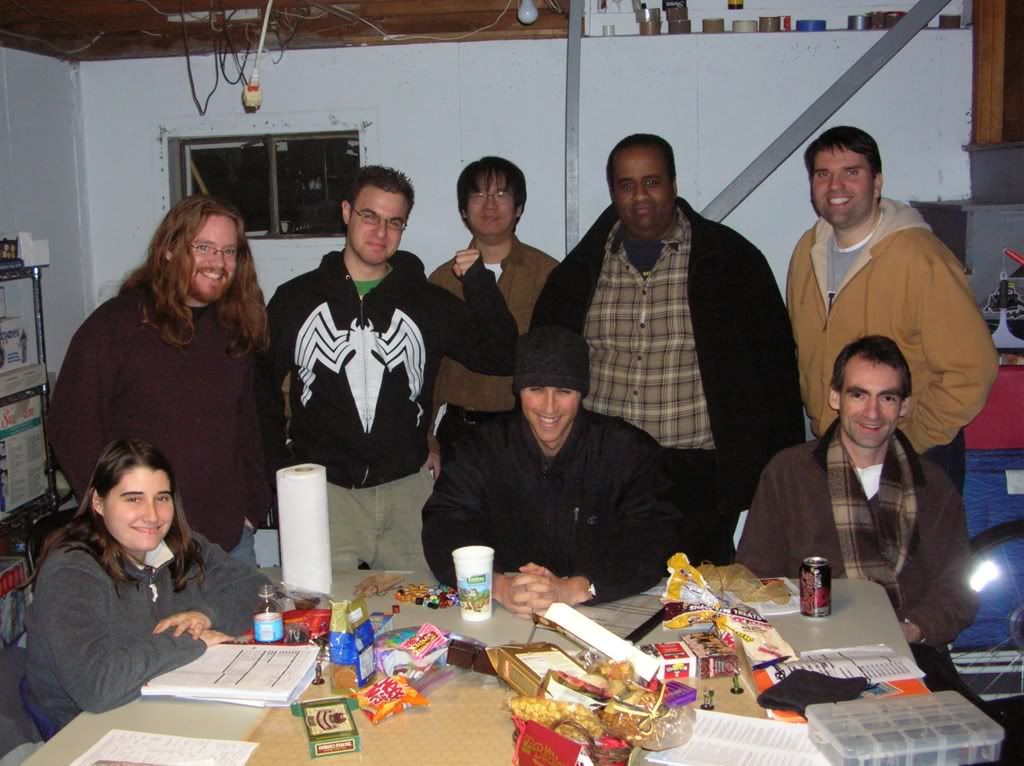
Although my current gaming group has had some scheduling disruptions because of travel, the Boston-area party’s post-Dungeons & Dragons Fourth Edition period of one-shots and miniseries has continued. Greg D.C. ran his Jenga-based Dread horror game, and after demonstrating FATE 3.0 for his “Spirit of the Caribbean!” pirate scenario, Brian W. successfully used it with his “Fierce Frontier” fantasy setting.

Josh C. expects to run a Werewolf: the Apocalypse supernatural scenario using White Wolf‘s Storyteller: World of Darkness rules, and Beruk A. is preparing a D20 version of
Rifts.” Josh also hopes to run an Exalted high-fantasy one-shot, and Paul J. has expressed interest in the mythic Scion, which uses a variant of the Storyteller system.

Also in the wake of the D&D4eVanished Lands: the Faith-Based Initiative” fantasy campaign, I’ve been looking into other genres and rules systems. In addition to my D20Gaslight Grimoire steampunk/fantasy and D20 Mutants & Masterminds 2nd Ed. (D20″M&M”2e) superhero scenarios, I plan to eventually return to my “Vortex
space opera.

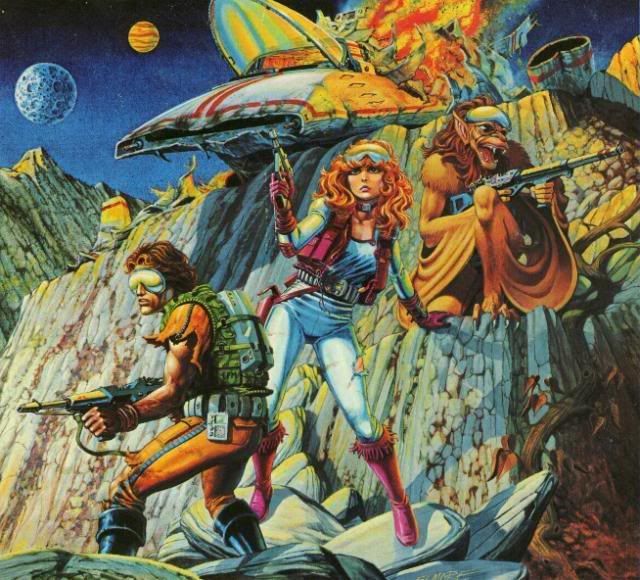
However, there is some question about what rules set to use. After being inspired by games such as Star Frontiers, I created homebrew rules that I used from high school through grad school. In the mid-1990s, I successfully converted to Steve Jackson Games’ Generic Universal Role-Playing System (GURPS) 3rd Ed. Space, but since then, I’ve been favorably impressed by various D20 games, including one version of Traveller (“T20”) and Star Wars: Saga Edition.

However, Hasbro’s Wizards of the Coast (WotC) unit, which also publishes D&D4e, recently announced that it was dropping its license for the Star Wars RPG. That’s too bad, but the books and online community for George Lucas’ franchise are sufficient for long-term campaigns.

WotC also said that it plans to release a new version of the Gamma World postapocalyptic setting using D&D4e, but I’ve been exploring other systems, such as Savage Worlds, Eclipse Phase, and FATE 3.0. Savage Worlds is a pulp RPG with a lot of support, and Eclipse Phase is a good example of the recent “transhumanist” strain in “hard” science fiction.

Starblazer Adventures (“SBA“) and Diaspora both use FATE, an up-and-coming system. SBA is based on 1980s British speculative fiction comics and is from Cubicle 7, which is also publishing Adventures in Time and Space and The One Ring, the latest Doctor Who and Lord of the Rings RPG adaptations, respectively.

Brian and Paul are proponents of FATE, which will also be the basis for the Dresden Files RPG and Icons, a superhero game and potential rival to D20″M&M”2e. Diaspora is a transhumanist RPG that’s a bit more portable than SBA, and after comparing them, we might combine the former‘s hard-SF concepts with the latter’s pulp style.

Ultimately, whatever rules are selected should serve the player group and my “Vortex” stories. Of course, if you ask eight role-players their opinions, you’ll get 10 responses. I’ll post more about the my plans and other genre entertainment soon.
24 February 2010: Winter games and retro-clones

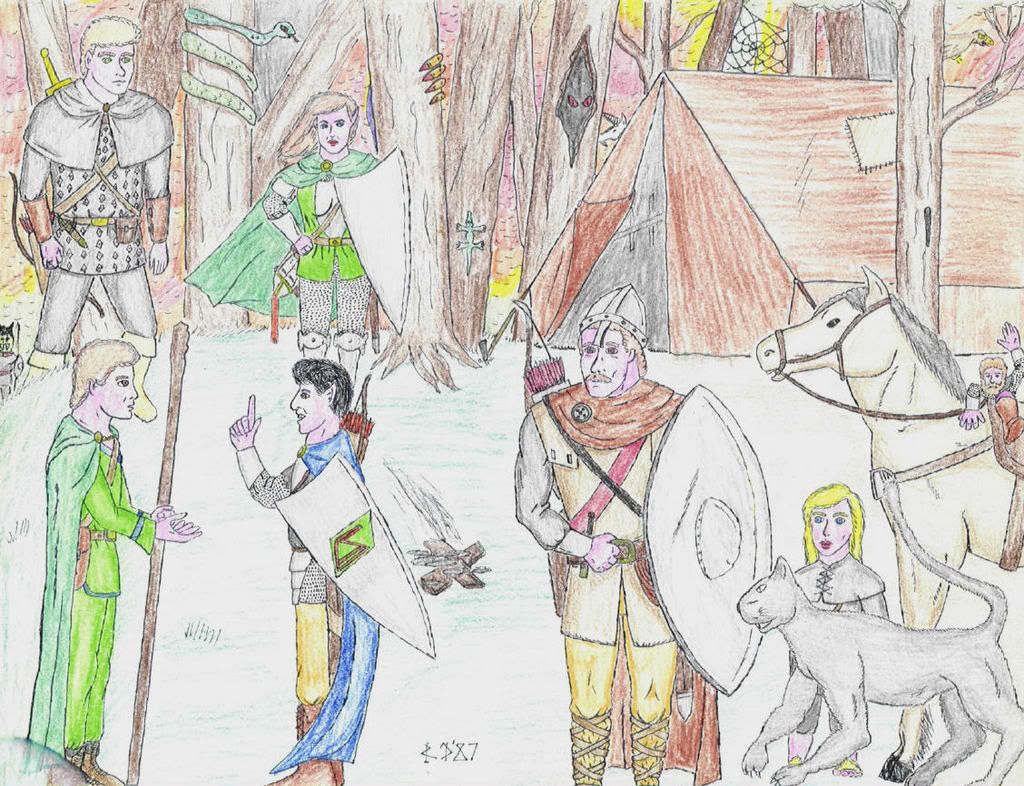
College D&D charactersFriends, I hope you’ve had a good fortnight. Janice and I have been busy watching the Winter Olympics in Vancouver, leaving me to catch up on recorded genre television on the weekends. In addition, I’ve been comparing notes on comic books and graphic novels with new fan David I.S. and playing various games.

Since wrapping up my “Vanished Lands: the Faith-Based Initiative” fantasy campaign, which used Dungeons & Dragons Fourth Edition (D&D4e), the current role-players have been involved in a series of one-shots. While I’m taking a break from serving as primary Game Master, I’m trying to encourage the Boston-area group of about eight people to try other genres, rules systems, and styles of games.

Wizards of the Coast’s D&D4e is still the most popular tabletop (or pen-and-paper, or dice-and-pizza) game on the market, thanks to 35 years of leading the hobby, brand recognition, and wide distribution. However, the boom of the past decade thanks to the D20 Open Game License has been replaced by economic recession, a move from print to online publishing of PDFs, and fragmentation of the market.

Locally, Greg D.C. has run InSpectres, a rules-light horror/humor game, and Paul J. used D20 Mutants & Masterminds 2nd Ed. for his “Vaguely Interesting People — the Four” comedic superhero scenario. Brian W. demonstrated collaborative storytelling with FATE 3.0 in his “Spirit of the Caribbean!” pirate one-shot. In addition to a “Paranoia” cyberpunk comedy one-shot, Brian ran Savage Worlds: Hellfrost, a Nordic-themed fantasy. So far, all of these games have gone well, although we’ve had some debates about what system would be the best fit for a longer-term campaign.

These “indie”-style games are good examples of the alternatives to D&D4e. I’ve already blogged about my ongoing Pathfinder: Holy Steel” teleconferencing team and the “Gaslight Grimoire” steampunk/fantasy homebrew using D20 “Lite.” Another trend among face-to-face (F2F) RPGs is “retro-clones,” or games that emulate older editions of D&D and other games. I have fond memories of my early years as a role-player in the early 1980s.

Although I’d be the first to acknowledge that game design has developed since then, I’ve downloaded several retro-clones, which remind me of a time when magic was rare and mysterious, monsters were unpredictable and deadly to Player Characters, and the games tried to evoke folkore and literature rather than second-hand adaptations into other media such as movies or computer games (not that there’s necessarily anything wrong with that if it’s your preference).

Coming soon: Space opera, the “rules-light” movement, and newer games!

28 August 2009: Game updates

Fantasy RPG wallpaper
"D&D3.75"

On Sunday, 23 August 2009, the “Holy Steel” teleconferencing team resumed, now using the Pathfinder core book, which revises the Dungeons & Dragons Edition 3.5/D20 System Reference Document. So far, despite this rule set’s complexity and the tome’s heft, I like Paizo’s iteration of the world’s most popular fantasy role-playing game more than Wizards of the Coast’s Dungeons & Dragons Fourth Edition (D&D4e)/Game System License.

Although Dexter V.H. has been too busy with family commitments to rejoin our virtual sessions as Drow Ranger “Faelonia,” Byron V.O., Beruk A., and Paul J. have
continued their exploration of the
pyramid of Unas as Paladin “Ibrahim,” Rogue “Milos,” and Wizard “Derek,” respectively. Their adventuring party has fought monsters and is searching for the Book of Thoth, which it believes cultists of Set are also after.

I’ve had to cancel two weeks’ worth of D&D4e “Vanished Lands: the Faith-Based Initiative” face-to-face (F2F) games because of work. We’ll probably meet again around Labor Day. After about 50 consecutive sessions, I don’t think missing a few Monday nights will hurt the momentum of that party, which is investigating smugglers in the
Hifalendorin human capital of Hesolin. Overall, “Holy Steel” has had more interesting investigations by Player Characters (P.C.s), and the “F.B.I.” has had more action scenes. A good group has a balance of the two.

I’m still looking forward to taking a break after the “F.B.I.” winds down, although that has taken longer than I expected. On the one hand, several people prefer Pathfinder or other systems to D&D4e, and the Player Characters (P.C.s) are approaching Tenth Level, which used to be “name level” — the midrange in power that usually marks the end of my campaigns.

On the other hand, the current Boston-area P.C.s have been gaining in experience and knowledge, and some gamers are understandably interested in maximizing their abilities. I still hope to give other Game Masters a shot and to run shorter-term steampunk, superhero, and/or space opera scenarios, most likely using a D20 variant, although I’ve seen mostly favorable reviews for the rules-light and pulp-flavored Savage Worlds.

I don’t expect my F2F game to return to the “Vanished Lands” setting, probably using Pathfinder, until spring of 2010. Since I’ve been building that fictional world since 1982, I’d like to take some time to tweak it to properly challenge and entertain
another party, which won’t be easy because most of the current group is now
familiar with it.

I ended my subscription for Lord of the Rings Online because college chums David I.S. and Dexter haven’t had the time to play regularly. The “Dimensional Corps Online” supergroup for the City of Heroes multiplayer online game is still going strong, and Dex invited me to try Champions Online (now separated from the Hero System 6th Ed. license). I have, however, enjoyed Wii Sports Resort. Batman: Arkham Asylum also looks cool, but it isn’t available for the Wii.

Coming soon: Superheroes and work!