25 July 2010: “Vortex” occupations and affiliation

Vortex occupations

Adventurers wanted! From the teeming megalopoli of Terra and the Sol system’s far-flung colonies to the vast reaches of interstellar space, humanity needs brave explorers and warriors, wise diplomats and mystics, and canny traders. Some aliens offer assistance, but others provide new dangers. Can you be a hero?

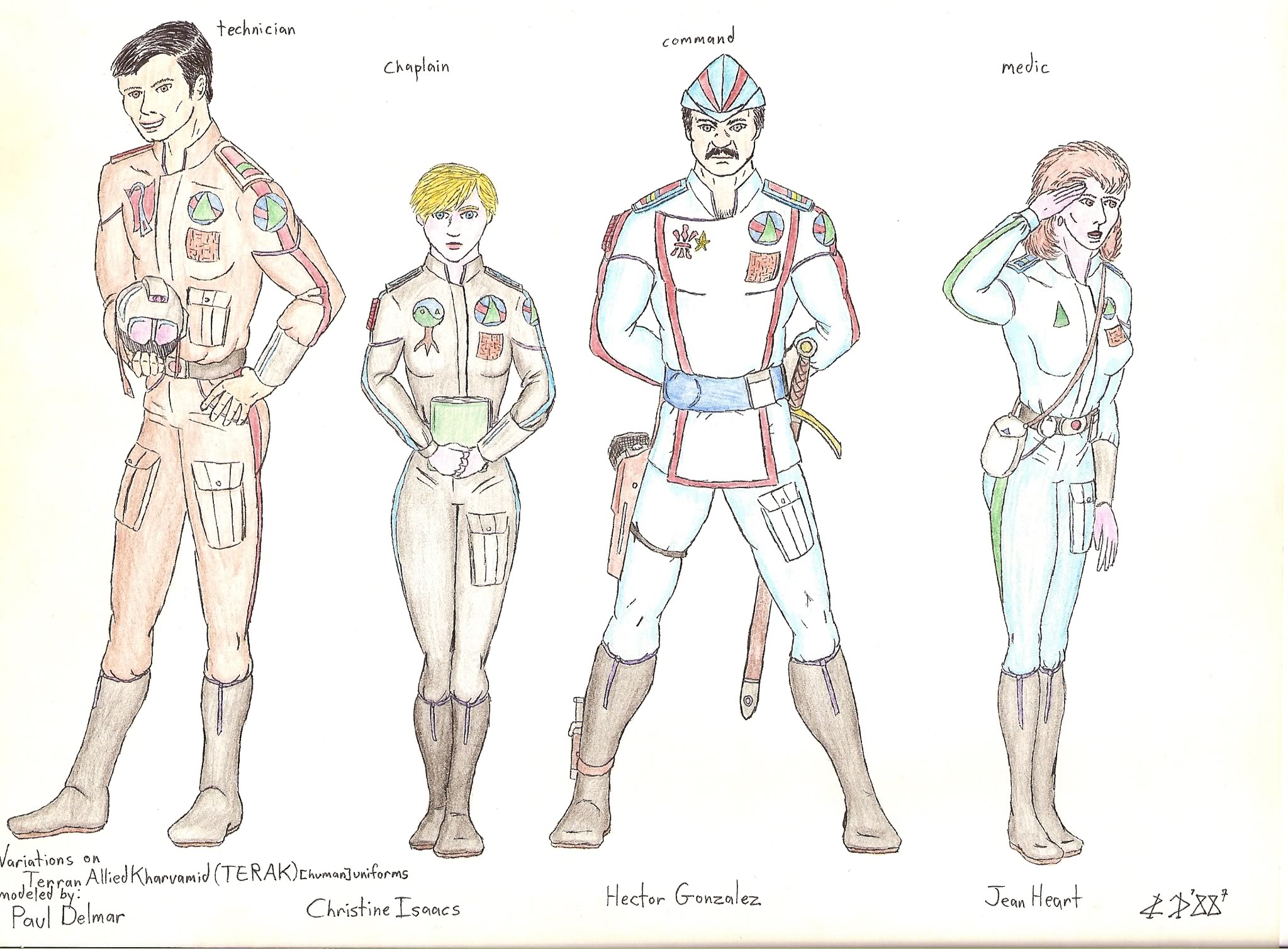
Fellow role-players, as my “Vortex” space opera approaches, here is more information for your Player Characters. While the D20 Star Wars: Saga Edition role-playing game is only one of the rules sets we’re considering (along with FATE Starblazer Adventures/Mindjammer/Diaspora, BASH Sci-Fi Edition, and GURPS 4e Lite/Space), its occupational classes are similar to those I’ve used in past versions of my homebrew campaign setting.

Diplomat (Noble): These people are interested in facilitating relationships among factions ranging from tribes to interplanetary alliances. Around the time of First Contact, diplomats can use their social talents as spies, peacemakers, or journalists. They tend to work best in the upper echelons of society.

Explorer (Scout): Just as humanity is colonizing the Sol system and encountering extraterrestrials, so too are aliens investigating Terra and numerous uncharted worlds. Scientific and survival skills are at a premium in hostile environments.

Mystic (Jedi): Terrans have just rediscovered abilities loosely classified into ecomancy (healing), elementalism (ergokinesis), probability control (luck), technomancy (machine control), telekinesis, and telepathy (drawn in part from GURPS Psionics). Unlike the Jedi knights, Mystics are secretive, specialized, and not necessarily militant. Still, their unusual abilities are much sought after.

Trader (Scoundrel): Freelance “fixers” work in gray markets, privateers and pirates ply the space lanes and cyberspace, and interstellar guilds try to control the threads of commerce linking worlds. Traders put a high priority on profit, but knowing when — and when not — to haggle is key, and they often work best
in the shadows.

Warrior (Soldier): Times of chaos increase the demand for the protection or aggression. Bodyguards, mercenaries, and members of regular militaries fight on land, under the seas, in the air, and in deep space. Martial artists and professional athletes entertain others with their feats of prowess, while Marshals enforce
frontier law.

So now you have a range of species and occupations to choose from. (If we use Saga Edition, there would be talent trees for further customization; there are similar mechanics in other systems.) What about alignment? When “Vortex” was more closely tied to AD&D2, I devised the following ethics:

-Justice (Lawful Good)

-Altruism (Neutral Good)

-Freedom (Chaotic Good)

-Order (Lawful Neutral)

-Balance (True Neutral)

-Anarchy (Chaotic Neutral)

-Might (Lawful Evil)

-Selfishness (Chaotic Neutral)

-Void (Chaotic Evil)

Those guidelines are still valid for individual beliefs, but for those gamers who prefer more nuance or flexibility, I recommend thinking about affiliations instead. Does your Player Character have a personal code of honor, and are there things he or she won’t do? How do species, personal history, occupation, group memberships, and socioeconomic status affect your P.C.’s outlook?

Returning to GURPS or FATE for a moment, each character should build ties to the “Vortex” setting through a web of associations with the following:

-Allies (peers such as fellow party members)

-Contacts (who can provide information)

-Dependents/followers (who need you for support)

-Enemies/rivals (not necessarily bad guys)

-Patrons (who can provide missions and material support)

These affiliations can be with individuals, groups of similar species/occupations (like a band of smugglers), or larger organizations such as megacorporations or militaries. I don’t expect everyone to have identical motivations or associates, but I hope they can at least be in parallel.

For example, “Miriam Accolon” is an Olvar Mystic stationed on Earth just after First Contact. Unlike her predecessors, who were spies disguised as Gennies or Synths, she operates openly as a Technomancer advising the United Ecumenical Movement on behalf of the Kharvamid Alliance.

I would previously have described Miriam as Altruistic, but now I’d say that her connections to the Kharvamids and U.E.M. show that she is firmly aligned with the “good guys.” That’s not to say our heroine is incapable of chaotic actions (she is Olvar, after all) or of evil, but she’ll likely use violence only in self-defense, try to help those weaker than herself, and behave in a rational fashion.

By contrast, “Adam Reutan” is a Terran human serving as a gunner in the North American Aerospace Marine Corps. He’ll follow the military code of honor only when necessary and is always “looking for an edge,” whether it’s against someone playing cards, a girl in a spaceport bar, a competitor for a mech suit assignment, or an enemy vessel. This Warrior isn’t malicious, just a bit self-absorbed, so I designated his ethics as Freedom in the past and would note that his orders are sometimes outweighed by his impulsiveness.

Regardless of the rules set we ultimately use, I plan to have some group character creation and discussion of party goals, and I’d also like your help developing relevant N.P.C.s and groups — Jim J.D’B. and Byron V.O. have already offered ideas.

I hope these examples are helpful, and I’ll post soon on why our choice of rules matters! -Gene
22 July 2010: Catching up — movies

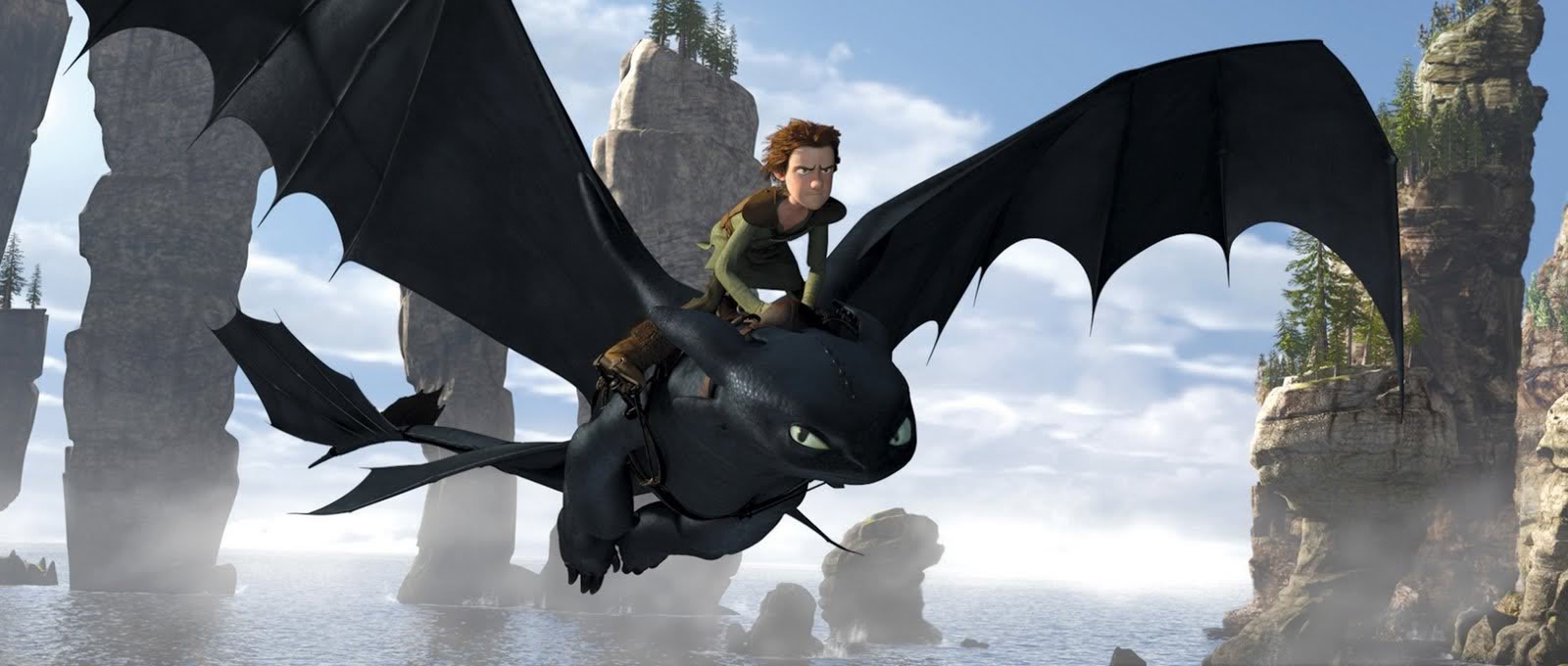
How to Train Your Dragon movie wallpaper

On Sunday, 18 July 2010, I met Thomas K.Y. in Burlington, Mass., to screen Christopher Nolan’s mind-bending technothriller Inception. Like Memento, Dark City, and The Matrix, the cyberpunk heist flick examines the nature of identity, perception, and reality. Inception has a strong cast and some nice set-piece action scenes inspired by James Bond films, but it lacks emotional resonance or the surreal vision of movies with similar themes, such as What Dreams May Come.

Inception is certainly more intelligently written than the blockbuster Avatar, but I didn’t find it to feel as fresh a speculative fiction mashup as last year’s District 9. At the same time, I didn’t find the layered plot to be as confusing as some viewers claimed. I’d give Inception, which is rated PG-13 for violence, a 7.5 out of 10, a B+, or three out of five stars.

So far, this summer’s films have been relatively lackluster, with the usual Hollywood recycling of ideas through sequels and remakes. There have been some lively debates online about the best years for genre movies, and I’m partial to 1982, which is when I came of age cinematically. It’s hard to believe that it has been 30 years since the release of The Empire Strikes Back. Of course, each generation will have its own favorites, as I was reminded by my younger co-workers at a TT staff lunch yesterday at Waltham’s Elephant Walk, a Franco-Cambodian restaurant.

This year, I’ve already passed on seeing the horror remake of The Wolf Man, the video game adaptation Prince of Persia: Sands of Time, comic book Western Jonah Hex, and the live-action adaption of a beloved fantasy anime TV series (Avatar:) The Last Airbender (which is getting a spin-off) in theaters because of mixed and poor reviews.

I wasn’t especially interested in Tim Burton’s twist on Alice in Wonderland, the A-Team remake, or computer-animated sequels Shrek Forever After and Toy Story 3, but I’m sure that I’ll eventually see them and Despicable Me, thanks to nieces and nephews. I’d rather see modern supernatural film The Sorcerer’s Apprentice, imperial Roman dramas Agora and Centurion, and the fantasy Legend of the Guardians, but time will tell.

7 July 2010: “Vortex” alien species

Vortex aliens

In one future, humanity has begun to colonize the Sol system, but strife over resources and ideology persists. Open and official First Contact with galactic societies, themselves at war, thrusts Terrans onto a larger stage, but can they survive?

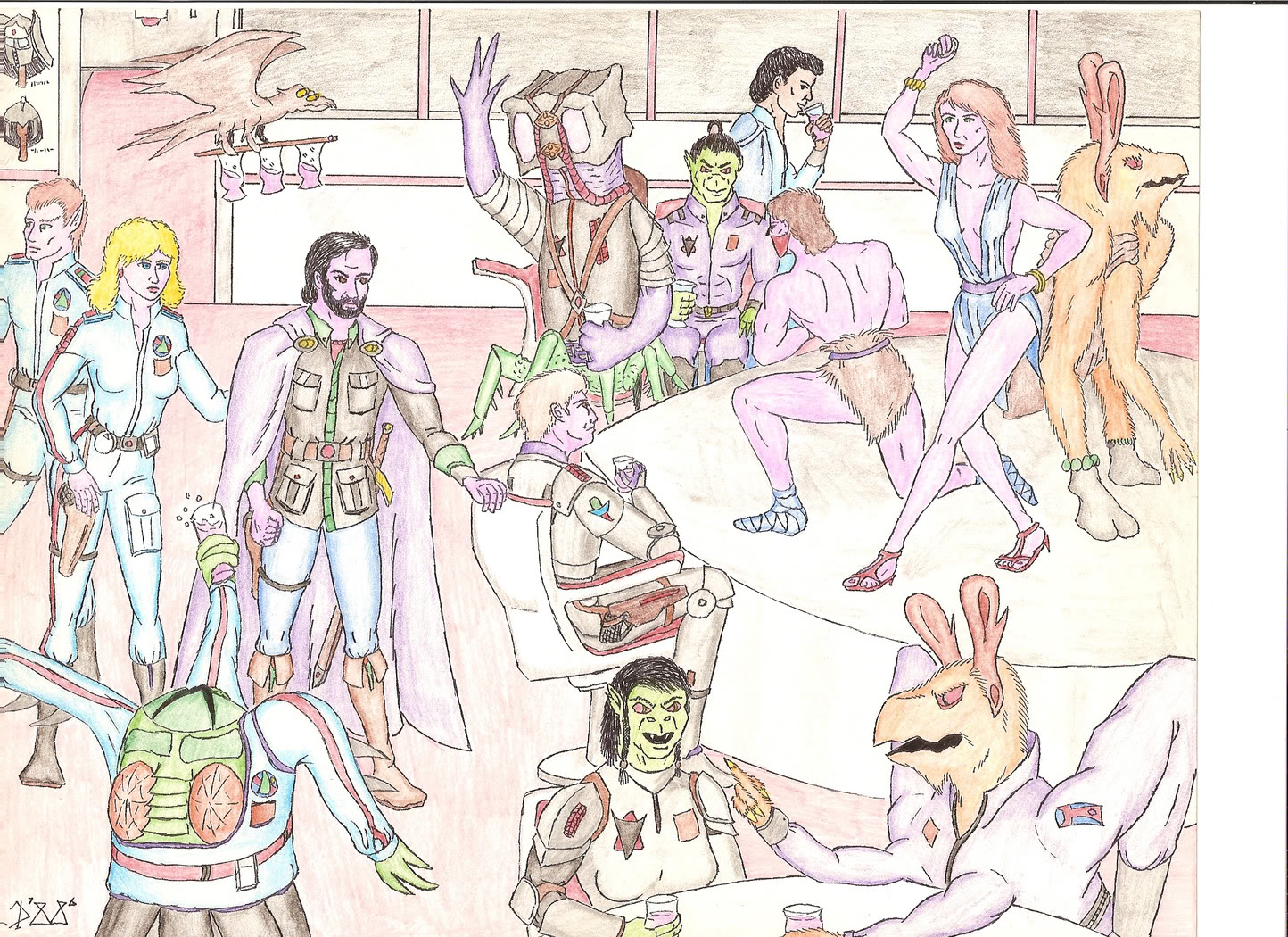
Fellow role-players, here is my latest post about my upcoming “Vortexspace opera campaign. I recently outlined the options for humans and “nearhumans,” and here is information about extraterrestrial species that interact with humans and that can be used for Player Characters.

Any sentient species within 300 light years of the Sol system is aware of humanity, but most of them have their own methods of communication and had little interest in one of several noisy backwaters, until recently….

Gustrall — flightless avian warriors

These bipeds evolved on the temperate plains of Irioth, the seventh moon of gas giant Birkomax, which orbits Firneq. They resemble flightless birds or raptors, with large beaks and muscular legs. However, they have hooves, orange fur, and antlers (actually breathing tubes), as well as small, double-jointed arms under
the “shoulders” of their legs.

The Gustrall (singular and plural are the same) have a long history of warfare, not unlike Terrans, and they had conquered all nearby solar systems before their greatest strategist, Kroac, became a pacifist. Gustrall tend to be reserved, honorable, and stubborn. They are only slightly more technologically advanced than the Sol system and can eat all Terran foods.

Nethians — insectoid scientists

The vegetarian Nethians evolved in the highlands of Oromekl 6 (which has a bit less gravity than Earth), and these explorers have named each planet they’ve settled since a supernova destroyed their homeworld thousands of years ago “Oromekl.” Each Nethian has six legs, all ending in three-clawed hands. They tend to walk on the rear two sets, have four eye/ear/nose stalks, and are covered in a smooth, gray exoskeleton. Nethians breathe through breathing holes along their thoraxes and have foldable wings for gliding. They are
excellent climbers but poor swimmers.

Nethians have an extremely hierarchical culture, but they do not have a hive mind and no longer enslave other species. In fact, these sentients enjoy public debate, and unlike many aliens, they discovered interstellar Transit on their own in vast, mazelike ships. Nethians are longtime allies of the Trinoids and appreciate
Terran inventiveness but are at a loss when faced with Gustrall tempers, Olvar humor, or human diversity.

Olvar — mammal-like mystics and pranksters

Of all the aliens that humans first encounter, they’re predisposed to liking the Olvar, which resemble primates or felines with tails, pointed ears, and multicolored short fur. (Yes, they’re similar to Elves or James Cameron’s Na’vi, but they were created years ago.) The Olvar evolved in the forests and mountains of Velthis Major, also known as Thurbast 3b. They can eat some human foods, and like chocolate, which is intoxicating to them.

The Olvar are known for their artistic sense, tribal organization, and sense of humor, and they are fond of ever-shifting Terran popular culture. In fact, generations ago, gray-suited Olvar adolescents were responsible for some human folklore of extraterrestrial visitors! Of the species presented here, the Olvar are most likely to study mysticism, and they are serious about recording and preserving history.

Ru’ulok — heavy-G reptilian pirates

The Ru’ulok are bipeds from Ru’okkal/Cralari 5 but are shorter and stockier than Terrans. They’re covered in small green scales and have gills where human ears would be, and their faces look somewhat simian. Although Ru’ulok internal organs are arranged in much the same way as human organs, these carnivores’ biochemistry isn’t compatible.

After generations of an oppressive caste system, the Ru’ulok distrust organization, such as those of the Nethians and Trinoids, and they don’t like the wealth disparities among humans. Although they communally share booty, the Ru’ulok compete to see who can get the best deals, find the most valued artwork or trade goods, or impress the most of their peers.

Trinoids — trilateral amphibious terraformers

The least humanoid of the aliens listed here, Trinoids evolved in the shallow areas of their “Home Sea,” or Hydronicus 2. They resemble Terran anemones or squid and have a barrel-shaped body, six stubby legs/feet, and three flexible arms ending in two spikes and three tapered fingers each. Trinoids have three sensory organs around a beaked mouth at the top of their blue-green torsos, but they communicate subsonically from ventral gills.

Trinoids have slowly but patiently expanded into the Orion Arm and are the founders of the Kharvamid Alliance to respond to the approaching Zarkonian Armada. Humans have difficulty understanding Trinoid society, which is based on the “Six Legs” — budding, food and photosynthesis, ethics, technology, strategy,
and Galactic commerce — with no clear divisions between the individual and government or corporate and religious affairs. However, Trinoids do have individual personalities, and they enjoy interacting with other species.

Some other aliens:

Cestolar — short, hairy clients of the Olvar

Laransans (created by Erik B.L.) — telepathic humanoid guardians

Ma’ari (created by Jenna P.) — diminutive wanderers

Meorr (created by David F.R-B.) — blue-furred lion-like berserkers

The aliens of “Vortex” are intended to be different, relatable, and worthwhile alternatives to human Player Characters. Interstellar travelers communicate via robotic translators, telepathy, or approximations via “Galactic standard” languages. While most of you are probably thinking of Star Trek or Star Wars, I’d also recommend looking at Star Frontiers, David Brin’s Uplift novels, or Farscape.

Coming soon: Occupations, factions, and rules!

1 July 2010: English vacation, Part 2

London
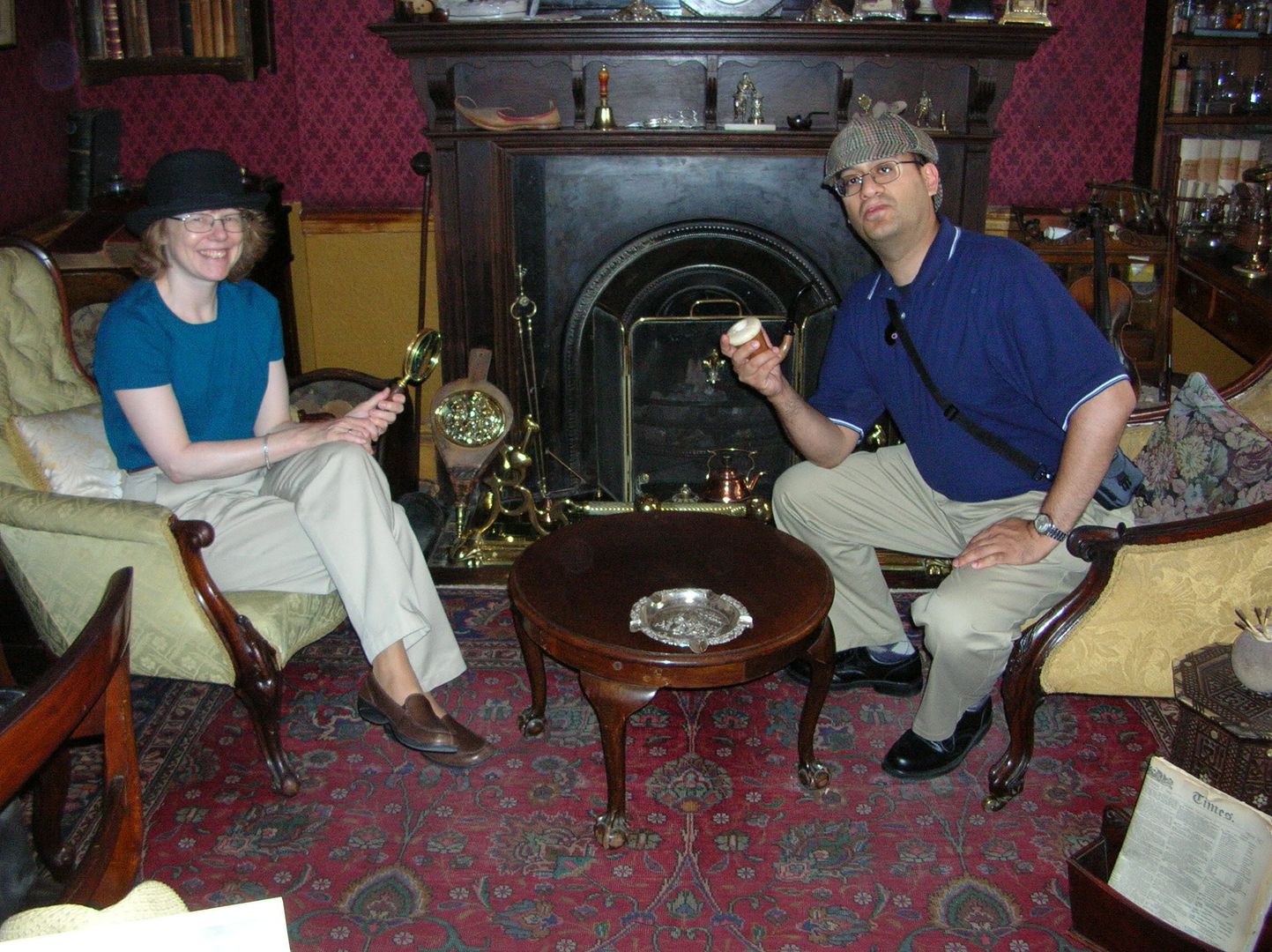
Janice and Gene at the Sherlock Holmes Museum

In a previous post, I blogged about the first few days of Janice’s and my vacation in England. The Internet enabled us to act as our own travel agents, conducting research on sites to visit and helping us book travel through Expedia. The London Pass program allowed Janice and me to get into museums (although most were free) and other attractions without waiting in line/queue for tickets.

On Wednesday, 23 June 2010, Janice and I went to the Tower of London. Janice remarked that it isn’t so much a tower as a castle (based on a Norman keep). We saw the crown jewels and Traitor’s Gate, and I noticed that the armor exhibit had changed since my previous visit 24 years ago. We had lunch at the Armories Café and then walked past the Golden Hinde (Sir Francis Drake’s ship) to the reconstruction of Shakespeare’s Globe Theater.

We weren’t able to tour the theater because a production of Macbeth (the “Scottish play”) had just begun, so we walked across the Millennium Bridge to St. Paul’s Cathedral, observing a range of architecture on the way. The church is as much a testament to British nationalism as to the Anglican faith, having been redesigned by Christopher Wren after the Great Fire of 1666. St. Paul’s magnificent crypt contains grave stones of numerous notable scientists, artists, statesmen, and military leaders.

Janice and I then strolled by the antique stores of Portobello Market and Notting Hill, made famous by movies. Many of the stores were empty, but the pubs were overflowing with fans and spectators of soccer’s World Cup. The Wimbledon tennis tournament was also occurring that week, but we couldn’t tell if it affected traffic or tourism. We later enjoyed Indian cuisine at Masala Zone, which I liked even more than Wagamama because of a friendly and informative staff, healthy and tasty food, and reasonable prices.

The next day, Janice and I went to the grand British Museum, which had a special exhibition of Renaissance drawings. We also checked out the significant collection of artifacts from ancient Mesopotamia, Egypt (such as the Rosetta Stone, mummies, and statuary related to my Pathfinder: Holy Steel” campaign), Greece (including the Elgin Marbles or contested sculpture from Athens’ Acropolis), Rome, and several other civilizations. We could easily have spent more time exploring London’s many museums and palaces, just as there are other sites in the U.K. that would be worthwhile destinations for day trips.

Janice and I had dinner at Pret a Manger, which is similar to and slightly nicer than Au Bon Pain in the U.S. We then walked through Bloomsbury and Soho (no relation to Manhattan’s Soho, other than being a neighborhood frequented by artists). Among other things, we stopped in at some comic book shops, including Gosh!, Comicana, Orbital Comics, and the multimedia extravaganza of Forbidden Planet, which has few equivalents here at home.

On Friday, June 25, I mailed two boxes of books and a few souvenirs home to lighten our luggage for our return. Since Janice and I had been unable to get inside the Globe Theater two days before, we returned for a tour. Whenever we return to England, Janice and I would like to try to take in a show.

After a simple but good lunch of wine and cheese at La Fromagerie, we walked to the Sherlock Holmes Museum at 221b Baker Street. Janice and I are both fans of Arthur Conan Doyle’s fictional detective, so it was fun to enter a replica of Holmes’ Victorian apartment. In nearby Covent Garden and Marleybone, we liked the markets and had a decadent snack of Nutella and peanut butter at Crème de la Crepe. We browsed at Daunt’s Books before dinner at Café Pasta, a local chain.

Janice and I flew back to Boston on Saturday, June 26, watching most of Up in the Air on the way. (I screened the OK juvenile fantasy Percy Jackson and the Lightning Thief on the flight to Chicago.) After “comfort food” at Wild Willy’s Burgers in Needham, Massachusetts, we began catching up on chores such as mowing the lawn, doing laundry, and grocery shopping.

In addition, I’ve enjoyed the latest episodes of Doctor Who (continuing our Anglophilia) and Leverage. I’ll have to try to post more soon about the end of the regular television season and this summer’s genre shows.

On Sunday, June 27, we met Janice’s middle sister Shelly, her husband Melvin, and our nieces Rebecca and Laura for lunch at a Chili’s in Worcester, Mass., after they dropped off our nephew David at a summer camp for kids with diabetes. We had seen them a few weeks ago at Becky‘s high school graduation party in Utica, New York.

This past week, the “Holy Steel/Dragonslayers” teleconferencing team and face-to-face group skipped more sessions, but we’ll soon be getting back to the fantasy game, a few more one-shots, and the upcoming “Vortexspace opera (about which I’ve been blogging).

This coming weekend, Janice’s parents and the family of her youngest sister Melinda will be visiting us around Independence Day. College chums David I.S. and Dexter V.H. also hope to visit the Boston area. So much to do, so little time!

30 June 2010: “Vortex” species — humanoids

Berkeley art

Fellow role-players, by now, you’ve probably seen my descriptions of the development of my upcomingVortexspace opera and the “future history” and tone of the homebrew campaign setting. As we get closer to beginning the game, here are some notes on available Player Character species.

In one future, humanity has begun to colonize the Sol system, but struggles for scarce resources persist. Open and official First Contact with alien societies, themselves at war, opens a wider galaxy to explore — if Terrans survive.

Humans and “near” humans

As I’ve noted previously, about 200 years from now, our solar system is home to nearly 20 billion people, most of whom are “normal” humans living on Earth. They’re still the baseline for whatever rules set we ultimately choose (the top contenders are D20 Star Wars: Saga Edition, FATE Diaspora/Starblazer Adventures, GURPS 4e Lite/Space,” and BASH Sci-Fi Edition).

In the “Vortex” universe, as in many space operas, humans are adaptable, corruptible, and lower-tech than their new galactic acquaintances. Still, the upstart children of Terra have great potential.

Also known as “metahumans,” “parahumans,” “posthumans,” and “transhumans,” the broad category of “near” humans includes mutants, genetically modified humans, and cyborgs. About one in 5 million people is born with a random but significant (and mostly helpful) mutation, and during the era of the Societe de Justice Internationale and the “Drake’s Seven,” many were costumed vigilantes or supervillains.

“Gennies” include humans born in the low-gravity environments of the Lunar Free State, the Mars Confederation, or some outer colonies (but not the orbital cities, which have mostly normal inhabitants).
Some people have been enhanced as entertainers or soldiers, while others have engaged in dangerous recreational splicing. As mentioned previously, some cloning exists, but it’s expensive and heavily regulated.

Cyborgs may not seem as high-tech as their genetically modified kin, but they can be nearly indistinguishable from normal humans (in contrast to many gennies, who often flaunt their differences and supposed superiority). Many modifications are to repair injuries, to interface with machines, or to have swappable functions.

“Synths”

“Synths,” or synthetic humanoids, include genetically modified animals and androids and mostly live in Earth’s colonies. Although humans created these client species to be more capable individually than themselves, humans have also been reluctant to grant them equal rights.

Uplifted” animals arose out of the creation of “gennies” and efforts to preserve megafauna that was going extinct. They’re commonly based on dogs and wolves (Canids), large cats (Felinoids), primates (Chims), bears (Ursoids), or cetaceans (Delphines). Uplifted animals are usually stronger than humans but not as smart, and like gennies, their reproduction is strictly controlled. Alien synths are known as “xenoids.”

By contrast, true artificial intelligences may be smarter than humans but rely on robotic bodies. Robots have industrial, exploratory, or military applications, and androids are often confused for gennies and have social or entertainment applications. Humanoid androids, nonhumanoid bots, and disembodied A.I.s all have programming and legal restrictions and are as vulnerable to computer viruses as organic beings are to
regular illness.

Coming soon: “Vortexaliens and occupations!